










Company
20 September 2026
Warehouse Racking Systems & Shelving Production Guide
Moving a warehouse shelving line from standard to custom profiles changes four things: too…
 10:33
10:33 Poorly made steel profiles slow assembly, weaken the frame, and increase repair costs. When a profile, channel, or rail does not fit, the whole project suffers. The solution is to choose cold-formed profiles made with stable dimensions, clean punching, and reliable manufacturing control.
Cold-formed steel profiles are widely used in industrial applications because they offer strong structural performance, tight tolerances, flexible shapes, and cost savings compared with many hot-rolled or welded alternatives. Buyers choose cold-formed channels, guide rails, girts, and frames when they need lightweight strength, accurate mounting holes, repeatable dimensions, and customized production for racking, electrical cabinets, construction, automotive parts, and support systems.
A cold-formed profile is a steel section shaped at room temperature by a roll forming machine, press brake, punching line, or other cold forming equipment. Unlike hot-rolled profiles, which are formed at high temperature in a mill, cold-formed steel is shaped without heating the steel to a red-hot state. This helps the profile keep a cleaner surface finish and more controlled geometry.
In simple words, cold-formed profiles are steel parts made by bending flat steel into a useful shape. The shape may be a channel, steel channel, rail, bracket, flange profile, U-channel, girts, or a more complex cross-section. These sections and profiles can be used in construction, machinery, storage systems, electrical cabinets, solar panel supports, and automotive structures.
Cold-formed steel is also recognized in structural design standards. The American Iron and Steel Institute states that cold-formed steel standards cover the design, manufacture, installation, and quality of structural members and connections used in light-frame construction applications.
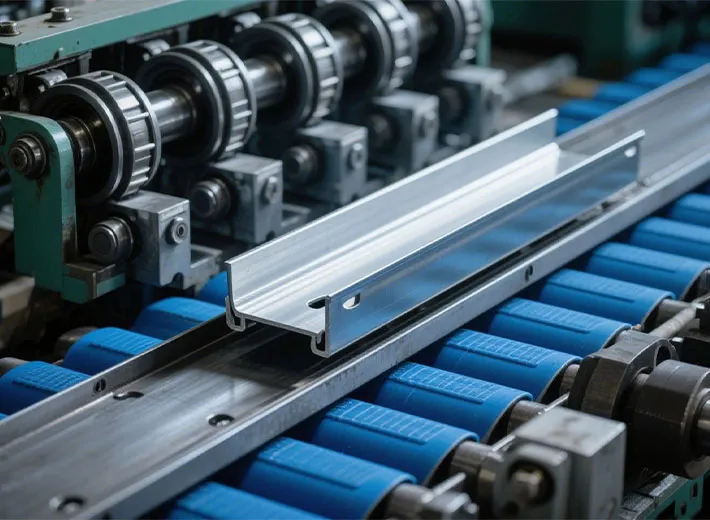
Many buyers compare cold-formed steel with hot-rolled structural steel. Both have value. The right choice depends on the load, shape, tolerance, surface finish, and production volume. Hot-rolled profiles are often used for heavy beams and large structural steel applications. Cold-formed profiles are often better when buyers need lighter steel, precise geometry, and repeatable production.
One key advantage is design flexibility. Cold-formed steel can create open profiles, open steel sections, lightweight channels, and special cross-sectional shapes that may be difficult or expensive to produce by hot rolling. In many industrial applications, that flexibility creates cost savings because the profile can be made closer to the final required shape.
Cold-formed steel shapes are typically made from sheet, strip, or plate material at room temperature, while hot-rolled steel shapes are formed at elevated temperatures. This difference affects surface condition, dimensional control, and suitable product types.
A steel channel is one of the most common cold-formed profiles. It may look simple, but it solves many practical problems. Steel channels provide a strong open shape that is easy to punch, bend, weld, coat, and assemble. This makes them ideal for support systems, frames, shelves, mounting rails, and equipment structures.
A cold-formed channel can include side flanges, ribs, slots, or mounting holes. The open shape makes it easier for workers to install bolts, fasteners, brackets, or cable supports. In commercial and industrial projects, this small detail matters. A profile that installs quickly can reduce labor time and improve overall assembly efficiency.
For example, a cable tray support channel may need repeated holes along the length. A rack upright may need slot punching with high precision. A guide rail may need excellent straightness and alignment. These are not just design details. They affect whether the final system feels strong, clean, and easy to install.
Why Buyers Use Cold-Formed Channels
In many cases, the channel is the hidden part of the product. But it carries the load, keeps parts aligned, and protects the structural integrity of the full system.
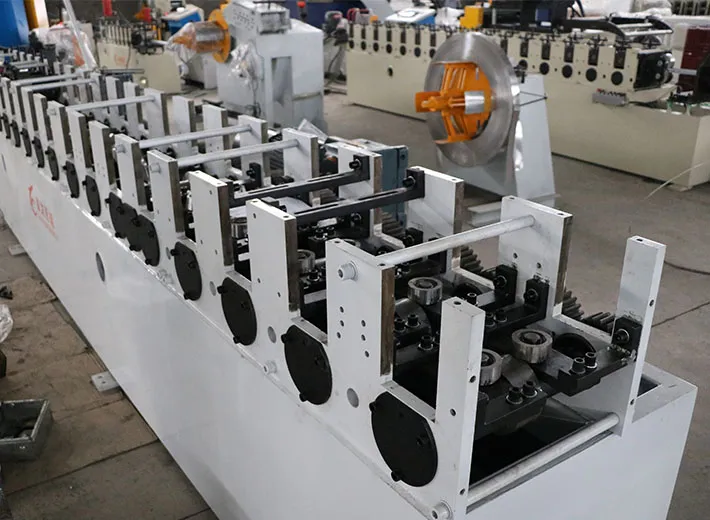
Guide rails are used when movement, positioning, or alignment matters. A rail profile may guide a sliding door, support a moving part, align a storage system, or act as a track in machinery. In automotive, construction, and industrial equipment, a small error in rail geometry can create noise, friction, or poor fit.
The manufacture of cold-formed guide rails usually starts with steel coil or strip. The line may include an uncoiler, leveler, servo feeder, punch press, forming stations, cutting system, and sometimes a welding or bending unit. The material passes through rollers step by step until the final profile shape is formed.
Chenlong provides cold roll forming equipment and profiles for industrial buyers, including custom-made solutions supported by a production base, CNC centers, and an R&D team.
Cold-formed girts are often used in industrial building wall systems. They support wall panels and help transfer loads to the main frame. A girt is usually lighter than a heavy hot-rolled beam, but it still provides useful strength when designed correctly. That is why girts are common in warehouses, workshops, agricultural buildings, and steel structures.
Cold-formed frames and beams can also appear in storage systems, rack structures, solar panel substructure systems, equipment bases, and light-duty support frames. In these projects, the goal is not always maximum weight. The goal is the best balance of strength, weight, cost, and easy installation.
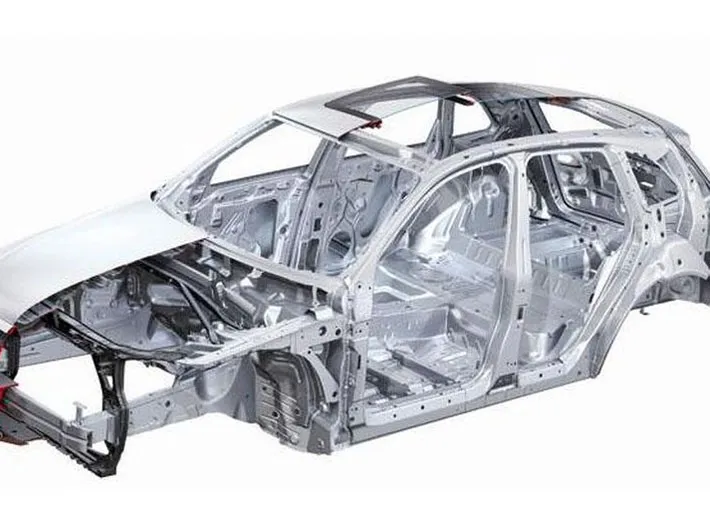
A profile is not only a shape. It is also a working part. If the hole position is wrong, the mounting bracket will not fit. If the bend angle changes, the frame may twist. If the weld is poor, the structural integrity may suffer. If the rail is not straight, the sliding part may jam.
That is why punching, bending, welding, and cutting should be considered together. A modern cold roll forming line can combine punch operations, continuous forming, CNC cutting, and optional weld or bend steps. This helps reduce secondary fabrication work and improves production speed.
Chenlong’s equipment component page describes core elements of cold roll forming lines, including cold roll forming machines, customized bending machines, punching machines, laser welding machines, and cutting machines for high-speed and reliable production.
A small profile error can become a big assembly problem. Good dimensional accuracy reduces rework, protects the project schedule, and makes every profile easier to install.
The biggest advantage of custom cold-formed profiles is that the buyer does not need to design the product around a standard steel shape. Instead, the profile can be tailored around the real application. That means better fit, less cutting, easier mounting, and better cost control.
Custom roll forming can adjust the cross-section, flange width, hole pattern, rib position, coating, thickness, steel grade, and custom lengths. For OEM manufacturers, this can reduce fabrication work and support faster mass production. For distributors, it can create a more competitive product line.
Chenlong’s shaped profiles page presents custom roll forming profiles and roll formed steel products for distribution boxes, electrical distribution cabinets, cable tray profiles, warehouse shelving, construction, automotive, and other industries.
A good supplier should do more than sell steel. The supplier should understand the end use, production volume, tolerance needs, steel grade, surface treatment, and packaging method. This is especially important for custom roll formed profiles because the wrong design can lead to expensive tooling changes.
Buyers should send drawings, samples, target material thickness, strength requirements, hole patterns, coating needs, and expected annual volume. If the profile will be used in construction, storage systems, automotive structures, or machinery, the buyer should also explain how it will be mounted and loaded.
Chenlong is positioned as a manufacturer of cold roll forming equipment and shaped steel profiles. For industrial buyers, this “equipment + profiles” model is useful because it connects product design with production reality. The team can help buyers develop a profile and also understand how that profile will be produced at scale.
This is important for companies that manufacture distribution boxes, cable trays, fire protection cabinets, warehouse racking, guide rails, structural frames, and other roll forming products. Instead of separating design, tooling, machinery, and profile supply into different suppliers, buyers can work with one partner for a more connected solution.
Chenlong’s service page also describes support for cold roll forming machines and production lines, including technical support, samples, testing, shipment, and after-sales service.
For buyers who need stable production, Chenlong can help tailor the profile geometry, equipment configuration, and production process. That creates a smoother path from idea to sample, and from sample to mass production.
A cold-formed steel profile is a steel section shaped at room temperature from coil, strip, sheet, or plate. Common examples include steel channel, guide rails, girts, brackets, rack profiles, cable tray profiles, and frame sections.
Buyers choose cold-formed profiles because they are flexible, lightweight, accurate, and suitable for repeat production. They can include punching, bends, flanges, ribs, and custom lengths, which reduces extra fabrication work.
Not always in the same way. Hot-rolled profiles are often used for heavy structural steel beams. Cold-formed profiles can provide high strength-to-weight performance and better shape flexibility. The right choice depends on load, thickness, steel grade, and profile geometry.
Yes. A steel channel can be customized by width, height, flange size, hole pattern, thickness, coating, length, and surface finish. Customization is one of the main reasons buyers use cold roll forming.
You should provide drawings, material thickness, steel grade, coating needs, length, tolerance, hole pattern, application, load requirements, and estimated order volume. A sample is also helpful when drawings are not complete.
Yes. Chenlong focuses on cold roll forming equipment and shaped steel profiles, which means buyers can discuss both production line needs and finished profile requirements with the same supplier.
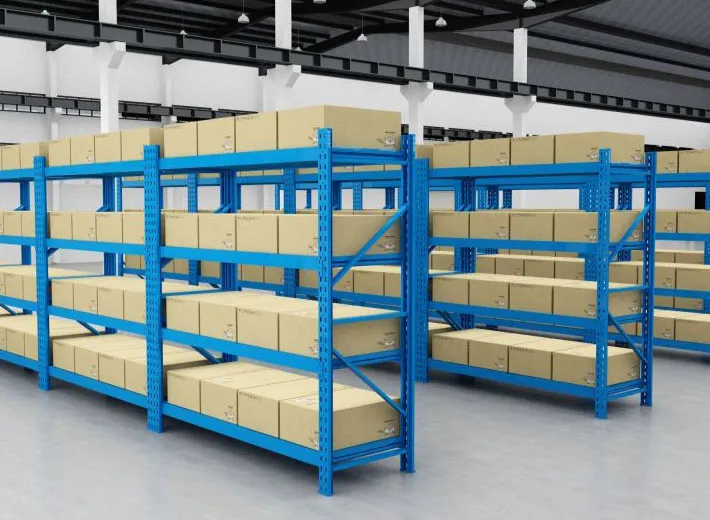
Moving a warehouse shelving line from standard to custom profiles changes four things: too…
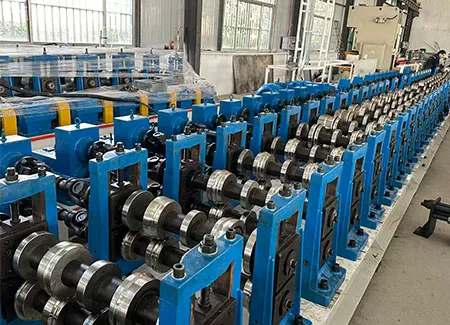
Chenlong’s roof and wall panel line is a factory-based automated roll forming system…
We will reply you within 24 hours. If for urgent case, please add WhatsApp/WeChat: +8613863639320,. Or call +8613863639320 directly.
*We respect your confidentiality and all information are protected.
We will only use your information to respond to your inquiry and will never send unsolicited emails or promotional messages.