











Company
20 September 2026
Warehouse Racking Systems & Shelving Production Guide
Moving a warehouse shelving line from standard to custom profiles changes four things: too…
 09:44
09:44 Warehouse buyers don’t forgive delays. If your machine setup causes uneven holes, slow changeovers, or unstable profiles, you lose orders and waste coil. That pain grows fast when a project needs thousands of parts. The solution is a fully automatic production line built around the right roll form machine and modular forming equipment.
An automatic production line for warehouse manufacturing uses a roll form machine (often a cold roll forming machine) to turn steel coil into roll formed components—like rack uprights, beams, shelving parts, cable tray, and light steel framing—through a continuous forming process with decoiler, punch, hydraulic cutting, and stacking. This article shows how to choose the right machinery and modules for B2B production needs.
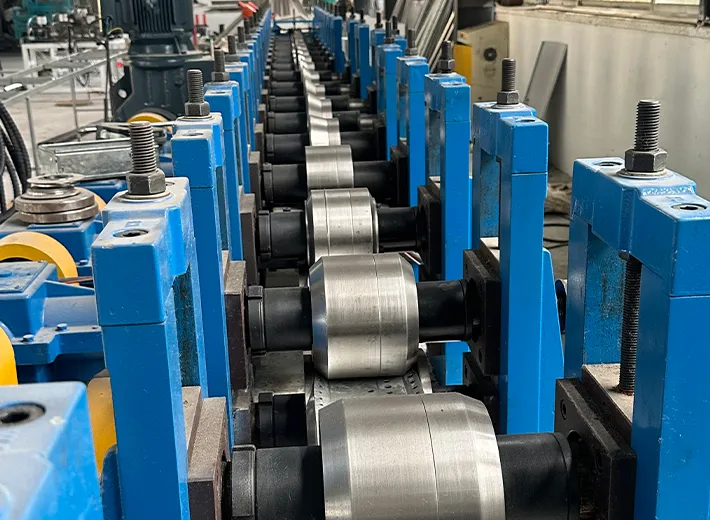
I wrote this for professional industrial buyers—roll forming factories, steel structure suppliers, warehouse racking makers, electrical enclosure manufacturers, HVAC/fire protection producers, and project integrators—who need high-speed output and consistent quality. You’ll learn how a roll form machine fits into an automated warehouse production system, which modules matter, and how to avoid costly mistakes when buying a cold roll forming machine from a forming machine manufacturer.
Cold forming equipment is any machinery that shapes metal at or near room temperature—by force, not heat. That includes bending, stamping, punching, and roll forming. A roll form machine is a specific type of cold forming equipment designed for continuous profiles.
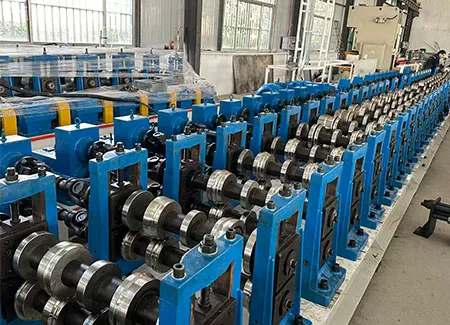
Roll forming equipment (or a roll forming system) feeds a strip (often from a decoiler) through a series of rollers to gradually form a profile. It’s not a one-hit process; it’s continuous, controlled shaping. That’s why it’s ideal for long parts like rack uprights and beams.
Cold forming vs machining (quick buyer view)
For large-scale manufacturers, cold forming is typically more cost-efficient and creates minimal material waste when the profile repeats. Machining is flexible for prototypes, but slower for mass production. (You’ll see this reality in almost every metal processing project.)
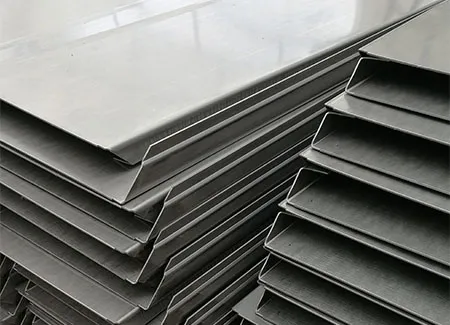
A cold roll forming machine usually starts with a steel coil. The coil is mounted on a decoiler (also called an uncoiler). Then the strip is fed into the machine. The process is continuous, and it involves feeding the strip through multiple roller stations.
Here is the typical forming process flow:
This is the basic “fed into the machine” workflow most buyers expect when they ask for a custom cold roll forming solution.
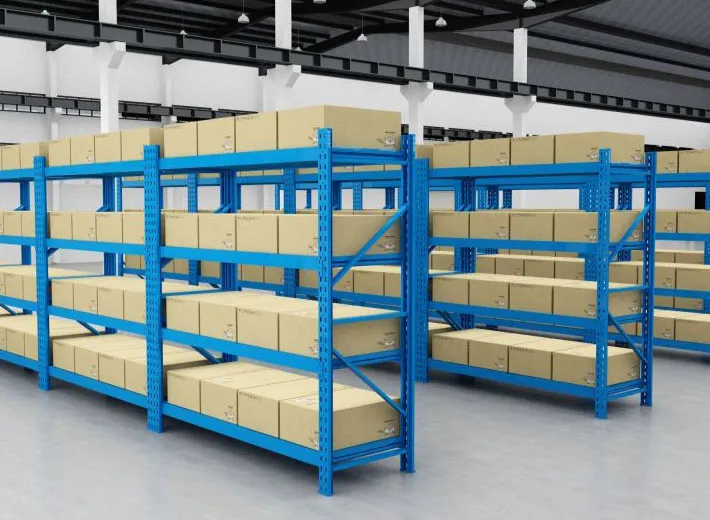
Warehouse projects are rarely “just racks.” In real procurement, I see buyers bundle components:
A good roll forming system supports this variety because roll forming can produce complex profiles at stable speed.
| Product family | Example roll formed parts | Why roll forming fits |
|---|---|---|
| Racking | uprights, beams, braces | long profiles, tight hole patterns |
| Shelving | shelf panels, stiffeners | consistent ribs reduce deflection |
| Cable management | cable tray side rails | repeat profiles, clean edges |
| Framing | studs, tracks, steel stud | fast output, stable dimensions |
| Enclosure support | door frame profiles | controlled fit-up |
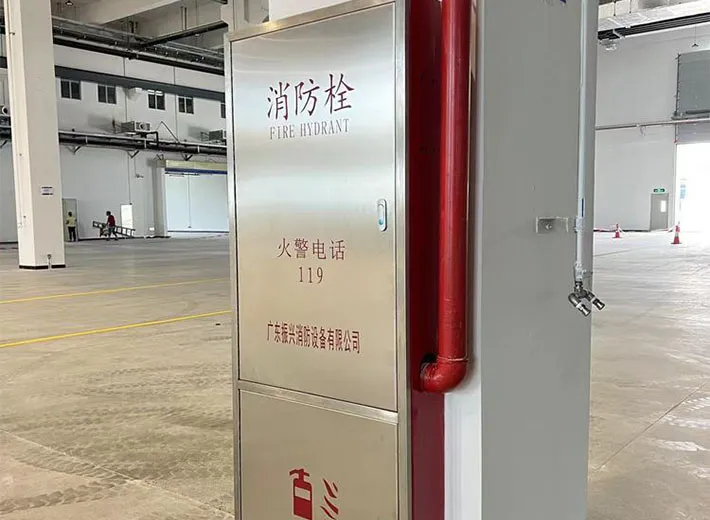
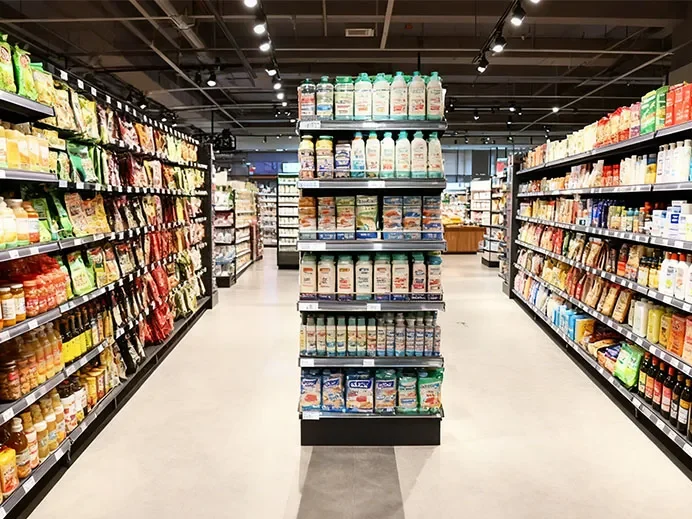
If you also produce fire safety or HVAC support components, the same forming equipment platform can be extended with punches and tooling changes. This is why modular roll forming solutions are attractive to OEM/ODM partners and system integrators.
Buyers often ask for “types of roll forming machines” because they want to match equipment to product families.
Here are practical types of roll forming machines in the warehouse ecosystem:
Each type is still a roll forming machine at its core, but tooling, station layout, and punching differ based on the product.
Light steel keel systems are common in partition and ceiling structures. If your warehouse project includes interior systems or prefabricated modules, a light steel keel profile line can be part of your broader production needs—especially for contractors building steel framing packages.
When I help buyers evaluate machinery, I always ask for proof in three areas: output stability, scrap control, and fit-up.
What is cold forming equipment?
Cold forming equipment is machinery that shapes metal at or near room temperature using force—like bending, stamping, punching, and roll forming—without heating the raw material. It’s popular for consistent mass production because it can reduce scrap and keep stable dimensions.
What is roll forming equipment?
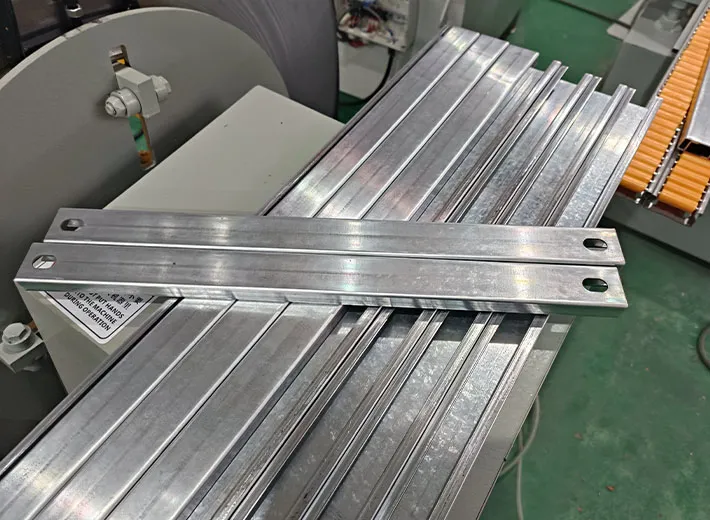
Roll forming equipment is a continuous system that feeds metal strip from a coil through multiple roller stations to create a final profile. A typical setup includes a decoiler, leveling, optional punching, forming stands, and cut-to-length output—ideal for long parts like rack uprights and purlins.
What is an example of cold forming?
A common example is producing warehouse racking uprights or a purlin roll forming machine output from steel coil using roll forming. Other examples include stamping brackets, punching holes, and bending sheet metal into frames—all done without heating.
What material is used in roll forming rollers?
Roll forming rollers are typically made from hardened alloy tool steel to resist wear and keep profile accuracy during long production runs. The best roller material and heat treatment depend on what steel you form (galvanized, stainless, or high-strength) and how complex the profile is.
What is cold rolled forming?
“Cold rolled forming” is often a mixed phrase. Cold rolling usually refers to improving sheet thickness and surface finish, while cold roll forming refers to shaping a strip into a profile using rollers. Clarifying this term helps ensure your machine specification matches the real process.
What is the difference between cold forming and machining?
Cold forming changes metal shape mainly by pressure (rolling, bending, stamping), while machining removes material by cutting (milling, turning, drilling). Cold forming is often faster and creates less waste for repeat profiles; machining fits small batches and complex one-off features.
Why is it called cold rolling?
It’s called cold rolling because the metal is rolled at or near room temperature, unlike hot rolling which happens at high temperature. Cold rolling often improves sheet thickness control and surface finish before the sheet enters a forming process.
Moving a warehouse shelving line from standard to custom profiles changes four things: too…
Chenlong’s roof and wall panel line is a factory-based automated roll forming system…
We will reply you within 24 hours. If for urgent case, please add WhatsApp/WeChat: +8613863639320,. Or call +8613863639320 directly.
*We respect your confidentiality and all information are protected.
We will only use your information to respond to your inquiry and will never send unsolicited emails or promotional messages.