











Azienda
30 April 2026
Fire Extinguisher Cabinet Guide: Steel Door Types, Mounting Options, Architectural Trim, and Manufacturing Solutions
A fire extinguisher cabinet is a protective box used to store a portable fire extinguisher…
 11:26
11:26 Poorly made profiles can slow assembly, weaken structures, and raise long-term costs. When a steel channel or guide rail is out of shape, the whole project feels it. The fix is simple: use cold-formed, roll formed steel profiles built for precision, durability, and repeatable output.
Cold-formed steel channel and guide rail profiles are shaped from steel strip through a continuous roll form process. They are widely used in construction, automotive, shelving, electrical systems, and industrial support systems because they offer tight tolerances, stable cross-sections, flexible customization, and efficient large-volume production.
A steel profile is any shaped metal section made for a specific job. In this case, we are talking about cold-formed parts such as a steel channel, a guide rail, reinforcement profiles, brackets, and other open steel sections. These parts start as steel strips and pass through a continuous roll form process that shapes the metal step by step without melting it. That makes the process efficient and highly repeatable for large-volume fabrication.
In daily industrial use, these roll formed steel profiles are not niche products. They are widely used in construction and industrial projects, including door and window frame profiles, cable tray parts, shelving components, guard rails, automotive rails, and custom metal support systems. Chenlong’s shaped profiles specifically highlights guide rails, brackets, door and window frames, and custom sections as part of its high-precision profile offering.
What makes formed steel appealing is not only shape. It is consistency. Buyers want stable cross-section geometry, reliable dimensional accuracy, and cleaner edges so downstream assembly goes faster. In our experience, if a profile is not straight, not square, or not punched correctly, the customer pays for the problem again during installation. That is why cold-formed steel keeps gaining ground in industrial supply chains.
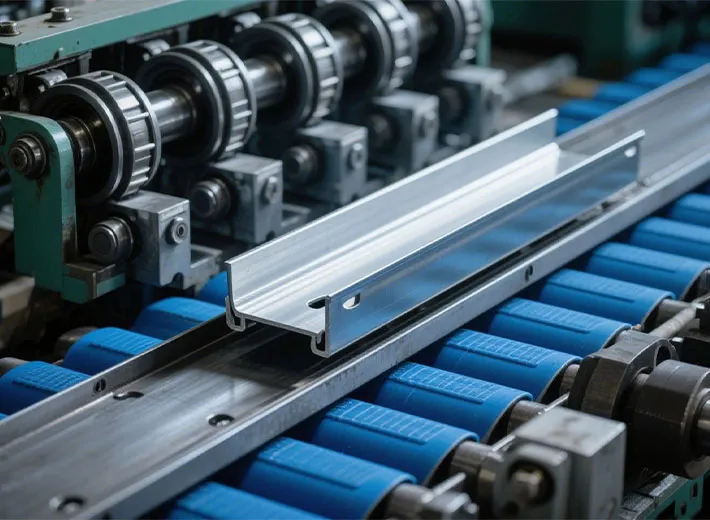
The biggest reason is speed with control. A good roll form process can produce profile after profile with very little variation. That helps ensure better fit, easier assembly, and less scrap. Compared with slower manual methods that rely on repeated cutting, welding, and bending, roll formed steel profiles support stable output and better cost control for commercial and industrial orders. Chenlong describes continuous roll forming as a way to deliver stable quality, low waste, and high output for large-volume profile manufacturing.
The second reason is flexibility. A buyer may need a light-duty shelve support today, a beam reinforcement next month, and a custom channel for a solar panel frame after that. With the right tooling and forming solution, the same production logic can be adapted to many profile families. This is why custom roll forming matters so much for OEMs. The process can be built around hole patterns, slot locations, edge details, and even special bends without rebuilding the whole factory workflow.
There is also a simple commercial reason. Profiles that are engineered to meet exact needs often use lighter steel more efficiently while preserving load-bearing capacity and structural integrity. That means the buyer can balance strength and cost instead of overbuying raw material “just to be safe.” In sectors that move fast, that is a real advantage.
The phrase different types of steel channels covers more than many buyers realize. Some projects use basic u-channels. Others require a deeper steel c profile, a reinforced open section, or a profile with return lips, ribs, or slots. There are also open profiles designed for cable routing, support systems, frame assemblies, and specialized OEM parts. In short, the market is broad, and most serious buyers are comparing more than one shape.
A useful way to group common profiles is this:
Chenlong’s show that these sections and profiles are used across warehousing, construction, electrical systems, fire protection, and automotive manufacturing. The Chenlong also mentions door and window sections, guide rails, brackets, cable tray profiles, and automotive rails among its finished applications. That broad fit is one reason roll forming solutions are attractive to manufacturers that serve more than one market.
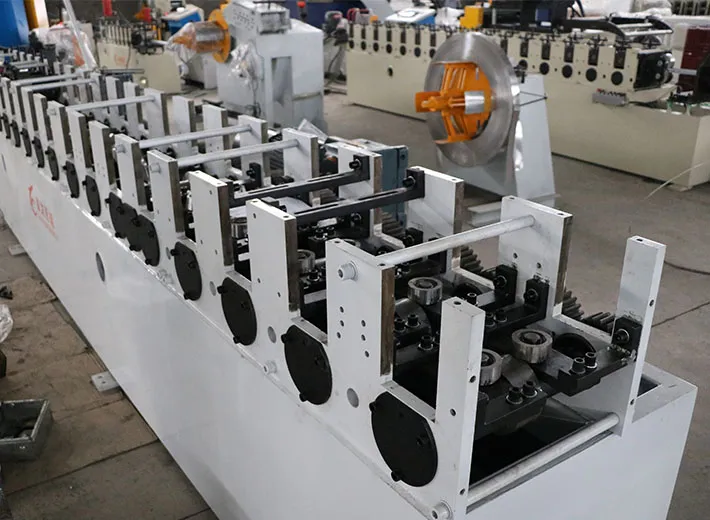
A profile is not finished when it leaves the last roll station. Many parts still need a punch pattern, a flange, a notch, or a joining step. That is why integrated auxiliaries matter. Chenlong describes CNC and hydraulic punching machines as essential for punching, shearing, trimming, bending, flanging, and stretching strip or semi-formed profiles to match design requirements.
The same is true for weld operations. Not every profile needs welding, but some do. When a profile is hollow, sealed, reinforced, or part of a more complex assembly, inline or secondary laser welding can improve structural integrity and surface quality. Chenlong’s component page says laser welding machines are suitable for seams, joints, or reinforcing parts of cold-formed profiles, especially when strong, smooth joins are needed.
In practical terms, these operations are where many projects are won or lost. You can have a good base section, but poor hole placement, uneven bends, or weak welds will still create trouble. That is why advanced roll forming is not just about rolling metal. It is about building a stable, repeatable process around the full profile requirement.
These profiles are widely used because they fit many industries. In construction and industrial sectors, they appear in framing, supports, cable management, roofing details, enclosures, steel deck systems, and other structural support systems. They are also common in door and window assemblies, where profile straightness and edge quality matter for final fit and sealing. Chenlong’s site specifically highlights modern construction applications, frame profiles, corrugated panels, gutters, steel decking, and non-standard structural sections.
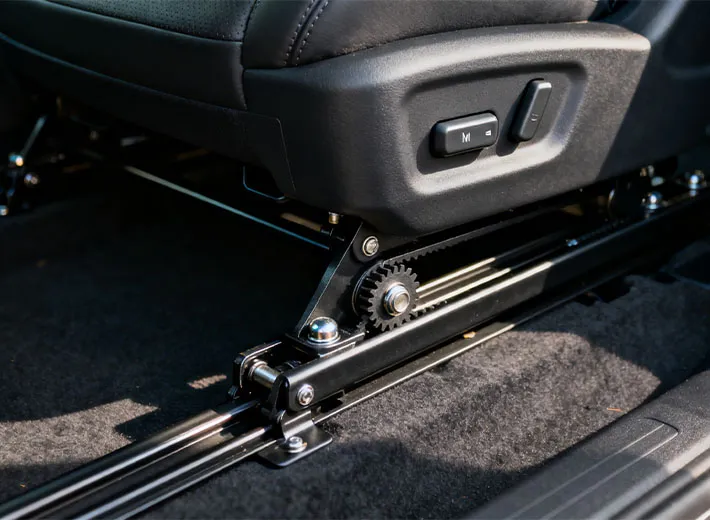
In automotive manufacturing, precision matters even more. Seat slides, roof rack tracks, sunroof guide rails, reinforcement members, and other rail-based parts need consistent shape and stable batch production. Chenlong’s shaped profiles page refers directly to automotive rails and says its forming solutions support consistent dimensions and clean profile edges for industrial projects.
There are also expanding uses in new energy and infrastructure. A solar panel support profile, a cable tray channel, or a custom bracket for machinery all rely on repeatable section geometry. The same logic applies in warehouse shelving, light-duty storage systems, and guard rails for safety-related assemblies. When profiles are used in the construction of real systems, small shape errors can become large field problems. Precision is not a luxury. It is part of performance.
If a profile will face moisture, weather, or a demanding industrial environment, surface protection matters. Galvanized steel and hot dip galvanized finishes help slow rust and support longer service life. That does not remove the need for good design, but it does improve durability and surface protection in many outdoor or semi-exposed uses. Industry cold-formed steel standards and guidance also emphasize the role of proper product data, design, and material selection in long-term performance.
For buyers, this usually comes down to three questions:
Un profilo con la giusta finitura superficiale può migliorare la fiducia nella rivendita e ridurre le preoccupazioni relative alla manutenzione. Può anche contribuire a garantire una migliore coerenza durante l'assemblaggio quando il prodotto necessita di un esterno pulito e stabile. Per molti progetti commerciali e industriali, l'acciaio laminato a caldo può ancora far parte della catena di fornitura, ma l'acciaio deformato a freddo con il rivestimento giusto offre spesso una soluzione finita più efficiente per la produzione di profili ripetibili.
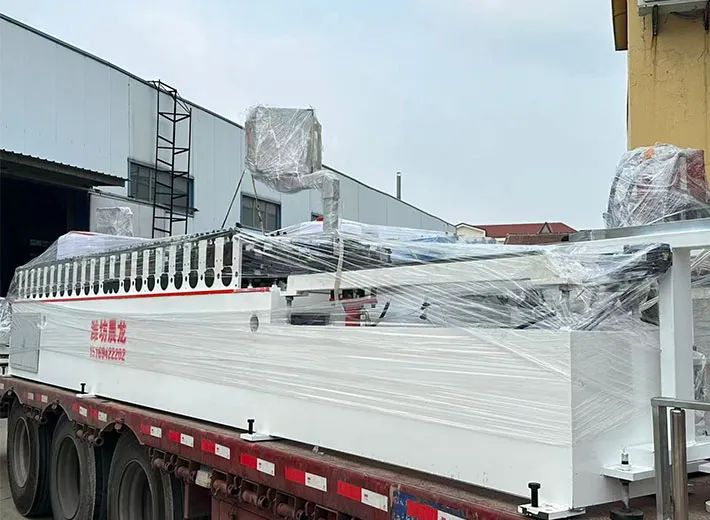
Un buon processo di acquisto inizia con l'uso finale, non con il catalogo delle macchine. Chiedi cosa fa effettivamente il profilo. È portante o decorativo? È parte di un supporto per ponte in acciaio, di un telaio in acciaio, di una zona di rinforzo in acciaio tubolare o di un sistema di scaffalature leggere? Il profilo sarà utilizzato nella costruzione di un involucro edilizio, in macchinari o in un'assemblaggio di trasporto?
Poi fai le domande che plasmano la soluzione:
Queste domande aiutano a garantire che l'acquirente ottenga l'attrezzatura giusta, non solo il preventivo più economico. In molti casi, un fornitore che può adattare gli strumenti, la movimentazione dei materiali e i passaggi di finitura creerà più valore rispetto a un venditore di macchine standard. Questo è particolarmente vero quando i componenti sono progettati per soddisfare specifici requisiti di assemblaggio, resistenza e finitura.
Chenlong si posiziona come un produttore cinese di attrezzature per la deformazione a freddo personalizzate e profili sagomati, servendo settori come magazzinaggio, armadi elettrici, scatole antincendio, canaline, costruzione e automobilistico. La homepage dell'azienda afferma di avere una base produttiva di 10.000㎡, centri CNC avanzati e un focus su attrezzature chiavi in mano e profili ad alta precisione, mentre la sua pagina di servizi evidenzia supporto 24/7, produzione interna, installazione e formazione in loco opzionali e preparazione della spedizione entro 45 giorni per le attrezzature.
Questo è importante per gli acquirenti B2B. I produttori e i partner OEM di solito non vogliono solo una macchina. Vengono a cercare un partner che comprenda il profilo, gli strumenti, il flusso dei materiali, i passaggi di finitura e l'obiettivo di produzione. Le pagine di Chenlong invitano ripetutamente gli acquirenti a inviare disegni, campioni, specifiche dei materiali o obiettivi di produzione e promettono una risposta su misura entro 24 ore. Questo è esattamente il tipo di comportamento dei fornitori che gli acquirenti cercano quando valutano la deformazione a rullo personalizzata, le sezioni metalliche personalizzate e il supporto professionale per la deformazione a rullo.
Dal punto di vista delle vendite, questo è il momento in cui l'attenzione diventa azione. L'acquirente vede un problema comune: parti incoerenti, fabbricazione lenta, troppa movimentazione manuale. Poi l'acquirente vede il punto d'interesse: un processo che combina alimentazione, foratura, deformazione, taglio e impilamento. Il desiderio cresce quando il fornitore può mostrare flessibilità del profilo, alta resistenza, buona finitura e output scalabile. L'azione si verifica quando il proprietario del progetto condivide un disegno e ottiene una soluzione di deformazione costruita intorno a reali esigenze di produzione.
Qual è la differenza tra profili laminati a caldo e deformati a freddo?
L'acciaio laminato a caldo è modellato ad alta temperatura, mentre i profili deformati a freddo sono modellati da strisce a temperatura ambiente o vicino a essa tramite rulli progressivi. I profili deformati a freddo offrono generalmente una migliore ripetibilità per sezioni a bassa grammatura e alta produzione.
I canali in acciaio forniscono sufficiente resistenza per usi strutturali?
Sì, quando la forma del profilo, il grado di acciaio, lo spessore e l'applicazione sono abbinati correttamente. I canali in acciaio forniscono supporto, allineamento e rigidità in molti sistemi commerciali e industriali, ma il progetto finale dovrebbe sempre corrispondere al carico richiesto e alle condizioni di servizio.
I prodotti in acciaio deformati a rullo possono sostituire assemblaggi saldati?
In molti casi, sì. Una sezione deformata a rullo ben progettata può ridurre la fabbricazione manuale e le variazioni. Alcuni progetti hanno ancora bisogno di un passaggio di saldatura, ma molti beneficiano di meno operazioni secondarie.
I profili sono comunemente utilizzati in sistemi solari e di supporto?
Sì. I profili sono utilizzati nel instradamento dei cavi, nei sistemi di rack, nei sistemi di supporto e nelle strutture dei pannelli solari perché il processo offre sezioni ripetibili e output efficiente per parti di lunghezza lunga.
Cosa rende i profili su misura per progetti OEM migliori?
I profili adattati ai requisiti del prodotto possono ridurre gli scarti, semplificare l'installazione e migliorare la vestibilità complessiva. Questo li rende ideali per applicazioni in cui la posizione dei fori, la geometria delle pieghe, la finitura e la sezione trasversale devono rimanere coerenti tra i lotti.
Come posso avviare un progetto personalizzato con Chenlong?
Prepara il tuo disegno, campione, dati sui materiali e output target. Chenlong chiede agli acquirenti di condividere questi dettagli in modo da poter fornire una soluzione su misura e raccomandare la giusta attrezzatura per la deformazione o approccio al profilo.
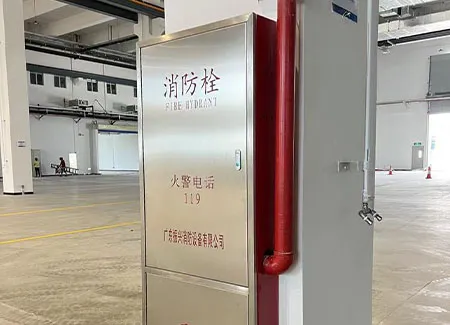
A fire extinguisher cabinet is a protective box used to store a portable fire extinguisher…
Profili realizzati male possono rallentare l'assemblaggio, indebolire le strutture e aumentare i costi a lungo termine. Quando…
Ti risponderemo entro 24 ore. In caso di emergenza, aggiungi WhatsApp/WeChat: +8613863639320,. Oppure chiama direttamente +8613863639320.
*Rispettiamo la tua riservatezza e tutte le informazioni sono protette.
Utilizzeremo le tue informazioni solo per rispondere alla tua richiesta e non invieremo mai email non richieste o messaggi promozionali.