











Entreprise
20 September 2026
Warehouse Racking Systems & Shelving Production Guide
Moving a warehouse shelving line from standard to custom profiles changes four things: too…
 10:20
10:20 Chenlong Technical Team | Corporate Technical Author | Published September 7, 2026
Roll forming machine design is driven by three interacting factors: how many roll stations the target profile needs, what the tooling is made from, and how fast the line can run without compromising forming accuracy. None of these get decided independently — changing one usually forces a tradeoff in the other two.
A common assumption is that roll forming machines come in standard sizes with a set number of stations. In practice, station count is a direct function of the target profile’s geometry — specifically, how many bend transitions it takes to get from flat strip to final cross-section without overstressing the material at any single bend.
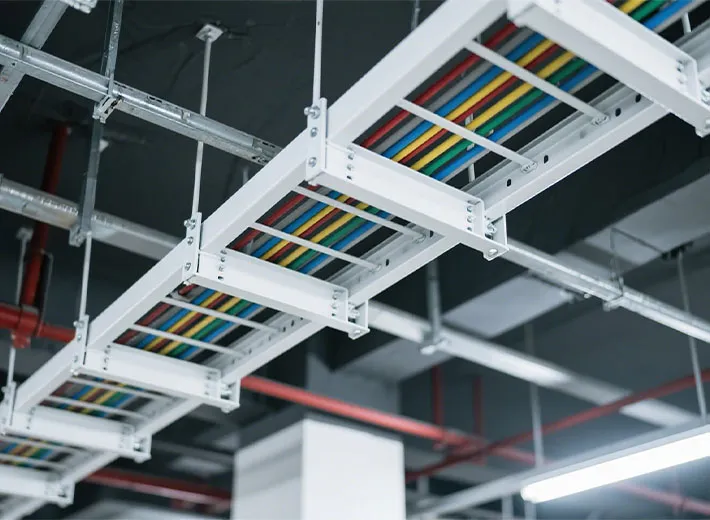
A simple open channel might need relatively few stations. A profile with multiple flange returns, an interlocking edge, or a tight radius needs more, because each additional bend transition has to be spread across enough stations to avoid cracking or excessive springback at the bend line. This is the same underlying logic that makes a chemin de câbles profile — which often has punched perforations and a formed lip — a different design problem than a plain C-channel purlin, even when both run on cold-formed steel coil.
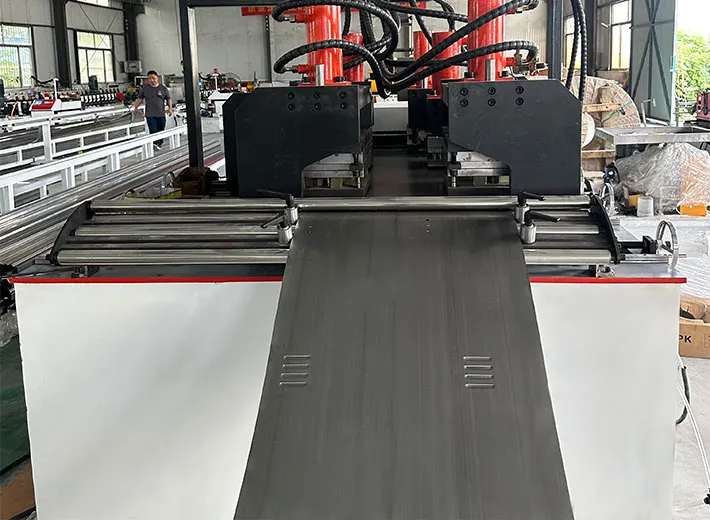
Engineers design the bend sequence — often called the roll flower or flower pattern — before deciding how many stations a line needs. Each station in the flower represents one incremental step in the bend progression, mapped out so that no single station tries to add too much bend angle at once. The flower pattern is genuinely its own design discipline, with enough depth that it deserves separate treatment beyond what fits here — we’re building a dedicated breakdown of flower pattern design and will link it from this page once it’s live. For now, the practical takeaway is that station count is a downstream result of flower design, not an input chosen independently of it.
Buyers researching “what are the rolls made of” often run into two separate answers depending on which part of the tooling they’re asking about, and vendor pages don’t always distinguish them clearly.
Forming roll material — the contoured rollers that do the actual bending — is typically a hardened tool steel selected for wear resistance under continuous contact with moving coil stock. Chenlong’s published product information does not list a specific forming roll steel grade; that detail is Not disclosed and would need to be confirmed directly for a given project.
Punching die material — for lines with inline punching — is a separate question with a published answer on Chenlong’s shelving production line: Cr12MoV, SKD11, or DC53, selected depending on the material being punched and the application. These are die steels for the punch station specifically, not the forming rolls themselves, and the two shouldn’t be assumed interchangeable when evaluating a quote.
| Tooling Component | Material Question | Status |
| Forming rolls (bend stations) | Steel grade for contoured rollers | Not disclosed — confirm per project |
| Punching dies | Steel grade for punch/die sets | Published for shelving line: Cr12MoV, SKD11, or DC53 |
Production capacity gets marketed as a headline number, but speed is actually a design output constrained by the other two factors above. More stations generally means more distance and more roller contact for the strip to pass through per cycle, which affects how fast the line can run before feeding accuracy or bend consistency starts to degrade. A line with published capacity in the 0–50 m/min range — the range Chenlong lists across several of its production lines — represents a configured ceiling for that specific tooling setup, not a universal number that applies regardless of profile complexity or material thickness.
This is also why increasing speed on an existing line isn’t simply a motor or drive setting. Running faster than the roll flower and station spacing were designed for tends to show up first as inconsistent bend angle or strip walk, before it shows up as an outright jam.
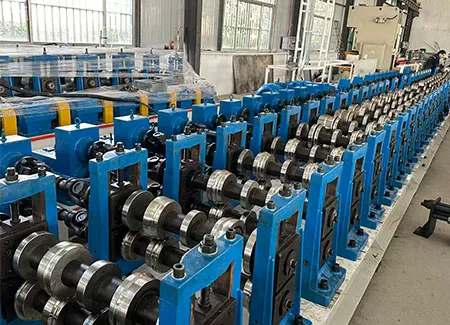
It’s tempting to read “more roll stations” as a proxy for a more sophisticated or higher-quality machine. That’s not necessarily true. A profile that genuinely needs 10 bend transitions to form without cracking requires roughly that many stations regardless of build quality — adding more stations than the flower design calls for doesn’t improve the result, it just adds unnecessary line length and cost. The number that matters is whether station count matches what the specific profile geometry requires, not whether it’s a large number.
Design decisions at the station and tooling level also carry safety implications, since more stations mean more pinch points and more locations where an operator might need access during tooling changes. ISO 12100:2010 sets out the general framework for identifying machinery hazards and reducing risk during both design and operation — relevant here because a station layout designed only for forming performance, without factoring in guard placement and access for tooling changeovers, creates safety gaps that are harder to retrofit after the machine is built than to design in from the start.
Two suppliers quoting the same profile can legitimately arrive at different station counts and still both be correct, depending on their flower design approach and tooling steel choices. Rather than comparing station count as a standalone number, ask each supplier to walk through why their design uses that count for your specific profile — the answer should reference your bend geometry, not a generic “more stations, more precision” claim.
A: Generally yes, since more stations mean more tooling, more line length, and more drive components. But the right comparison is whether the count matches your profile’s bend complexity, not which quote has the higher number.
A: It’s the mapped-out sequence of incremental bends each roll station applies, planned before station count is finalized. It’s a distinct enough topic that it deserves its own detailed explanation — we’ll link that here once it’s published.
A: Not necessarily, and vendor pages don’t always specify. Published die steel information (Cr12MoV, SKD11, DC53) applies to punching dies specifically; forming roll steel grade should be confirmed separately per project.
A: Not reliably. Speed is constrained by the station layout and flower design the line was built for. Pushing speed beyond that design tends to degrade bend consistency before it causes an outright failure.
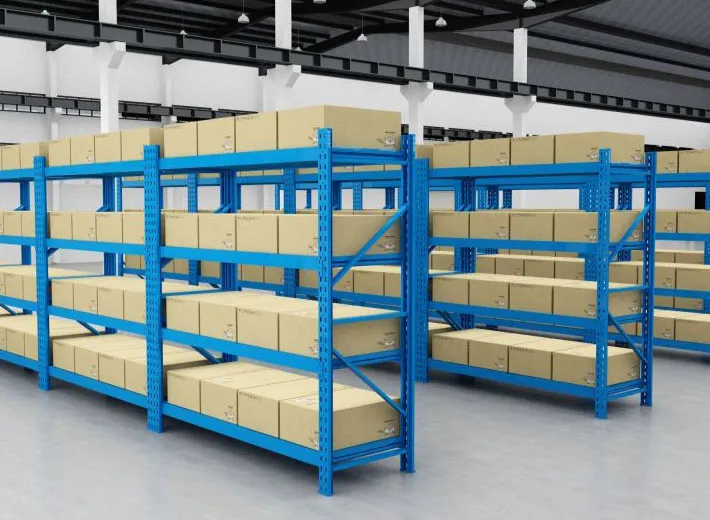
Moving a warehouse shelving line from standard to custom profiles changes four things: too…
Chenlong’s roof and wall panel line is a factory-based automated roll forming system…
Nous vous répondrons dans les 24 heures. En cas d'urgence, veuillez ajouter WhatsApp/WeChat : +8613863639320,. Ou appelez directement +8613863639320.
*Nous respectons votre confidentialité et toutes les informations sont protégées.
Nous n'utiliserons vos informations que pour répondre à votre demande et n'enverrons jamais de messages électroniques ou promotionnels non sollicités.