











Empresa
20 September 2026
Warehouse Racking Systems & Shelving Production Guide
Moving a warehouse shelving line from standard to custom profiles changes four things: too…
 15:16
15:16 EV charger brands face a real problem: demand is rising, but weak enclosure quality can cause water ingress, poor heat control, slow assembly, and costly returns. A better manufacturing process solves this before the charger reaches the site.
An EV charger enclosure is the protective metal housing around an electric vehicle charger. It protects electrical components, cable interfaces, control systems, and user panels from weather, dust, tamper risk, and daily outdoor use. For OEM brands, choosing the right enclosure process, material, and automated production line improves safety, appearance, delivery speed, and long-term product stability.
Um EV charger enclosure is more than a metal box. It is the first protection layer for the charger, the user, and the internal electrical components. When a charging device is installed in parking lots, factories, public areas, residential communities, or a roadside charging station, the enclosure must protect the inside parts from dust, rain, heat, impact, and repeated operation.
For electric vehicle charging, the enclosure also affects brand image. A clean, strong, high-quality enclosure makes the EV charger look reliable before the buyer even opens the panel. A weak enclosure does the opposite. It can bend, rust, leak, overheat, or create poor cable management. That is why many OEM brands now treat enclosure design as a key part of the charger product, not as an afterthought.
From our experience in automated metal profile processing, the best enclosure projects usually start with three questions: Where will the charger be installed? What electrical layout will go inside? How many units must be produced each month? These questions help define the material, installation method, hole positions, seam design, coating, lockable structure, and final assembly process.
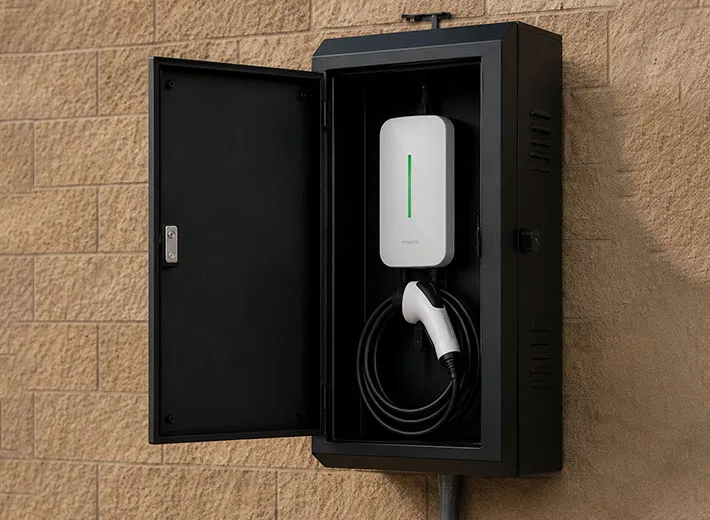
The basic manufacturing process for an EV charger enclosure includes design review, material selection, cutting, bending or forming, punching, weld processing, surface treatment, assembly, and inspection. For low-volume projects, many factories use semi-automatic steps. For larger OEM orders, automation becomes more important because it improves repeat accuracy, reduces labor costs, and keeps the enclosure size stable.
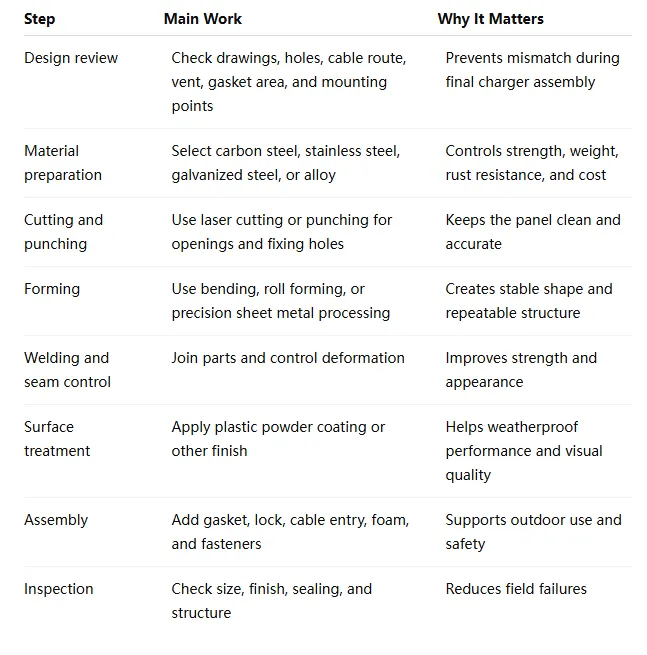
For an electric vehicle charger, small errors can create large problems. If a hole is 2 mm off, the control board may not fit. If the seam is uneven, water can enter. If the panel has deformation, the door may not close well. This is why high precision production equipment matters.
The right enclosure material depends on the charger market, installation environment, target price, and brand position. There is no single best material for every EV charger enclosure. A residential wall-mounted charger may need a compact and light enclosure, while a commercial EV charging station may need a stronger cabinet with more space for electrical components and better cooling.
Common material options include:
For many EV charger projects, the decision is not only about material price. Buyers also need to think about yield strength, material thickness, forming stability, surface quality, and how the material behaves during bending or forming. A strong steel sheet may look good on paper, but if the forming process is not controlled, cracks, springback, or panel deformation may appear.
As a production line partner, Chenlong pays attention to the full process. We study the cross-section, profile production speed, and part tolerance before recommending the equipment plan. That approach helps OEM customers produce high-quality enclosures with fewer rejects and less downtime.
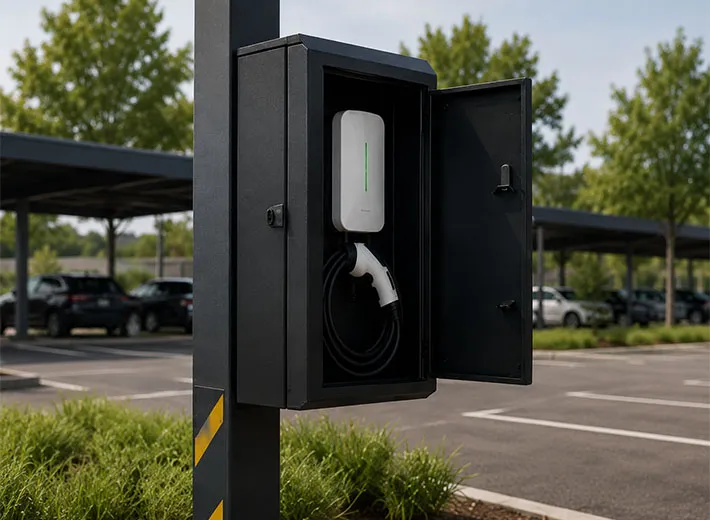
Customization is not only about changing the color or logo. In EV charger enclosure manufacturing, customization options can include material, door structure, hinge position, cable outlet, coating texture, lock type, cooling holes, internal brackets, control systems mounting, and packaging style. These details help the charger match the buyer’s market.
For residential products, the enclosure should be neat, safe, and easy to install. The buyer may want a smooth front panel, small size, and simple cable storage. For commercial EV projects, the enclosure may need thicker material, stronger mounting, better service access, and space for communication modules.
OEM customers often ask us to customize production lines around their own drawings. This is common when they already have a charger brand, but need faster and more stable enclosure output. A custom EV charger project may require special hole positions, branded faceplates, or designed enclosures for a unique product family.
In our work with metal profile processing and automated systems, we often see one hidden buyer need: repeatability. A sample enclosure can look good. But can the factory repeat it 5,000 times with the same quality? That is the real test. Automation helps make that possible.
Cold roll forming is a continuous metal forming process. It bends metal step by step through rollers, instead of forming the full shape in one hit. For EV charger enclosure projects, it can help produce long profiles, frames, brackets, side rails, mounting channels, and structural parts with good consistency.
Chenlong specializes in high-precision cold bending forming equipment and customized automated production lines. Our background includes metal cold roll forming, sheet cold roll forming, frame roll forming, door frame forming, cable tray production, racking system profiles, drywall profiles, wall panel profiles, standing seam metal roof profiles, trapezoidal profiles, c channel steel, and cz purlin solutions. This experience helps us understand how to control deformation, material thickness, yield strength, seam quality, and production speed.
Some buyers may know us from projects such as c purlin roll forming machine systems, roll forming machine c solutions, steel roll forming equipment, or roll forming making machine production lines. The same core idea applies to EV charger enclosure manufacturing: form the metal accurately, reduce manual handling, and improve throughput.
Cold forming can also support:
This is not just about one machine. It is about processing technology, machine factory experience, and the ability to connect cutting, forming, punching, transfer, and inspection into a practical production system.
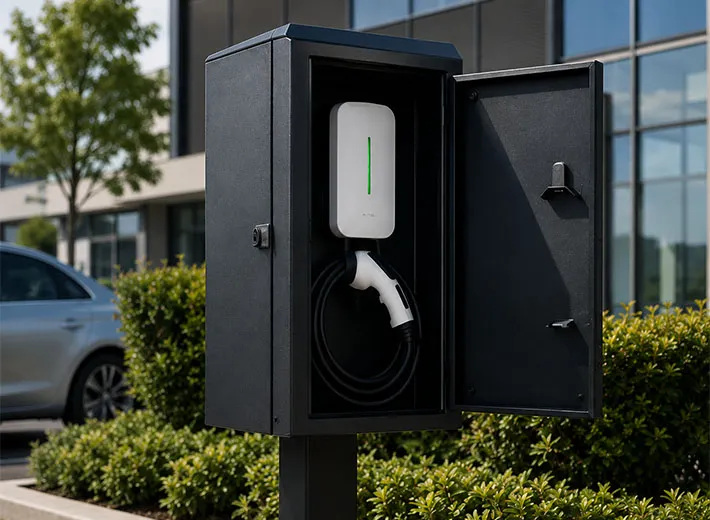
An outdoor EV charger enclosure must deal with rain, dust, sunlight, heat, wind, and user contact. The enclosure should protect the charger, but it should also allow safe heat control. If the internal temperature rises too much, the charger may reduce power or stop working. That is why ventilation, vent design, and excellent heat dissipation matter.
A good outdoor enclosure balances sealing and cooling. Too many openings can reduce weatherproof protection. Too few openings can trap heat. Designers often use protected vents, internal airflow paths, or heat dissipation structures to support optimal performance. The goal is simple: keep the inside parts protected while allowing the charger to operate safely.
Safety is also physical. Public outdoor EV charging equipment may face vibration, impact, tamper attempts, and rough use. The enclosure should have a strong door, secure lock, smooth edges, and reliable grounding points. For an outdoor ev charging project, these details can reduce service calls and protect the brand reputation.
A useful way to think about enclosure risk:
Weak sealing → water ingress → electrical fault → service cost
Poor forming → bad fit → door gap → lower protection
Bad cooling → overheat → power reduction → poor user experience
Low accuracy → slow assembly → labor waste → delayed delivery
Small design choices can decide whether a charger performs well for years or causes repeated field problems.
Weifang Chenlong Intelligent Technology Co., Ltd. is a high-tech company based in Shandong, China. We focus on high-precision cold bending forming equipment and customized automated production lines. For EV charger enclosure manufacturing, our role is to help manufacturers, distributors, and OEM partners build efficient, stable, and scalable production systems.
We do not see an enclosure as only a part. We see it as a production challenge. The customer needs stable shape, clean holes, strong seams, good coating preparation, easy assembly, and reliable output. That is why we combine advanced equipment, automation, and practical engineering support.
Chenlong can support customers in areas such as:
For buyers comparing factory price only, the cheapest line may look attractive. But if it causes deformation, slow setup, high scrap, or unstable output, the real cost becomes much higher. A better line should reduce labor, improve throughput, protect quality, and help the factory deliver chargers on time.
Um EV charger enclosure is the outer housing that protects the charger’s electrical components, control system, cable entry, user interface, and internal structure. It helps protect the charger from dust, rain, impact, tamper risk, and daily outdoor use.
The best material depends on the market and installation environment. Carbon steel is cost-effective. Stainless steel offers better corrosion resistance. Galvanized steel balances cost and rust protection. Alloy may help reduce weight or improve heat transfer in special charger designs.
IP65 is often used for outdoor electrical products because it indicates dust-tight protection and resistance to water jets. However, the final choice depends on local rules, charger design, cable entries, gasket quality, and installation conditions. Do not use IP65 as a replacement for full product testing.
What is the difference between a residential and commercial EV charger enclosure?
Residential ev charger enclosures are usually smaller, lighter, and easier to install. A commercial EV charger enclosure may need a stronger structure, more service space, better heat control, and stronger protection for public use.
Chenlong mainly provides high-precision cold bending forming equipment and customized automated production lines. We help enclosure manufacturers, EV charger brands, distributors, and OEM partners build efficient production systems for metal enclosure parts and related profiles.
Automation improves repeat accuracy, reduces labor costs, increases throughput, and helps avoid deformation or unstable assembly. For OEM production, automation makes it easier to manufacture enclosures in large batches with consistent quality.
The EV charger market is growing, but growth also brings pressure. Buyers expect safe products, clean design, weatherproof protection, stable charging, and fast delivery. The enclosure plays a major role in all of these.
A strong EV charger enclosure starts with good design. But it becomes real through the right manufacturing process, material control, forming technology, and production equipment. For OEM brands and enclosure factories, the question is no longer, “Can we make this box?” The better question is, “Can we produce this enclosure accurately, repeatedly, and profitably?”
That is where Chenlong can help. With experience in cold bending forming equipment, automated production lines, and metal profile processing, Weifang Chenlong Intelligent Technology Co., Ltd. supports global manufacturers that want more efficient, customized, and scalable production solutions.
If you are planning a new EV charger enclosure project, upgrading your current production line, or developing a customized EV charger product family, Chenlong can review your production needs and help design a practical automated solution.
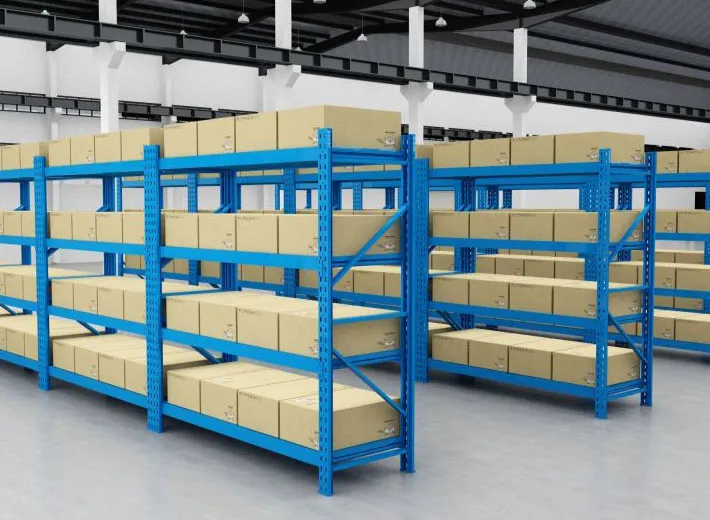
Moving a warehouse shelving line from standard to custom profiles changes four things: too…
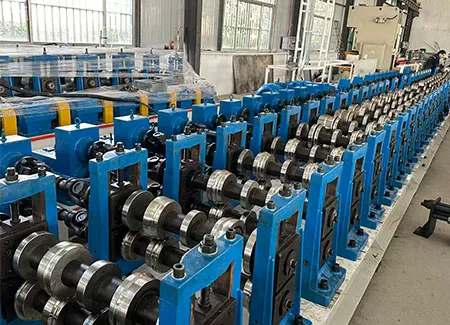
Chenlong’s roof and wall panel line is a factory-based automated roll forming system…
Responderemos dentro de 24 horas. Para casos urgentes, adicione WhatsApp/WeChat: +8613863639320. Ou ligue diretamente para +8613863639320.
*Respeitamos sua confidencialidade e todas as informações estão protegidas.
Usaremos suas informações apenas para responder à sua consulta e nunca enviaremos e-mails não solicitados ou mensagens promocionais.