


Empresa
18 November 2026
Temporary Power Distribution Boxes: Uses and Sourcing Guide
A temporary power distribution box is a portable enclosure that takes one incoming supply …
 14:52
Poorly designed pallet racks waste space, slow forklift operations, and increase the risk of damaged goods. As inventory grows, these problems become more serious. Choosing the right heavy duty pallet racks helps create safer, more efficient storage while making better use of available warehouse space.
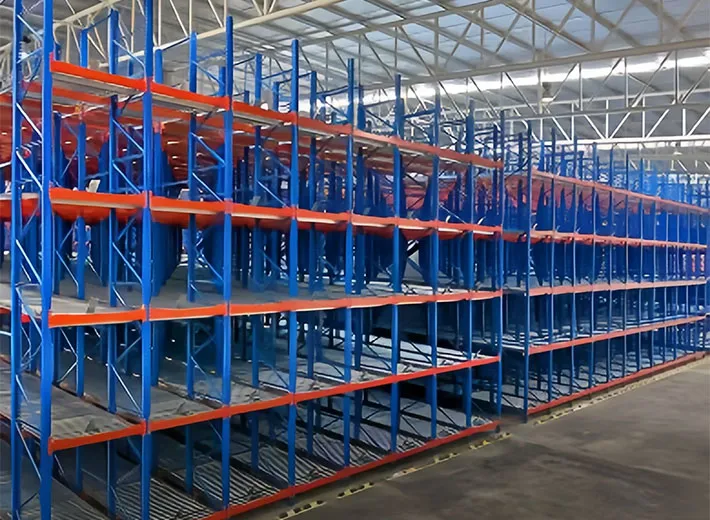
Heavy duty pallet rack systems are engineered steel structures designed to store palletized goods on multiple levels. The best system depends on pallet size, maximum load, forklift access, storage density, building height, and safety requirements. Common options include selective, teardrop, drive-in, flow, and cantilever storage systems.
Heavy duty pallet racks are industrial steel storage structures that hold large or heavy palletized products in multiple levels above the floor. A typical pallet rack uses vertical upright frames, horizontal beams, connectors, braces, footplates, and anchors to create organized storage positions.
These systems are widely used in distribution centers, manufacturing plants, logistics facilities, wholesale businesses, and industrial warehouses.
Unlike ordinary warehouse shelving, a heavy-duty pallet rack is normally loaded with a forklift or other suitable material handling equipment. It must carry concentrated pallet loads while resisting forces from loading, movement, and normal operations.
Common rack applications include:
A complete rack system should provide stable storage, suitable access, and sufficient capacity for the intended operation.
However, the term “heavy duty” does not describe a universal load rating. The capacity depends on the complete engineered design, including material grade, member geometry, connections, anchorage, frame height, and load arrangement.
For manufacturers, these requirements begin with the quality of the steel profiles used to build the rack.
Na Weifang Chenlong Intelligent Technology Co., Ltd., we develop cold-formed steel profiles for warehouse shelving and industrial racking to support manufacturers producing uprights, beams, and related storage components.
Different pallet rack systems serve different inventory and handling requirements.
The most common systems include selective racking, drive-in storage, pallet flow, push-back storage, and mobile rack arrangements.
| Rack type | Main advantage | Typical application |
| Porta-paletes seletivo | Direct access to individual pallets | General distribution and mixed inventory |
| Teardrop pallet rack | Adjustable beam positions | Flexible warehouse storage |
| Drive-in rack | High storage density | Large quantities of similar products |
| Pallet flow rack | First-in, first-out movement | Date-sensitive or high-volume inventory |
| Push-back rack | Multiple pallets stored in depth | Dense storage with fewer aisles |
| Estrutura cantilever | Open-front loading | Long and irregular materials |
| Mobile pallet rack | Reduced fixed aisle requirements | Space-constrained facilities |
A standard pallet rack often uses a selective configuration because operators can access each pallet position without moving other stored goods.
This makes selective systems suitable for warehouses with many SKUs, frequent picking, and regular product changes.
A deep pallet storage arrangement may offer greater density, but it normally reduces direct access. Some systems also require specialized forklifts or operating procedures.
Before choosing between these storage solutions, buyers should review inventory turnover, handling equipment, available floor space, and future growth.
A system with maximum storage density may not provide the fastest picking speed. The best storage system balances capacity, accessibility, operating efficiency, and safety.
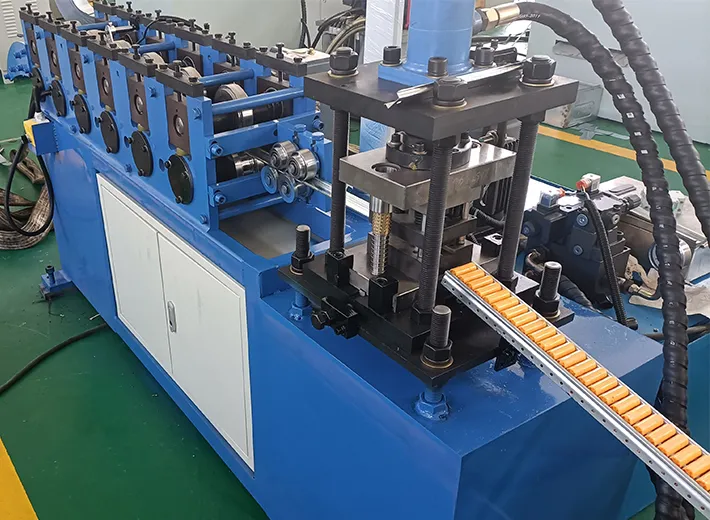
A heavy-duty pallet rack depends on several structural components working together.
Its performance does not come from one thick beam or one reinforced upright.
A complete assembly commonly includes:
| Componente | Função | Important consideration |
| Upright frames | Carry vertical and horizontal loads | Steel grade, bracing, and frame height |
| Pallet rack beams | Support pallet loads | Span, section shape, and connection strength |
| Beam connectors | Join beams to uprights | Compatibility and locking devices |
| Bracing | Stabilizes the upright frame | Geometry and attachment |
| Baseplates | Transfer forces into the floor | Size, thickness, and anchorage |
| Anchors | Secure the structure to the floor | Engineering and substrate conditions |
| Wire decking | Supports specified loads and loose items | Deck rating and beam compatibility |
| Steel decking | Provides a formed metal support surface | Material and load rating |
| Pallet supports | Help support pallet placement | Design and load position |
| Column guards | Reduce impact exposure | Location and protection design |
Upright frames
The upright is a central structural element.
Its cross-section, thickness, punched holes, steel grade, and bracing arrangement influence the complete frame performance.
Manufacturers must control straightness, twist, slot position, and dimensional accuracy.
Pallet rack beams
A beam connects two upright columns and supports the stored load.
Common designs include step beams, box beams, and other formed steel sections.
The correct beam must match the expected pallet load, span, connector arrangement, and complete engineered configuration.
Wire decking and steel decking
A deck provides a surface beneath stored goods.
Wire decking can help support approved loads and reduce the risk of small objects falling through an open level. The exact deck rating and compatibility must be verified.
Steel decking may offer a more continuous surface, but its design must account for the stored load and applicable fire-protection requirements.
Neither deck type should be treated as an automatic replacement for properly designed pallet supports.
Rack accessories
Common pallet rack accessories include row spacers, pallet stops, column protectors, load signs, safety locks, anchors, shims, and protective barriers.
These components help the rack is built into a complete, properly configured storage assembly.
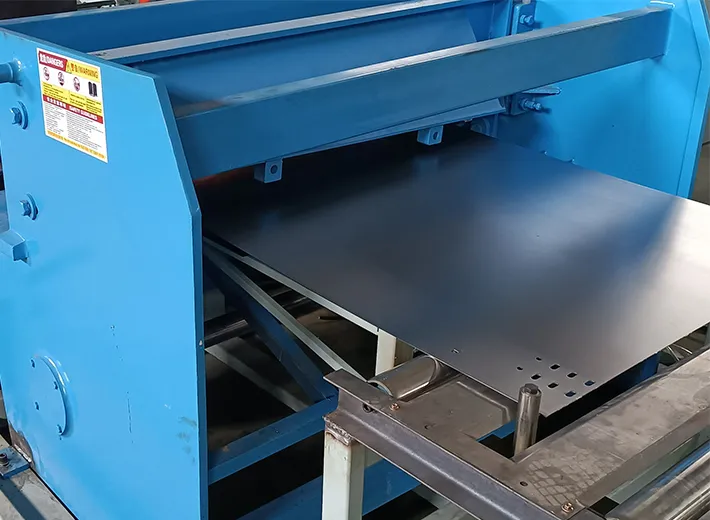
Selecting the correct capacity begins with a complete inventory survey.
Buyers need the size and weight of each stored unit, the maximum pallet load, pallet dimensions, load distribution, and the number of pallets stored at each level.
The heaviest load should be included in the design review, not merely the average product weight.
Important information includes:
Illustrative storage calculation
Suppose a planned bay holds two pallets per beam level, with each pallet weighing 1,000 kg.
The combined stored goods weight on that level is:
2 pallets × 1,000 kg = 2,000 kg
This is only a planning value. It does not establish a safe beam rating or permitted bay load.
The engineered design must also consider load placement, load distribution, connection behavior, the pallet itself, frame loading, anchorage, and applicable design factors.
Planning pallet positions
A pallet position is a location intended to hold a specified unit load.
If a layout contains 40 bays, each with two pallet positions per level and three usable levels, the theoretical number of positions is:
40 × 2 × 3 = 240 pallet positions
Actual usable storage depends on the approved rack design, clearances, operating constraints, and pallet dimensions.
A good layout should not simply fill every open area.
The objective is to provide safe and efficient access while making practical use of floor space.
For a full warehouse, the plan should also consider receiving, staging, packing, dispatch, pedestrian movement, and equipment maintenance.
A selective system is not always the best choice.
Facilities that handle large quantities of similar inventory may need high-density storage systems.
Drive-in rack systems
A drive-in rack allows a forklift to enter the storage structure and place pallets along a lane.
This reduces the number of aisles and increases storage density.
It works best when the operation stores large quantities of similar goods and can manage the reduced selectivity.
However, drive-in operation requires careful control of forklift movement and the condition of the storage structure.
Pallet flow systems
A flow rack uses rollers or wheels arranged on a slope.
Loads enter from one side and move toward the picking side under controlled conditions.
This can support first-in, first-out inventory handling.
Flow systems require additional engineering for the rollers, brakes, guides, frames, and pallet characteristics.
Cantilever rack systems
A cantilever rack is designed for long or irregular materials such as pipes, lumber, steel profiles, and structural sections.
Instead of placing loads between front uprights, cantilever arms extend from vertical columns.
This provides open-front access for long items that would be difficult to store in standard pallet structures.
For manufacturers, cantilever components follow different profile and connection requirements from selective pallet frames.
The correct racking solution depends on product shape, handling method, load requirements, and available building space.
The performance of a finished rack begins with accurate metal components.
Many manufacturers use cold roll forming to produce uprights, beams, shelf profiles, braces, and support channels.
The process shapes metal strip through a series of roller stations.
Each station gradually changes the cross-section until the final profile is complete.
A typical production process includes:
Upright production often requires repeated slots or connector openings.
The hole pattern must remain accurate so the beams can be installed at the intended levels.
Beam production requires consistent cross-sections, cut lengths, and connection surfaces.
Accurate beams and frames help simplify assembly and reduce dimensional variation between production batches.
At Weifang Chenlong Intelligent Technology Co., Ltd., we specialize in high-precision cold bending forming equipment and customized metal profiles.
Nossa perfis de aço conformados a rolo para prateleiras de armazém e estruturas porta-paletes industriais support manufacturers that need repeated upright, beam, shelving, and structural components.
Manual fabrication can work for small batches, but separate punching, cutting, forming, and handling stages may slow large orders.
An integrated line connects these processes and improves repeatability.
Da Chenlong linha de produção automática para estantes de armazém e supermercados can integrate feeding, leveling, punching, roll forming, cutting, and receiving operations according to customer requirements.
Potential benefits include:
Weifang Chenlong Intelligent Technology Co., Ltd. is a high-tech equipment manufacturer based in Shandong, China.
We specialize in precision cold bending forming equipment, customized automated production lines, and metal profile manufacturing.
Our products serve manufacturers, distributors, and OEM partners in warehouse storage, electrical equipment, construction, new energy, and industrial structural applications.
We can review projects involving:
Our warehousing field production equipment and profiles provide options for different manufacturers.
Our engineering approach
We start with the product drawing and the intended manufacturing process.
Then we review material grade, thickness, profile geometry, hole position, forming sequence, cutting requirements, and output targets.
This helps determine whether the customer needs:
The goal is to improve production consistency and efficiency without adding unnecessary equipment.
For buyers planning a new rack product or factory expansion, a detailed engineering discussion is more useful than a general machine catalog.
Enviar Chenlong your upright and beam drawings, steel specifications, punching patterns, and production targets for a customized manufacturing review.
What is the difference between heavy-duty pallet racks and warehouse shelving?
Heavy-duty pallet systems normally hold palletized products loaded by forklifts. Shelving systems commonly store cartons, bins, tools, and smaller products handled by hand.
What is a teardrop pallet rack?
A teardrop design uses specially shaped openings in upright columns and matching beam connectors. It allows adjustable beam positions, but compatibility must be verified between manufacturers.
Is wire decking necessary for every pallet rack?
No. The required deck or pallet support arrangement depends on load conditions, pallet construction, the rack design, and applicable requirements. Wire and steel decking must be rated and compatible with the intended configuration.
Can used pallet racking be safely reused?
It may be reused after appropriate condition assessment and engineering verification. Damaged components, missing load information, and incompatible parts must be addressed before installation or loading.
What is the best pallet rack system for high-density storage?
Drive-in, push-back, pallet flow, and mobile systems can provide high-density storage. The correct choice depends on inventory rotation, product variety, forklift access, and operating requirements.
Can Chenlong manufacture custom pallet rack profiles?
Yes. Chenlong develops cold-formed metal profiles and production equipment based on customer drawings, materials, tolerances, and output requirements. The final rack assembly still requires suitable engineering and validation.
Choosing the correct storage equipment begins with clear load data, product dimensions, forklift requirements, floor conditions, and layout planning.
For manufacturers, quality begins even earlier—with precise upright profiles, stable beams, accurate punching, and repeatable forming.
A rack designed for demanding warehouse applications must combine structural performance with practical manufacturing and assembly.
At Chenlong, we help manufacturers turn drawings into reliable production processes through customized cold forming equipment and precision metal profiles.
Whether you are developing a new heavy-duty pallet rack product, increasing output, or improving an existing forming process, our engineering team can evaluate the requirements.
Entre em contato com a Chenlong with your profile drawings, steel grade, thickness range, punching pattern, cut lengths, annual production volume, and desired automation level.
We will review your project and propose a manufacturing solution built around your real production goals.
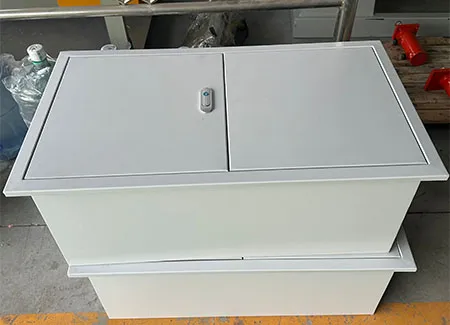
A temporary power distribution box is a portable enclosure that takes one incoming supply …
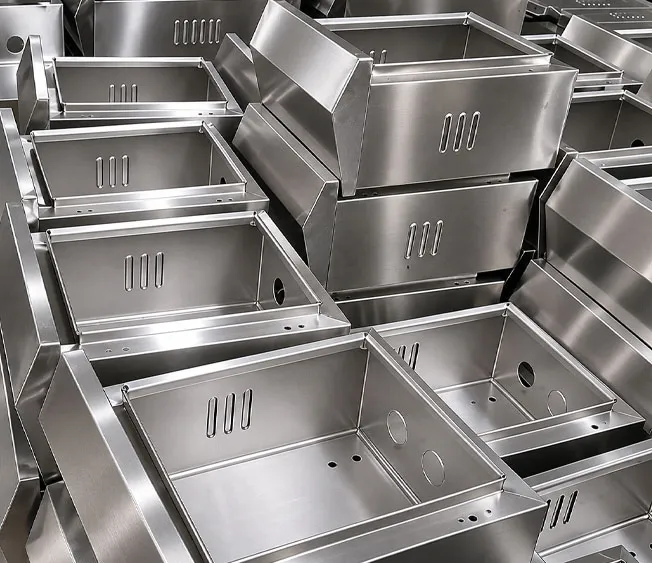
Seven electrical panel board types explained for cabinet and switchgear manufacturers, plu…
Responderemos dentro de 24 horas. Para casos urgentes, adicione WhatsApp/WeChat: +8613863639320. Ou ligue diretamente para +8613863639320.
*Respeitamos sua confidencialidade e todas as informações estão protegidas.
Usaremos suas informações apenas para responder à sua consulta e nunca enviaremos e-mails não solicitados ou mensagens promocionais.