











Company
20 September 2026
Warehouse Racking Systems & Shelving Production Guide
Moving a warehouse shelving line from standard to custom profiles changes four things: too…
 11:19
11:19 Chenlong Technical Team | Corporate Technical Author, Weifang Chenlong Intelligent Technology Co., Ltd. | Published: September 2026
Most searches for a roll forming machine for sale return used-equipment listings. Used lines cost less and ship sooner, but arrive tooled for someone else’s profile. New lines are engineered around your drawing and carry a build lead time. The right choice depends on whether your cross-section matches what is already out there.
Information current as of August 2026. Chenlong builds new custom lines and does not operate a used-equipment marketplace, so take the used-machine section below as an inspection checklist rather than a sales pitch — the checks are the same ones our engineers run when a customer asks us to evaluate a second-hand line.
Search results for “roll former for sale” or “roll forming line for sale” mix three markets that have almost nothing in common.
Used equipment listings on marketplaces and dealer sites. Fast to buy, priced against scrap and location as much as against capability, and almost always sold with the tooling of whatever the previous owner was making.
Stock standard machines, usually small or portable units for common building profiles such as roofing panels or light framing sections. Ready to ship, fixed capability, no engineering involved.
Custom-engineered lines built around a specific profile drawing. This is what Chenlong makes, and it is the category where the phrase “for sale” is least accurate — nothing is sitting in a warehouse waiting for a buyer.
Deciding between them is mostly a question about your part, not about your budget.
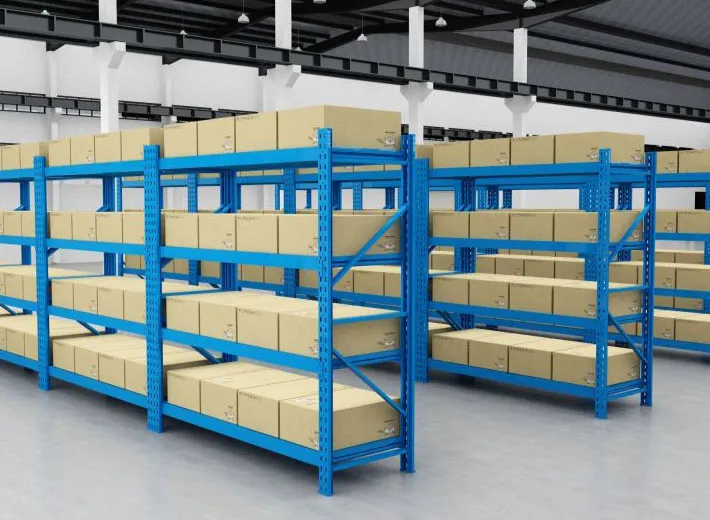
| Dimension | Used line | New custom line |
| What you are buying | A machine plus the previous owner’s tooling | A machine engineered to your cross-section |
| Profile match | Only if your section matches theirs, or you re-tool | By definition |
| Time to first good part | Shipping and reinstall, then a debugging period of unknown length | Published build time, then installation, commissioning, first-article approval |
| Tooling status | Worn by an unknown amount; roll flower design usually undocumented | New, with the design held by the builder |
| Controls and software | Whatever generation the line was built with; may be unsupported | Current; servo feeder brand specifiable |
| Electrical supply | Built for the previous plant’s voltage and frequency | Configured to your local supply |
| Spare parts | Depends on whether the original builder still exists | From the builder, with the line |
| Conformity documentation | Travels with the machine only if the seller kept it | Prepared as part of the order |
| Engineering support when parts come out wrong | None, unless you contract it separately | The party that designed the pass sequence |
| Cash out at signing | Full amount, usually before shipping | 30% down, balance after inspection and before shipment |
The last row is worth reading twice. On used equipment, payment structure usually favours the seller entirely, and there is no inspection stage that you control.
A used line is the right answer more often than a manufacturer’s blog will normally admit.
If your required cross-section genuinely matches what the machine was built for — same profile family, similar thickness, similar width — you are buying working tooling along with the stands, and that tooling is the expensive part. A plant that finds a used line originally built for the same rack upright or the same tray section is buying at a discount that new equipment cannot match.
Used also works when the line is a capacity addition rather than a capability addition. You already run the profile, you already know the pass sequence, and your engineers can debug it. The risk that sinks most used purchases is unfamiliarity, and that risk is near zero when the buyer already makes the part.
Budget-constrained entry into a proven product is the third case: a plant testing whether a profile sells before committing to tooling. That reasoning is sound as long as everyone understands the used line is a pilot, not the eventual production asset.
Nine checks before you wire money for a used line
Checks 2 and 4 eliminate most listings on their own. If a seller cannot supply pass drawings and cannot let you measure parts from a live run, the purchase is a bet on photographs.
Chenlong’s published product pages list configurable ranges across several production lines: raw material width 10–2,000 mm, rolling thickness 0.2–10 mm, production capacity 0–50 m/min, with materials including SPCC, SPHC, SGCC, SUS, aluminum, and SECC. The shelving line additionally publishes motor power of 3–200 kW, voltage of 110–380 V customized to local supply, and punching die materials of Cr12MoV, SKD11, or DC53. Servo feeder options published across the cabinet, cable tray, and shelving lines include Yaskawa, Delta, and customized alternatives.
Read those as the envelope the equipment family covers, not as the specification of a delivered machine. A line quoted for 1.2 mm galvanized tray at a fixed width has stands, a drive, and tooling sized for that job. Treating a published range as a delivered capability is the single most common error when comparing quotations, and it also makes used listings look better than they are, since a listing that quotes a similar range is quoting the same kind of envelope.
Compared with the stock portable machines sold ready to ship, a custom line trades availability for fit: nothing is in stock, but nothing has to be worked around either. Specify the profile drawing, material grade and thickness, coil width and weight, required output in finished pieces per shift, punching pattern with pitch tolerance, and local supply voltage. Those six inputs determine the quotation more than anything else you can say.
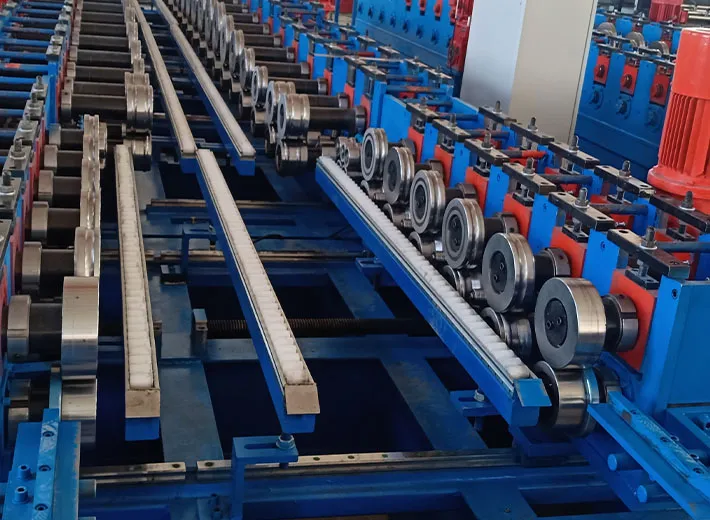
ISO 12100:2010, Safety of machinery — General principles for design — Risk assessment and risk reduction, published by the International Organization for Standardization, sets out the risk assessment framework normally applied to this class of equipment. It is assessed as an assembly, which is why a line that has been split up, moved, and reassembled by a third party raises questions that a standalone machine does not.
For the EU market, the European Commission states that Directive 2006/42/EC applies to machinery placed on the market before 20 January 2027, and that Regulation (EU) 2023/1230 replaces that framework from that date. For a new order this is a question about which framework your technical file will be prepared under — with a 40–60 business day build for custom equipment plus shipping and commissioning, an order placed now can land near that boundary. For a used line, it is a question about what documentation actually exists and whether the seller has it, which is check 8 above for a reason.
There is no price list for a custom line, and any figure quoted before your drawing is reviewed belongs to a different machine. Chenlong engineers each solution around the customer’s profile drawings, material specifications, product dimensions, required production speed, punching requirements, automation level, and line configuration, and issues pricing per project on quotation.
Published commercial terms:
Compare that structure against a used purchase before comparing the two prices. Paying 30% now and the balance after an inspection you attend is a materially different exposure from paying in full for a machine you have seen in a video.
A: No. Chenlong builds new equipment and custom-engineered production lines. The used-machine checks above are provided because customers ask us to evaluate listings, and the questions are the same regardless of who ends up supplying the line.
A: There is no reliable ratio, because used pricing tracks location, urgency, and the seller’s situation more than it tracks capability. Price the total instead: asking price, plus re-tooling if the profile does not match, plus dismantling and shipping, plus electrical conversion, plus the debugging period before the line produces sellable parts.
A: Sometimes, if the stand count, shaft diameter, and frame spacing suit your cross-section. Confirm this with an engineer before purchase rather than after — new roll sets for a section the line was never designed to make can approach the cost of a new line.
A: Add the published build time — 20–30 business days for standard equipment, 40–60 for custom — to shipping, installation, commissioning, and first-article approval. Plan the project from that total, not from the build figure alone.
A: Positioning repeatability at the punch, and the spare-parts network behind it. Yaskawa, Delta, and customized options are published for the cabinet, cable tray, and shelving lines, so a preferred brand can normally be specified at order stage. On a used line you take whatever is installed.
A: Sometimes. Chenlong describes a modular adjustable forming design on its cable tray line, intended to support different tray specifications. Sections that differ in width or depth are easier to accommodate than sections needing a different bend sequence.
A: Almost certainly not for your part. That style of figure describes what the equipment type can be built to cover. The delivered machine has a drive, stands, and tooling sized for one job, and running well outside that band is a different machine.
A: A dimensioned profile drawing with hole pattern and pitch tolerance, material grade and thickness, coil width and weight, target output in pieces per shift, the full range of profiles you intend to run, and your local voltage and frequency.
Chenlong Technical Team — Corporate Technical Author, Weifang Chenlong Intelligent Technology Co., Ltd.
The Chenlong Technical Team represents the company’s engineering and R&D expertise in cold roll forming equipment, customized automated production lines, tooling, and precision cold-formed steel profiles. Chenlong has been engaged in cold roll forming manufacturing since 2006 and operates in-house manufacturing facilities supported by CNC machining, tooling capabilities, custom engineering, and a professional R&D team. Its technical work covers warehousing and racking, electrical and energy equipment, fire protection, construction, automotive manufacturing, and customized industrial profile production, serving customers in more than 50 countries.
Moving a warehouse shelving line from standard to custom profiles changes four things: too…
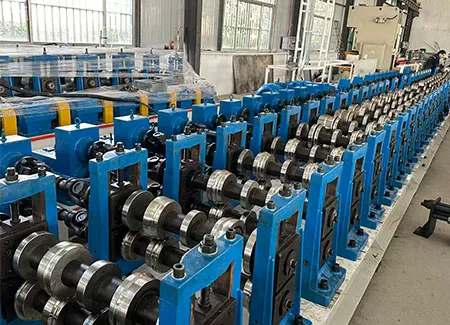
Chenlong’s roof and wall panel line is a factory-based automated roll forming system…
We will reply you within 24 hours. If for urgent case, please add WhatsApp/WeChat: +8613863639320,. Or call +8613863639320 directly.
*We respect your confidentiality and all information are protected.
We will only use your information to respond to your inquiry and will never send unsolicited emails or promotional messages.