











Company
02 September 2026
Warehouse Racking Systems and Warehouse Shelving: How to Choose the Right Storage Solution
Poor storage planning wastes floor space, slows picking, and increases product damage. The…
 13:43
13:43 A poorly planned power distribution box can cause repeated trips, unsafe cables, equipment damage, and lost working time. These risks rise when several crews share one supply. A properly specified portable power distribution system solves the problem by dividing electricity into controlled, protected circuits.
A power distribution box receives electricity from a generator, temporary service, or another approved source and divides it among several branch circuits. Choosing the right unit requires matching the voltage, phase, amperage, outlet configuration, environmental rating, connected load, and required protection to the job.
A power distribution box is an electrical assembly that receives electricity through a main input and sends it to several protected output circuits. It may be permanently installed in a factory or building, or designed as a movable unit for construction, maintenance, events, and emergency work.
A portable power distribution box normally connects to a generator, temporary service panel, or approved utility connection. Its internal components control how the available electricity reaches tools, lighting, pumps, welders, chargers, and other equipment.
Common names include:
A spider box usually has one main input and several outlets that extend power to different work areas. However, the name does not define a single technical specification. Voltage, current, connector design, environmental protection, and certification can vary between products.
A permanent distribution panel and a movable unit serve similar basic functions, but they operate under different conditions. Manufacturers producing these products can explore our cold-formed electrical cabinet and cable tray solutions for integrated equipment and profile manufacturing support. Portable equipment often faces rough transport, cable pulling, dust, water, vibration, and frequent reconnection. Its housing, frame, components, and wiring layout must account for those conditions.
To understand how a power distribution box works, follow the path of electricity. Current enters through an inlet or attached power cord. It then passes through the main disconnect and reaches a bus or other distribution point. From there, smaller protected circuits supply the connected equipment.
The basic flow is:
This is how well-designed distribution boxes work: they safely centralize and distribute power without allowing the conductors or connected components to carry more current than their ratings permit.
The unit does not create electricity or increase generator capacity. It only organizes the available supply. If the connected electrical load exceeds the upstream capacity, the system may trip, overheat, or become unstable.
For example, a 50A input does not mean every output can deliver 50A at the same time. The combined load must remain within the ratings of the cable, input connector, internal bus, protective devices, and primary power source.
Portable power distribution units are useful when permanent wiring is unavailable, incomplete, too far away, or unable to support a changing work area. They provide a controlled alternative to running many unplanned extension leads from one connection.
Typical applications include:
On construction sites, distribution boxes are used to supply several work zones from temporary service equipment. One circuit may support lighting, while other circuits serve drills, saws, pumps, chargers, or other power tools.
The same equipment may support emergency restoration after a power outage. A generator can provide backup power, while the distribution system divides the supply among selected loads. A qualified professional must still verify generator output, grounding, neutral configuration, cable capacity, and connection methods.
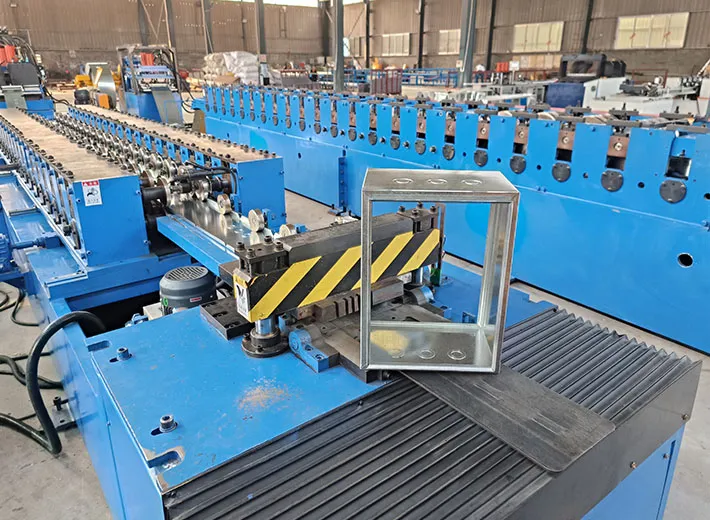
A useful power center is more than a steel cabinet with several sockets. Every component must suit the same voltage, phase, current, environment, and intended application.
| Component | Function | What the Buyer Should Verify |
| Inlet | Connects the box to its power source | Voltage, current, phase, and connector type |
| Main Breaker | Disconnects or protects the incoming power supply | Rating and compatibility |
| Branch Breaker | Protects an outgoing circuit | Correct sizing for the wiring and connected load |
| GFCI Device | Helps protect personnel against ground faults | Protected circuits and reset method |
| Receptacle | Connects tools and downstream equipment | Pin configuration, voltage, and current rating |
| Internal Bus | Distributes electrical current | Material, clearance, and capacity |
| Enclosure | Protects internal components | Environmental protection and impact rating |
| Labels | Identify circuits and operating limitations | Clarity, durability, and accuracy |
Important box features may include:
A 20 amp duplex outlet may serve smaller 120V tools. A 30A or 50A connection may supply larger equipment or another downstream unit. The correct choice depends on the load, not simply on which connectors are most popular.
For equipment intended for repeated transport, the housing also needs accurate openings, smooth edges, reinforced mounting points, and stable joints. Poorly formed parts can slow assembly, weaken seals, and create inconsistent product quality.
The ampere rating indicates the current a connection or circuit is designed to carry under stated conditions. Buyers must consider voltage and phase at the same time.
| Rating | Common Use | Main Consideration |
| 20A | Smaller tools, lights, and chargers | GFCI requirements and branch-circuit loading |
| 30A | Medium-capacity equipment or a downstream power feed | Connector, voltage, and cable compatibility |
| 50A | Main power input or higher-capacity output | Source capacity, conductor size, and total power demand |
Some systems combine 30A and 50A locking connections with several smaller branch outlets. In these designs, 30A and 50A twistlocks provide a more secure physical connection than a basic straight-blade plug. They do not, however, make incompatible voltage or wiring arrangements safe.
A simple power calculation helps buyers compare systems:
Single-phase: (P = V \times I)
Three phase: (P \approx 1.732 \times V \times I \times PF)
At 120V, a 20A circuit has a theoretical value of 2,400 watts. At 240V, a 50A single-phase circuit has a theoretical value of 12,000 watts. These values do not replace code requirements, safety margins, equipment instructions, or continuous-load rules.
Never connect equipment just because its plug fits. High voltages, incorrect phase arrangements, undersized conductors, and poor grounding can create serious hazards. Have a qualified person verify the complete electrical system before energizing it.
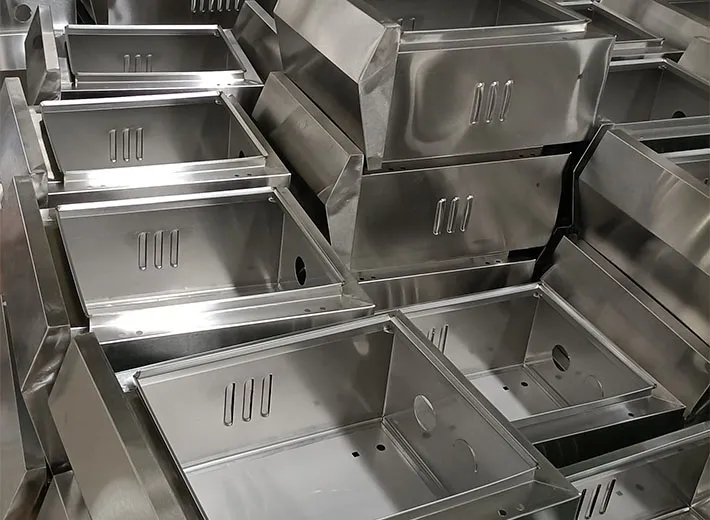
NEMA types describe degrees of protection against access to hazardous parts and defined environmental conditions. They are not general quality grades. Each rating represents a particular set of protection characteristics.
The official NEMA enclosure type guide includes Types 1, 3R, 4, 4X, 12, and others.
| NEMA Type | General Application Consideration |
| Type 1 | Basic indoor use |
| Type 3R | Indoor or outdoor use, including protection against falling rain |
| Type 4 | Indoor or outdoor environments involving water and windblown dust |
| Type 4X | Similar protection to Type 4, with additional corrosion resistance |
| Type 12 | Indoor industrial environments involving dust, dirt, and dripping liquids |
Do not assume that a sealed-looking cabinet is suitable for outdoor use. Hinges, gaskets, cable entries, outlet covers, latches, drainage, fasteners, and assembly methods all affect performance.
A unit used outside may face rain, mud, dust, sunlight, impact, and temperature changes. The rating must apply to the complete assembled product, not only to its empty metal casing.
Before specifying indoor and outdoor use, document:
A NEMA type and an IP rating are not automatically equivalent. They belong to different systems. Use the exact rating required by the destination market, application, and authority having jurisdiction.
Good portable power distribution starts with a load schedule. List every device that may operate, then record its voltage, phase, running current, starting current, plug type, and expected operating time.
| Connected Load | Voltage | Running Current | Starting Demand | Operating Pattern |
| Work lighting | 120V | 8A | Low | Continuous |
| Hand tools | 120V | 15A | Moderate | Intermittent |
| Pump | 240V | 18A | High | Cyclic |
| Welding equipment | Nameplate value | Nameplate value | Application-specific | Intermittent |
Motors, pumps, compressors, and welders may draw more current during startup than during normal operation. Power distribution solutions for welding must also consider duty cycle, grounding, input characteristics, connector type, and the equipment manufacturer’s instructions.
Use the following planning process:
The best power arrangement is not always the unit with the highest rating. Oversizing adds cost and weight. Poor circuit planning can still cause nuisance trips, even when the main input appears large enough.
If you need power from temporary power poles, verify the service voltage, grounding arrangement, current capacity, and permitted connection method. If you need to distribute power from temporary power equipment connected to a generator, also check its neutral configuration and operating instructions.
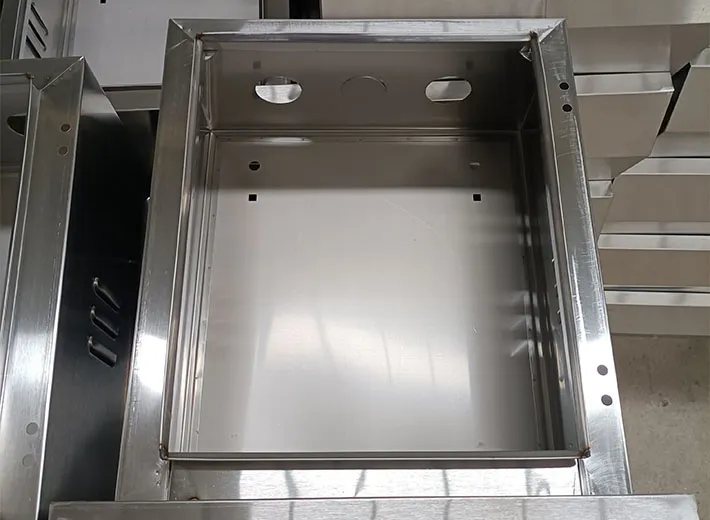
Choosing a power distribution box begins with the source and ends with the connected equipment. Terms such as dependable power and reliable power have little value unless the manufacturer provides clear technical ratings and verifiable test information.
UL has identified UL 1640 as a standard associated with portable power distribution equipment used on construction sites. Buyers should confirm the currently applicable standard, product category, and certification route for the exact design.
Do not claim a product is UL listed or write “the box is ETL approved” unless the exact finished model has a valid and verifiable certification. A certified component does not automatically certify the complete assembly.
For custom power distribution, provide a single-line diagram, load schedule, cabinet drawing, component list, operating environment, production quantity, and target market. This helps the supplier develop a solution tailored to your power distribution needs.
Demand for electrical infrastructure creates a second challenge: manufacturers must produce accurate box bodies, cabinet frames, mounting rails, reinforcing sections, and panels in repeatable volumes.
At Weifang Chenlong Intelligent Technology Co., Ltd., we specialize in high-precision cold bending forming equipment, customized automated production lines, and formed metal profiles. Our solutions support distribution box manufacturing, electrical cabinet manufacturing, cable tray production, and related structural equipment.
A customized electrical enclosure production line may integrate:
An integrated distribution cabinet production line can reduce repeated material handling and support stable dimensions across large batches. It is useful for manufacturers producing cabinet frames, door sections, back-panel profiles, breaker mounting structures, and reinforced edges.
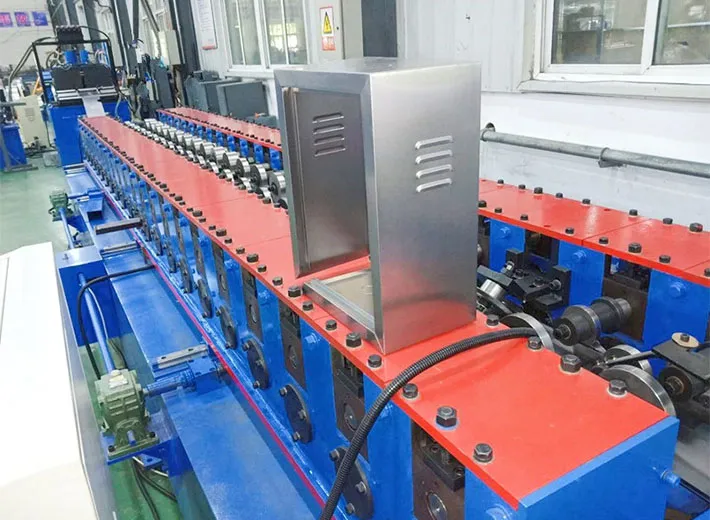
Consider an OEM that produces several electrical cabinet heights from the same basic frame design. Separate punching, measuring, cutting, and bending operations create queues and increase the risk of accumulated errors.
A customized roll forming machine can combine punching, forming, and cutting in a continuous workflow. The manufacturer may gain:
The exact benefits depend on the part design, metal grade, thickness, tolerances, speed, automation level, and existing factory process. We review these factors before recommending equipment.
Our cold forming solutions can be designed around:
Precise metal parts support efficient assembly, but the finished electrical product must still complete all required engineering, testing, and certification.
When you contact Chenlong, share your drawings, profile samples, raw material, thickness, punching pattern, tolerance, production speed, and planned annual output. We can then assess whether you need finished profiles, a standalone forming machine, or a complete automated production line.
Its purpose is to receive electricity from an approved source and divide it among several controlled circuits. The system helps organize multiple connections and provides appropriate overcurrent, fault, and disconnection functions.
It can only do so when the generator output, voltage, phase, connector, grounding arrangement, cable, and distribution equipment are compatible. Follow the manufacturers’ instructions and applicable electrical rules.
No. A 50A system offers greater current capacity only when the source and all connected components support it. A 30A design may be lighter, more economical, and fully suitable for smaller power needs.
No. They address different hazards. One mainly protects wiring and equipment from excessive current, while the other responds to certain ground-fault leakage conditions that can endanger people.
Not unless the complete product has the environmental rating required for the location. Outdoor suitability depends on the housing, seals, cable entries, covers, fasteners, drainage, and assembled construction.
We need the finished part drawing, profile cross-section, metal type, thickness, hole pattern, tolerance, production volume, required speed, and desired automation level. We also need to understand whether the line will produce one profile or several related products.
The right power distribution box begins with clear electrical requirements. Efficient production begins with accurate components, repeatable forming, and a process designed around the finished product.
For manufacturers, distributors, and OEM partners, Chenlong provides customized cold roll forming equipment and high-precision metal profiles for electrical boxes, distribution cabinets, cable trays, and related products.
If your current process requires repeated measuring, separate punching, heavy manual handling, or too many disconnected machines, we can help you evaluate a more integrated approach.
Contact Weifang Chenlong Intelligent Technology Co., Ltd. with your profile drawings, material specifications, punching plan, and production target. Our engineering team will assess your requirements and propose a practical, scalable power distribution solution for your manufacturing goals.
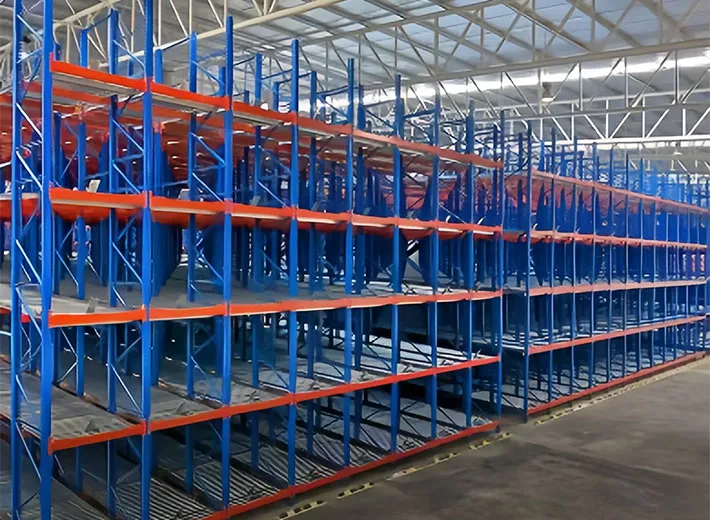
Poor storage planning wastes floor space, slows picking, and increases product damage. The…
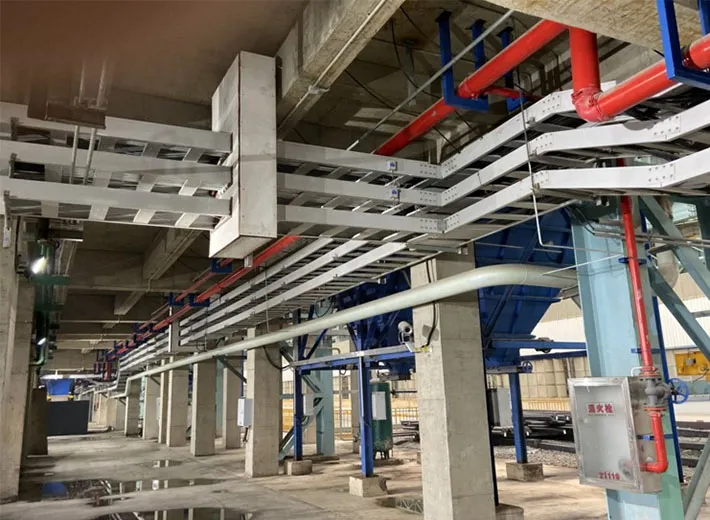
Loose electrical lines create blocked access, poor airflow, slow maintenance, and higher d…
We will reply you within 24 hours. If for urgent case, please add WhatsApp/WeChat: +8613863639320,. Or call +8613863639320 directly.
*We respect your confidentiality and all information are protected.
We will only use your information to respond to your inquiry and will never send unsolicited emails or promotional messages.