


Company
18 November 2026
Temporary Power Distribution Boxes: Uses and Sourcing Guide
A temporary power distribution box is a portable enclosure that takes one incoming supply …
 17:12
Chenlong Technical Team | Corporate Technical Author, Weifang Chenlong Intelligent Technology Co., Ltd. | Published: November 2, 2026 | Last reviewed: November 2, 2026
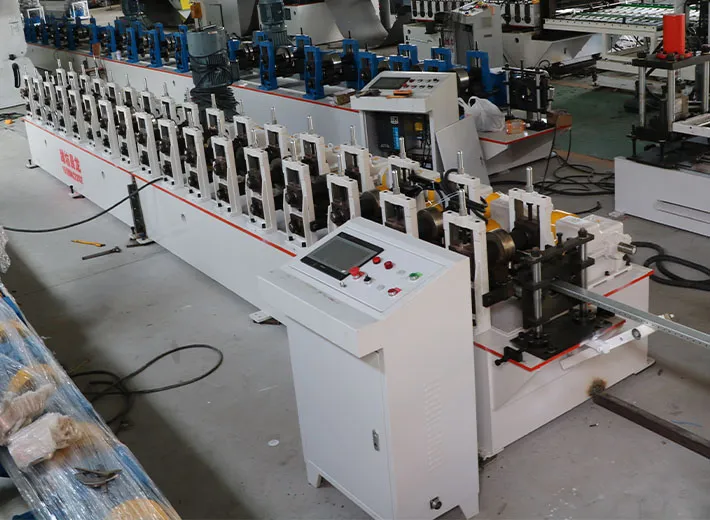
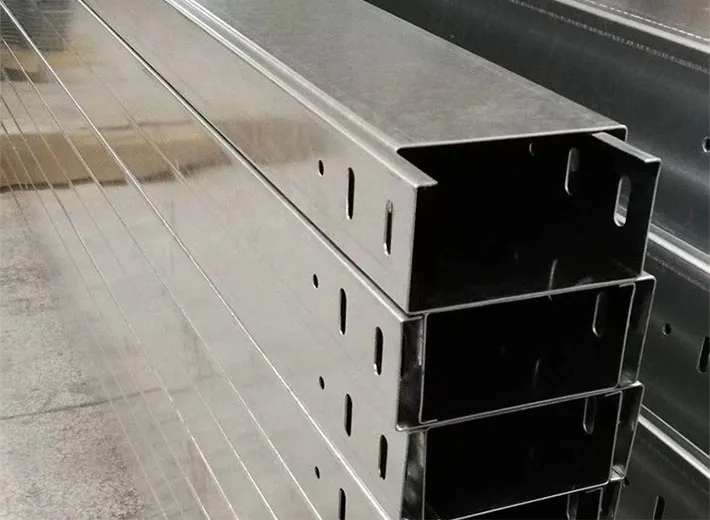
A cable tray roll forming line turns steel or aluminum coil into finished tray sections by feeding, punching, roll forming and cutting strip in one continuous flow. Chenlong’s cable tray line is configurable for 10–2,000 mm strip width, 0.2–10 mm thickness and 0–50 m/min, and lists SPCC, SPHC, SGCC, SUS, aluminum and SECC as compatible materials.
A complete line is a chain of machines, and the cable tray product page only describes part of that chain. Knowing which stations are listed for the cable tray line, and which come from Chenlong’s general equipment-component catalog, makes quotations easier to compare.
Steps 3, 4 and 5 are what the cable tray page specifically describes. Steps 1, 2, 6 and 7 are configured per project, so ask for them to be named line by line in any quotation.
This is the core reference table. The middle column contains only what Chenlong publishes for the Cable Tray Cold-Forming Equipment Production Line.
| Parameter | Published for Chenlong cable tray line | What to specify in your RFQ |
| Raw material width | 10–2,000 mm | Flat (developed) width of each tray size you plan to run |
| Rolling thickness | 0.2–10 mm | The actual thickness band of your tray range, not the maximum you might ever need |
| Production capacity | 0–50 m/min | Required output at your real hole pattern and cut length |
| Materials | SPCC, SPHC, SGCC, SUS, aluminum, SECC | Grade, coating and yield strength of the coil you buy |
| Servo feeder | Yaskawa, Delta or customized | Brand preference tied to your local service and spare-parts access |
| Punching | Inline punching supported | Hole drawings, pitch and whether punching must change with tray size |
| Forming design | Modular, adjustable for different tray specifications | Number of tray widths and heights you need from one line |
| Tray types listed | Tray-type, ladder, perforated, solid-bottom, channel-type | Which of these you produce now and plan to add |
| Forming tolerance | Not published for this line | Ask for a stated tolerance on width, height and hole position |
| Motor power / voltage | Not published for this line | Your factory supply voltage and frequency |
| Punching die material | Not published for this line | Ask which tool steel is proposed for your material |
| Price | Project quotation only | See the pricing section below |
The Most Common Misreading: Treating the Range as One Machine
Published ranges such as 0.2–10 mm and 10–2,000 mm describe what Chenlong can configure, not what one line does at once.
A line built to roll 1.0 mm perforated tray at high speed and a line built for heavy channel-type sections at the thick end of the range use different roll stand counts, shaft sizes, drive power and punching tonnage. As thickness rises, forming load rises with it, and line speed usually comes down. A supplier that quotes “0.2–10 mm, 50 m/min” for a single machine without qualification is giving you a catalog headline, not a specification.
What this means in practice:
Chenlong lists five cable tray families for this line. Each one puts pressure on a different part of the configuration.
| Tray type | What drives the line configuration | Question to raise with the supplier |
| Perforated tray | Hole pattern, punch speed, die wear | Is the punch press matched to the line speed you need? |
| Solid-bottom tray | Flatness of the base, edge forming | How is base flatness checked at acceptance? |
| Tray-type (trough) | Side wall height range, flange returns | Which heights are covered by the adjustable design? |
| Ladder tray | Side rails and rungs are separate profiles | Are rung production and rail-to-rung joining in scope, or only the side rails? |
| Channel-type | Narrow, often heavier sections | Is a separate, smaller line more economical than adapting a wide tray line? |
Ladder trays catch many first-time buyers out. The roll formed part is usually the side rail; rungs are made and joined separately. If welding is required, Chenlong’s component catalog includes CNC laser welding machines, but whether joining is part of your line must be written into the quotation.
Compared with the dedicated single-size cable tray machines common in marketplace listings, which are built around one tray width and height, a modular adjustable line trades a higher upfront configuration effort for fewer separate machines.
| Dimension | Fixed-size dedicated line | Size-adjustable modular line (Chenlong’s described approach) |
| Tray sizes per line | One profile | Multiple widths/heights within the designed range |
| Changeover | None needed; new size means new line or new roll set | Adjustment and, where needed, punching tool changes |
| Best fit | One high-volume tray size running for years | A catalog of tray sizes with mixed order volumes |
| Main risk | Idle machine if demand for that size drops | Changeover time and setup discipline on the shop floor |
| What to verify | Speed and tooling life | Changeover procedure, time per change, tolerance after each change |
Neither option is better in every plant. A manufacturer shipping one standard tray size to a single distributor gains little from adjustability. A manufacturer quoting project-specific tray sizes every week usually does.
Chenlong does not publish a price range for the cable tray line. Every line is quoted per project, based on your profile drawings, material specification, product dimensions, required production speed, punching requirements, automation level and line configuration.
The commercial terms Chenlong does publish on its Service page apply company-wide:
| Term | Published value |
| Payment methods | T/T, L/C |
| Deposit | 30% upon order confirmation |
| Balance | After inspection, before shipment |
| Standard equipment lead time | 20–30 business days |
| Custom equipment lead time | 40–60 business days |
| Expedited production | May be available for urgent orders |
A cable tray line with adjustable forming and project-specific punching will normally fall under the custom lead time. Confirm which category your line is quoted under.
Chenlong’s About Us page states ISO9001, CE and SGS approvals at company level. The cable tray product page does not publish certificate numbers, issuing bodies, validity dates, certification scope or CE Declaration of Conformity details. If your customers or local authorities need these, request them in writing before order confirmation.
Two external references are worth knowing:
That second point has a timing consequence right now. A custom line ordered in late 2026 with a 40–60 business day lead time, plus ocean freight, may reach an EU buyer close to or after January 20, 2027. Ask the supplier which framework the conformity documentation will be prepared under, and agree on it in the contract. This is a compliance question for your own advisers, not something to assume.
Strong fit when:
Limitations to weigh honestly:
Sending these up front shortens the quotation cycle and makes quotes from different suppliers comparable.
When the quotation comes back, check that every item above is answered by name. Anything left as “standard” deserves a follow-up question.
Q: What thickness can Chenlong’s cable tray roll forming line handle?
A: The published configurable range is 0.2–10 mm. A specific line is built for the thickness band of your tray range, so state the band you actually produce in your RFQ.
Q: How fast does a cable tray roll forming line run?
A: Chenlong publishes a production capacity of 0–50 m/min for this line. Actual finished output depends on punching density and cut length, so ask for the speed at your own hole pattern.
Q: Can one line make perforated, ladder and solid-bottom trays?
A: The line page lists tray-type, ladder, perforated, solid-bottom and channel-type trays and describes a modular adjustable forming design. Which combination one line covers is decided at the quotation stage based on your drawings.
Q: What materials are supported?
A: SPCC, SPHC, SGCC, SUS, aluminum and SECC are listed for the cable tray line.
Q: How much does a cable tray roll forming line cost?
A: Chenlong does not publish a price. Lines are quoted per project based on drawings, materials, dimensions, speed, punching, automation level and configuration.
Q: What is the lead time?
A: Chenlong’s Service page states 20–30 business days for standard equipment and 40–60 business days for custom equipment, with expedited production possibly available.
Q: Is the line CE marked?
A: Chenlong states CE approval at company level. Certificate numbers, scope and Declaration of Conformity details are not published on the product page; request them directly, and confirm whether documentation follows Directive 2006/42/EC or Regulation (EU) 2023/1230 for your delivery date.
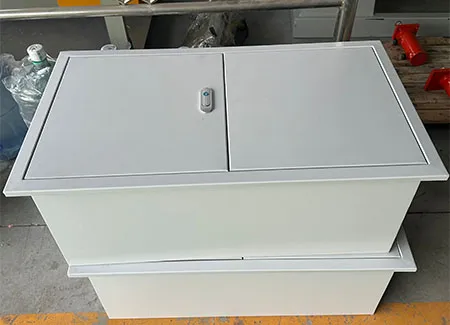
A temporary power distribution box is a portable enclosure that takes one incoming supply …
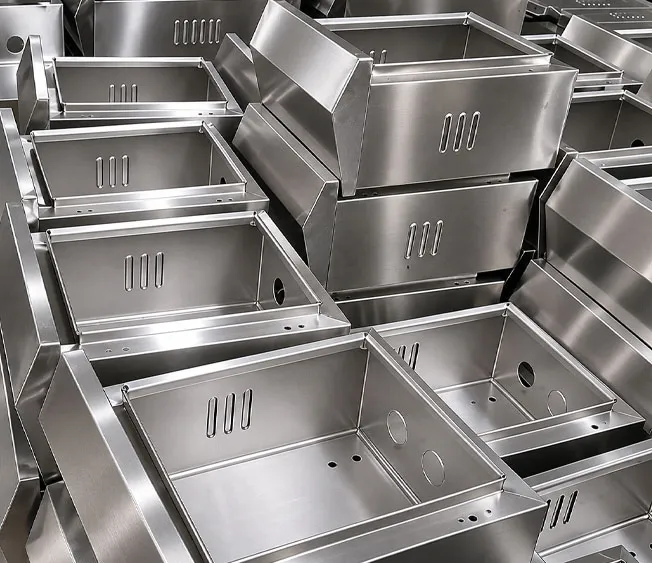
Seven electrical panel board types explained for cabinet and switchgear manufacturers, plu…
We will reply you within 24 hours. If for urgent case, please add WhatsApp/WeChat: +8613863639320,. Or call +8613863639320 directly.
*We respect your confidentiality and all information are protected.
We will only use your information to respond to your inquiry and will never send unsolicited emails or promotional messages.