











Azienda
20 September 2026
Warehouse Racking Systems & Shelving Production Guide
Moving a warehouse shelving line from standard to custom profiles changes four things: too…
 11:43
11:43 A weak or poorly fitted fire extinguisher cabinet can block access, corrode, or fail to protect vital equipment. In an emergency, small design faults become serious problems. The right casing, door, material, mounting method, and manufacturing process help keep fire extinguishers visible, secure, and accessible.
A fire extinguisher cabinet casing is a metal or plastic enclosure designed to hold and protect portable extinguishers. It may be surface-mounted, semi-recessed, or fully recessed. Correct selection depends on extinguisher size, wall depth, indoor or outdoor use, corrosion exposure, visibility, access, architectural design, and applicable fire safety requirements.
A fire extinguisher cabinet casing is the enclosure that surrounds and supports a portable extinguisher. It normally includes a body or tub, front trim, cabinet door, hinge, handle, catch, lock option, glazing panel, and mounting features.
The casing helps organize equipment and protect it from dust, impact, moisture, misuse, and daily building traffic. It can also help the extinguisher fit more neatly into an architectural wall system.
Le applicazioni comuni includono:
The casing itself does not put out a fire. It must hold a correctly selected and maintained extinguisher while allowing quick access during an emergency.
The terms fire extinguisher covers and cabinet casings are sometimes used together, but they can describe different products. A cover may be a lightweight protective shell or bag, while a casing is normally a more rigid enclosure with a body and door.
At Weifang Chenlong Intelligent Technology Co., Ltd., our focus is not the extinguishing agent or pressure cylinder. We develop customized forming equipment and metal components for manufacturers that produce fire protection enclosures, cabinet casings, doors, frames, and related profiles.
Portable fire extinguishers must remain easy to locate and reach. In busy buildings, exposed units may be struck by carts, equipment, luggage, tools, or other objects. Dust, moisture, sunlight, and unauthorized handling may also affect their condition.
A suitable cabinet can help:
A casing should not make the extinguisher difficult to find or remove. NFPA 10 addresses the selection, installation, inspection, maintenance, and testing of portable fire extinguishers so that they can work as intended. Project teams should confirm the adopted edition and local requirements. See the official NFPA 10 standard information.
OSHA also requires workplace extinguishers to be mounted, located, and identified so they remain readily accessible. Installation teams can review OSHA’s portable extinguisher placement guidance.
Good fire safety planning considers more than the box. It includes extinguisher type, quantity, location, travel distance, signs, mounting height, visibility, routine inspection, employee training, and evacuation procedures.
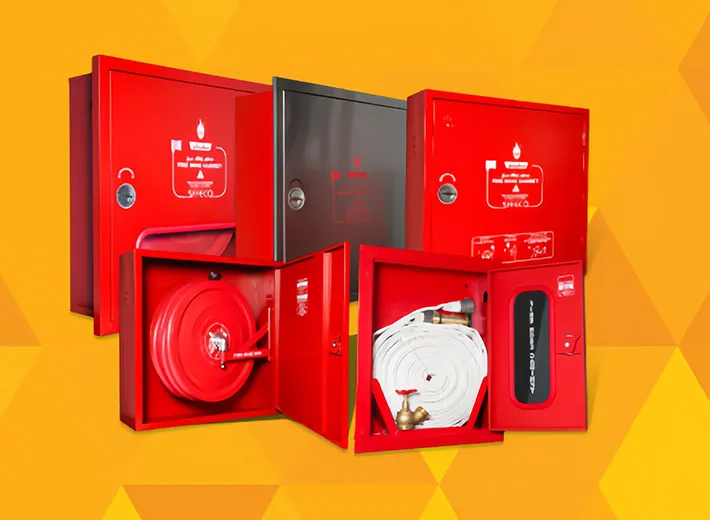
The three main installation styles are surface-mounted, semi-recessed, and fully recessed. Each type affects wall preparation, interior space, accessibility, appearance, and manufacturing details.
| Mounting Style | Costruzione | Typical Application | Main Consideration |
| Surface-Mounted | The entire cabinet body is installed on the wall surface | Solid walls or projects requiring simple installation | The cabinet projects into the corridor |
| Semi-Recessed | Part of the cabinet body is recessed into the wall | Walls with moderate cavity depth | Requires a balance between projection and recess depth |
| Fully Recessed | The cabinet body is installed inside the wall cavity | Projects requiring a clean architectural finish | Requires sufficient wall depth and careful coordination |
| Flush Design | The door and trim sit nearly flush with the wall surface | High-end interior projects | Requires precise wall openings and accurate trim alignment |
A surface-mounted unit is often easier to install because it does not require a deep wall opening. It can be useful on concrete, block, or existing walls where cutting a large recess is impractical.
A semi-recessed design places part of the tub inside the wall. This reduces projection while avoiding the full depth needed for a completely recessed model.
A fully recessed casing offers a clean appearance, but it needs early coordination with framing, wall services, fire barriers, and structural elements. A recessed unit must not weaken or improperly penetrate a required wall assembly.
A flush cabinet usually uses carefully aligned trim and door construction. Accurate flush cabinet doors help create a smooth wall appearance, particularly in hotels, offices, hospitals, and other finished interiors.
Before choosing a mounting style, check:
One design will not fit every building. The manufacturer should offer an adjustable product range or several casing depths to suit different projects.
The casing material affects strength, weight, appearance, corrosion resistance, forming method, and price. Common choices include steel, stainless steel, aluminum, and plastic.
| Material | Suitable Environment | Main Benefit | Important Check |
| Painted Steel | General indoor environments | Strong and economical | Coating quality and edge protection |
| Galvanized Steel | Humid or industrial environments | Improved corrosion protection | Zinc coating and cut-edge treatment |
| Stainless Steel | Coastal, washdown, or premium environments | Excellent corrosion resistance and appearance | Stainless steel grade and surface finish |
| Alluminio | Lightweight architectural applications | Low weight and clean appearance | Alloy grade, material thickness, and finish |
| Molded Plastic | Certain outdoor or lightweight applications | Corrosion resistance | UV stability and impact strength |
A painted steel casing can provide a strong, sturdy enclosure for general indoor projects. The finish should cover formed surfaces evenly and resist chips that may expose the base metal to rust.
A stainless steel casing suits locations where cleaning, humidity, salt, or chemicals may damage ordinary painted metal. Buyers searching for stainless steel fire extinguisher cabinets should confirm the stainless grade, sheet thickness, surface treatment, welding, and expected exposure.
An aluminum fire extinguisher cabinet can reduce installation weight and support a modern architectural appearance. Some designs use clear anodized aluminum for the trim or door frame. Anodizing can improve surface consistency and corrosion resistance, but the final performance still depends on alloy, thickness, processing, and environment.
A plastic fire extinguisher box may use an injection-molded enclosure. Some suppliers describe high-impact polystyrene construction or another engineering plastic. For outdoor use, buyers should ask about UV resistance, temperature range, impact behavior, sealing, and long-term color stability.
Plastic is naturally resistant to rust, but that does not make every plastic cabinet suitable for sunlight, extreme cold, industrial chemicals, or heavy-duty service.
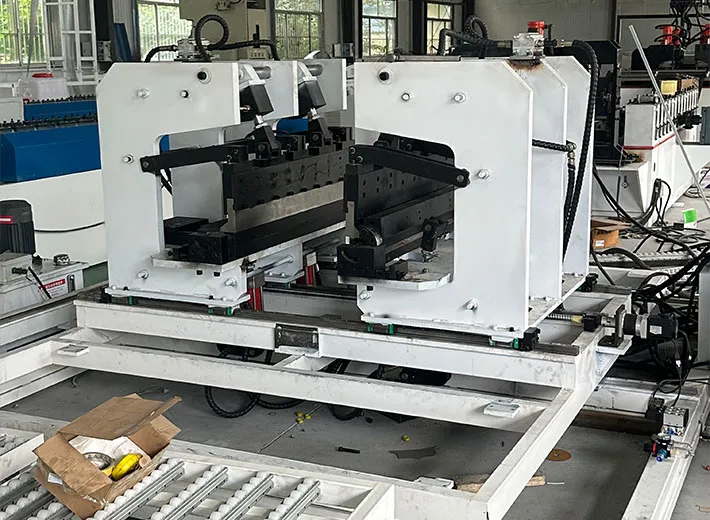
The door is the main point of access. It must open correctly, remain aligned, provide useful visibility, and withstand normal building use.
Una completa armadio per estintori door may include:
A clear door or transparent window helps occupants see the extinguisher. Acrylic is common because it is lightweight and easier to process than glass. The selected acrylic thickness should resist normal impact without making emergency access difficult.
A cylinder lock can help control unauthorized access, but a locked design must still follow applicable emergency-access requirements. The key should be managed according to the site’s safety plan. Never add a lock merely to stop casual use without considering access during a fire.
Some metal designs use a zinc-plated handle and roller catch. The roller holds the door closed during normal service while allowing it to open when needed. Hardware material and coating should match the indoor or outdoor environment.
Door and frame alignment matters. A poorly formed body can cause the door to rub, swing open, or fail to close. Accurate door and trim construction helps keep gaps consistent and supports a professional finished appearance.
The words fire rated and fireproof require care. A metal cabinet is not automatically fire rated simply because it is made from steel. A fire-resistance rating normally belongs to a tested assembly evaluated under a defined standard and installation condition.
A recessed cabinet installed within a rated wall may affect that wall’s performance. Some cabinet products use tested construction or protective features intended for rated wall assemblies. The buyer must review the exact product documentation, listing, wall design, and local code requirements.
Do not make unsupported claims such as:
A cabinet manufacturer should clearly distinguish:
A fire rated wall is a complete system. Cutting a recess into it without proper planning may reduce its intended protection.
This is also why a fire extinguisher casing should not be confused with safety cabinets for flammable liquids. A flammable storage cabinet serves a different purpose and follows different construction and compliance requirements.
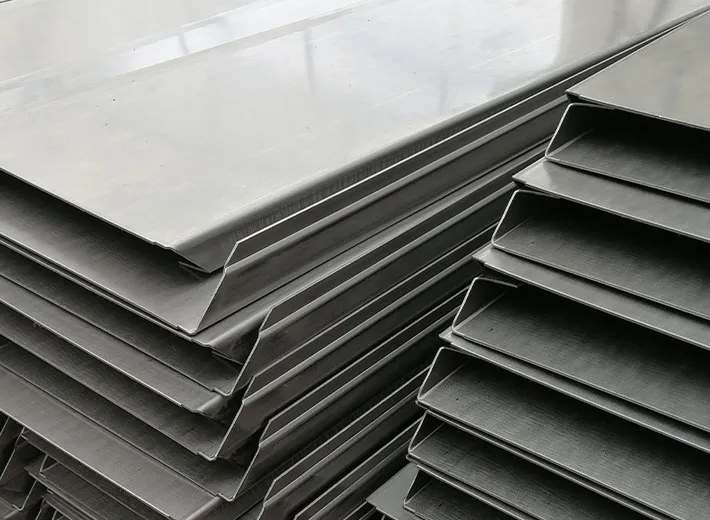
A casing must provide enough room for the selected extinguisher without wasting wall space. Measure the cylinder, valve, hose, handle, base, label, and any projecting parts.
Important dimensions include:
The extinguisher should enter and leave the enclosure without catching on the door, frame, shelf, or hardware. It must remain upright and secure during normal use.
Different fire extinguishers may use water, foam, dry chemical, carbon dioxide, wet chemical, or other approved agents. Their shapes and sizes vary. A casing designed for one extinguisher should not be assumed to fit another unit with the same nominal capacity.
Manufacturers may offer small, medium, large, or adjustable casings. Custom production becomes valuable when an OEM customer needs a special cylinder size, wall depth, door style, trim width, or branding requirement.
A buyer should send the manufacturer:
This information helps the supplier produce the correct enclosure rather than forcing the extinguisher into an unsuitable standard box.
Correct installation keeps the casing level, accessible, and firmly attached. The installer should follow the approved drawings, product instructions, project specifications, and applicable rules.
Before mounting the unit, confirm:
A casing should not obstruct a corridor or become hidden behind furniture, stored goods, doors, or decorations. People should be able to identify and reach the fire extinguisher quickly.
Routine inspection should look for:
The cabinet should remain clean and secure, but emergency access must not be unnecessarily restricted. If a unit is installed outdoors, inspect its seals, drainage, UV exposure, coating, and mounting hardware more often.
The building’s wider fire prevention plan should also cover alarm systems, escape routes, evacuation procedures, emergency lighting, training, and regular extinguisher service.
A cabinet for portable fire equipment is not the same as ordinary storage cabinets. It has a defined safety purpose and must preserve access to emergency equipment.
General storage units may hold tools, supplies, cleaning products, or documents. They are not automatically suitable for fire extinguishers.
Likewise, a flammable-liquid cabinet is not a fire extinguisher enclosure. Flammable-liquid storage cabinets are designed to store certain hazardous liquids under applicable safety requirements. They use specialized construction, labeling, doors, sills, and ventilation provisions.
Never store unrelated products inside an extinguisher casing. Boxes, tools, cleaning materials, or documents may block the equipment and cause confusion during an emergency.
Some buyers compare products from established cabinet brands, including JL Industries, while developing specifications. Brand references can help identify a door style or mounting category, but an OEM should still define the actual dimensions, material, hardware, performance, and compliance requirements rather than copying a brand name alone.
A metal casing may require cutting, punching, roll forming, bending, joining, welding, surface finishing, hardware assembly, and inspection. The production route depends on the body design and order volume.
Typical metal components include:
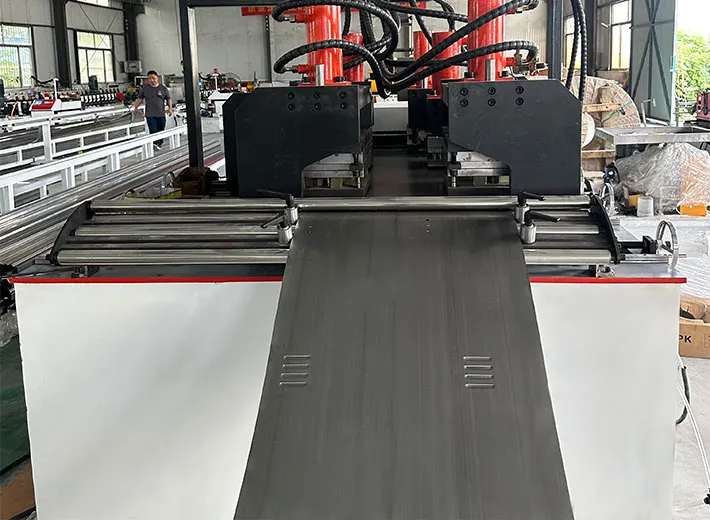
The manufacturer may begin with sheet or metal coil. Online punching creates mounting holes, ventilation openings, hardware positions, or connection features. Forming equipment then shapes edges, flanges, channels, and reinforcement sections.
Cold bending is useful for long and repeated profiles. It can create accurate door frames, trim parts, body edges, supports, and other casing components without heating the material.
At Weifang Chenlong Intelligent Technology Co., Ltd., we review the complete profile rather than only its outside shape. We study material behavior, bend sequence, hole position, dimensional tolerance, connection surfaces, and final assembly.
Illustrative manufacturing case
Consider a manufacturer producing recessed fire equipment casings in three heights. Workers currently cut individual sheets, punch each hole, bend every edge on a press brake, and measure the parts by hand.
The process can create several problems:
A customized forming line can connect feeding, leveling, punching, forming, cutting, and receiving. This makes repeated dimensions easier to control and can reduce unnecessary material transfers.
An automated cold forming line turns metal coil into repeated casing profiles or components. The exact configuration depends on the product drawing.
A typical line may include:
Chenlong’s automatic cold roll forming machine for fire protection cabinet casings is developed for repeated production of cabinet profiles, frames, panels, and enclosure parts.
Potential advantages include:
The actual output depends on material, thickness, product shape, punching pattern, cut length, automation, and changeover method. A complex custom casing may still require downstream bending, welding, or hardware assembly.
Automation should support the real production process. It should not add unnecessary equipment that makes operation and maintenance harder.
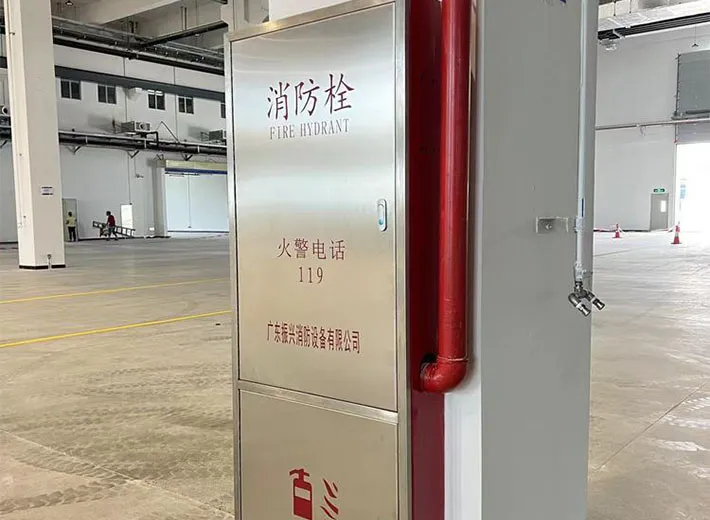
A general request for “a fire cabinet machine” is not enough to develop a reliable line. The equipment supplier needs detailed product and factory information.
Prepare the following:
| Required Information | Details to Provide |
| Product Drawing | 2D or 3D casing and profile drawings |
| Samples | Existing finished components, if available |
| Material | Steel, stainless steel, aluminum, or coated metal |
| Thickness | Minimum and maximum thickness range |
| Coil or Blank Width | Incoming material dimensions |
| Hole Pattern | Hole size, shape, spacing, and tolerance |
| Profile Range | Body, door, trim, frame, and reinforcement profiles |
| Cut Length | Minimum and maximum cut lengths |
| Production Speed | Pieces or meters produced per minute |
| Annual Volume | Current and projected production demand |
| Changeover | Manual, adjustable, or automatic changeover |
| Factory Power Supply | Voltage, frequency, and phase |
| Floor Space | Available production-line dimensions |
| Downstream Processes | Bending, welding, coating, and assembly |
Manufacturers should also describe the desired surface finish. Painted steel may need powder coating after forming, while stainless steel or clear anodized aluminum may need protection against scratching during processing.
Ask about the expected lead time only after the machine scope is clear. A simple standard line and a customized multi-process system will not have the same engineering or manufacturing schedule.
Chenlong’s cold roll forming production lines can integrate different processing stages according to the finished component. Our service and support also covers drawing review, equipment development, testing, installation options, training, spare parts, and after-sales support.
Weifang Chenlong Intelligent Technology Co., Ltd. is a high-tech company based in Shandong, China. We specialize in high-precision cold bending equipment, shaped metal components, and customized automated production lines.
We work with manufacturers, distributors, and OEM partners that need to produce:
Our process begins with the customer’s drawing or sample. We review the profile, material, tolerances, punching, cut length, production target, and downstream assembly.
The goal is to create a durable, efficient, and repeatable production solution. We do not claim that a forming machine alone makes a completed product compliant or fire rated. Product testing, documentation, final assembly, installation, and certification remain part of the complete compliance process.
For a custom project, send us:
These details allow our engineers to prepare a more accurate proposal and reduce unnecessary revisions.
It protects and organizes a portable extinguisher while keeping it visible and accessible. The casing may reduce accidental damage, dust, moisture exposure, and unauthorized handling.
No. A metal enclosure is not automatically fire rated. Buyers must review the exact product documentation, test or listing information, wall assembly, and approved installation method.
A recessed unit sits partly or fully inside a wall opening. A surface-mounted unit attaches to the wall face. Recessed designs reduce projection but require sufficient wall depth and more installation coordination.
Stainless steel can provide good corrosion resistance, but the correct grade, finish, hardware, drainage, seals, and environment still matter. Outdoor designs should also consider rain, salt, chemicals, impact, and UV exposure.
It may be suitable if the material has adequate impact, temperature, chemical, and UV resistance. Buyers should review the manufacturer’s data rather than assuming every plastic enclosure is weather-resistant.
It may support multiple lengths or related profiles through programmable feeding, adjustable tooling, or roller changes. The actual range depends on the shape, material, thickness, punching pattern, and required changeover time.
A dependable cabinet casing begins with the right dimensions, material, mounting style, door construction, hardware, corrosion protection, and access design. It must protect the extinguisher without making it difficult to identify or remove.
For manufacturers, product quality begins even earlier. Stable forming, accurate punching, consistent cut length, and aligned door components determine how efficiently each enclosure can be assembled.
Weifang Chenlong Intelligent Technology Co., Ltd. provides customized cold bending equipment and metal profile solutions for fire protection, electrical, new-energy, warehouse, and structural equipment manufacturers.
If your current process depends on repeated measuring, separate punching, manual forming, or excessive component handling, an automated line may create a more stable path to mass production.
Contact Chenlong with your cabinet drawings, profile samples, material specifications, thickness range, production volume, and automation target. Our engineering team will evaluate your project and propose a practical manufacturing solution.
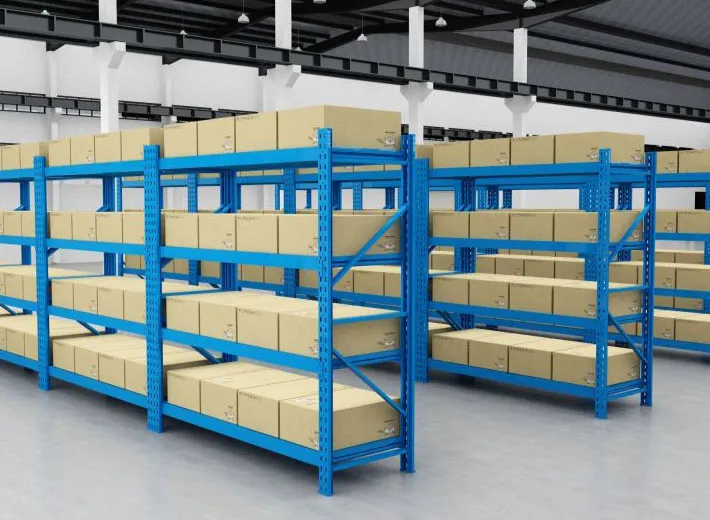
Moving a warehouse shelving line from standard to custom profiles changes four things: too…
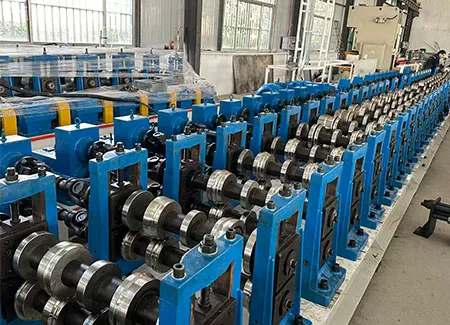
Chenlong’s roof and wall panel line is a factory-based automated roll forming system…
Ti risponderemo entro 24 ore. In caso di emergenza, aggiungi WhatsApp/WeChat: +8613863639320,. Oppure chiama direttamente +8613863639320.
*Rispettiamo la tua riservatezza e tutte le informazioni sono protette.
Utilizzeremo le tue informazioni solo per rispondere alla tua richiesta e non invieremo mai email non richieste o messaggi promozionali.