











Entreprise
02 September 2026
Warehouse Racking Systems and Warehouse Shelving: How to Choose the Right Storage Solution
Poor storage planning wastes floor space, slows picking, and increases product damage. The…
 13:47
13:47 Cable tray manufacturers often lose time on slow punching, uneven tray profiles, and manual handling. As orders grow, these small issues turn into late delivery and higher cost. A smart cable tray roll forming machine production line helps produce cable trays faster, cleaner, and more consistently.
A cable tray roll forming machine production line is an automated system used to produce cable trays, perforated cable tray sections, cable tray covers, tray profiles, and related cable support parts. It combines feeding, punching, cold roll forming, cutting, and stacking to improve cable tray manufacturing speed, quality, and repeat accuracy.
A ligne de production de machines à formage de rouleaux pour bacs à câbles is a complete metal forming system that turns steel coil or sheet strip into cable trays, tray profile parts, cable tray covers, and cable support structures. The line may include decoiling, leveling, servo feeding, punching, roll forming, cutting, and finished product collection.
In simple words, the machine takes flat metal and forms it into a useful cable tray shape. The forming process happens step by step. The steel moves through a roll former, and each forming roller bends the material a little until the final cable tray shape is complete.
For a cable tray manufacturer, this type of production line is important because cable trays are used in industrial buildings, power plants, data centers, factories, tunnels, commercial buildings, and modern cable management systems. A stable cable tray production line helps the factory produce cable trays with accurate tray width, clean holes, smooth edges, and repeatable quality.
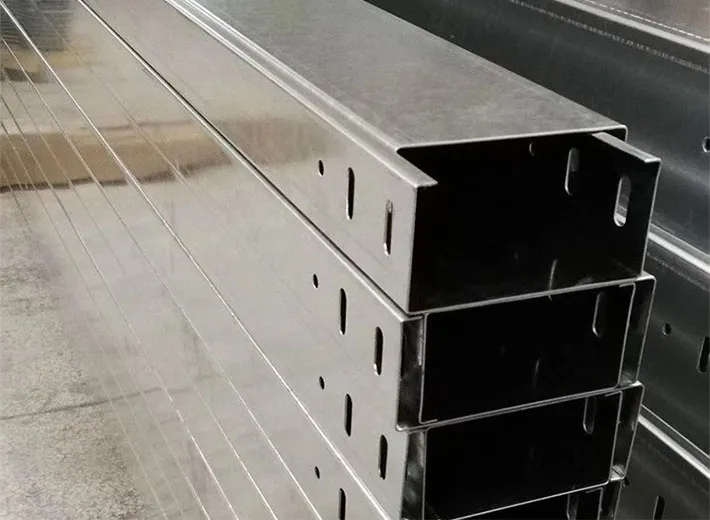
Cable tray manufacturing can be done with separate machines, but that method is often slow. Workers may cut the sheet, punch holes, bend edges, move parts, and then cut the final tray length. It works for small batches. But it becomes hard to control when the order volume grows.
Automatic forming machines solve this problem by connecting several processes into one smooth line. The cable tray production machine can feed material, punch holes, form the profile, cut the tray section, and collect finished cable tray parts with less manual handling.
For cable tray factories, this means:
In our experience at Chenlong, many buyers do not only want a low machine price. They want a production line that can run every day, make the same cable tray again and again, and support future production requirements. That is the real value of automated cable tray forming systems.
A machine de formage à rouleaux pour goulottes works through a continuous forming process. The raw material is usually steel strip or coil. The coil enters the machine, passes through leveling, punching, forming, and cutting sections, and then becomes a finished cable tray or tray profile.
A common process flow looks like this:
Steel Coil → Leveling → Servo Feeding → Punch → Roll Forming Section → Cable Tray Cutting → Stacking
Each part of the production line has a clear job. The leveling unit makes the steel flat. The servo feeding system controls length and hole position. The punch system makes holes or slots. The roll forming section shapes the cable tray. The cutting system cuts each tray section to the required length.
A good cable tray roll former must control the metal smoothly. If the feeding is not stable, the hole spacing may change. If the forming roller design is poor, the tray may twist. If the cutting is rough, installation becomes harder. That is why a reliable roll forming machine manufacturer must understand both machine design and cable tray applications.
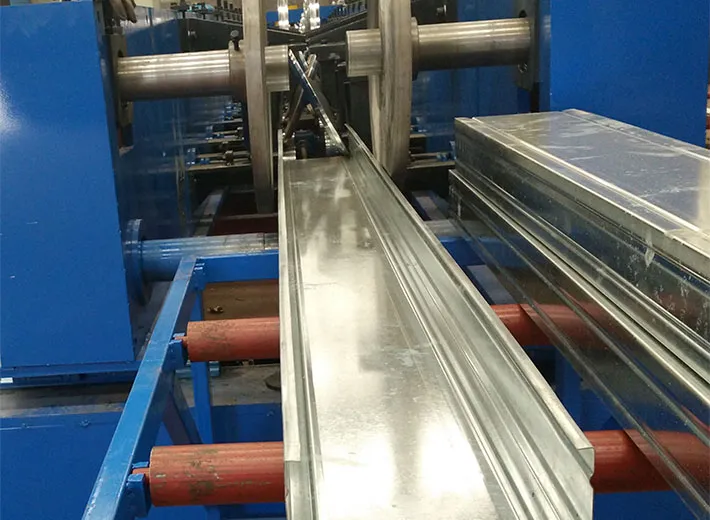
There are different types of cable tray, and each one has a different structure. The right cable tray machine depends on the product drawing, material thickness, cable load, and production requirements.
Common cable tray types include:
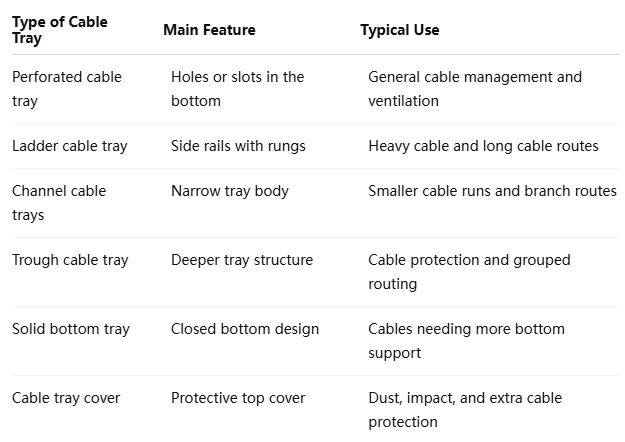
A perforated cable tray is a popular type perforated cable tray because it gives cable support while allowing air movement. A ladder cable tray is often used for cables used for power distribution, especially when the cable weight is higher. Channel cable trays are more compact and may suit smaller cable routes.
The machine can produce different cable tray products if the tooling and machine configuration are designed correctly. However, one machine cannot make every tray type without changes. A professional machine supplier should review the drawings before giving a solution.
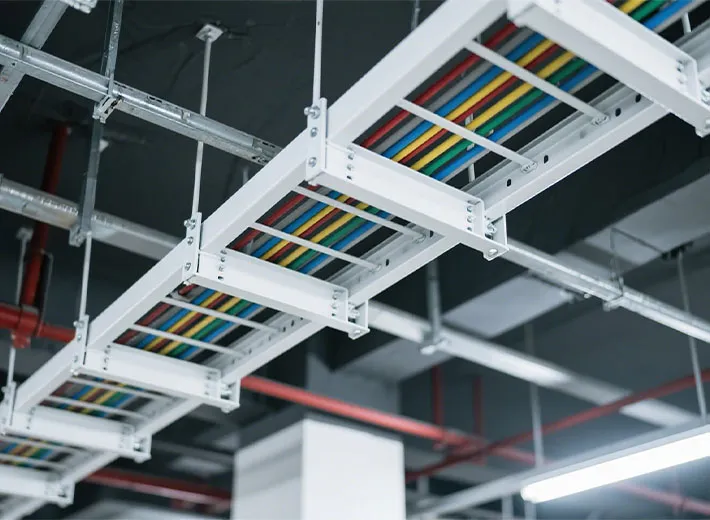
Understanding the components of a cable tray production line helps buyers choose the right machine. A cable tray manufacturing machine is not only one forming machine. It is a complete system.
Typical components include:
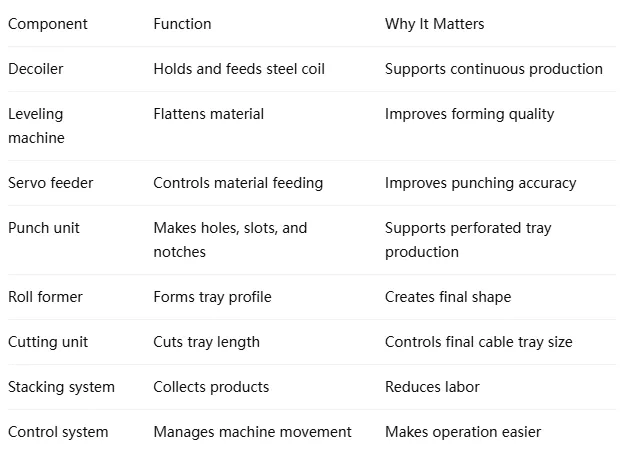
For high-volume production, the punch system is especially important. Some cable trays need many holes. If punching is slow, the whole line becomes slow. If punching is inaccurate, the finished cable tray may not meet customer requirements.
Chenlong designs production lines based on the buyer’s real product. For example, a perforated cable tray roll forming line may need a stronger punch station. A cable tray cover line may focus more on clean forming and smooth surface quality. A ladder tray side rail line may focus on strength, straightness, and hole accuracy.
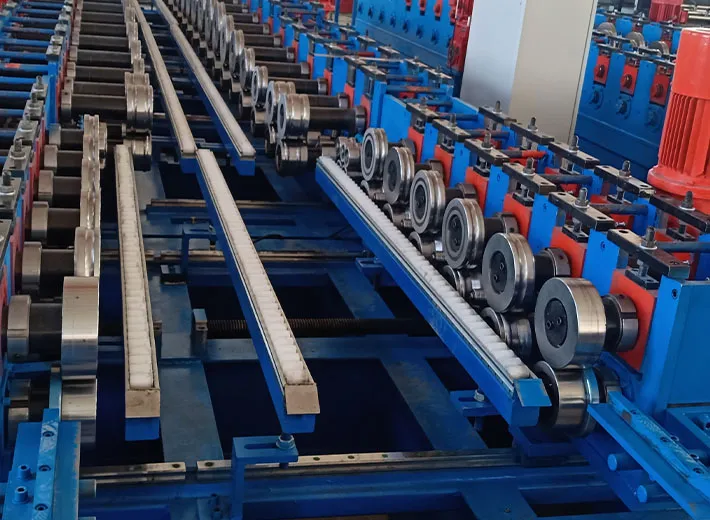
The punch process is one of the most important steps in perforated cable tray manufacturing. A perforated cable tray needs clean holes, stable spacing, and accurate hole rows. These details affect appearance, ventilation, weight, and installation.
In manual production, workers may punch holes on a separate machine. This adds handling time. It also increases the chance of error. In an automated production line, the punch process can happen before roll forming while the metal is still flat. This makes the process faster and more accurate.
Punching can create:
A well-designed punch system helps the line produce high-quality perforated cable trays with less rework. It also helps the factory meet different cable tray design needs. For custom cable tray orders, this flexibility is very useful.
Before ordering a cable tray roll forming machine, buyers should confirm the main parameters of cable tray products. This avoids wrong machine design and reduces project risk.
Important parameters include:
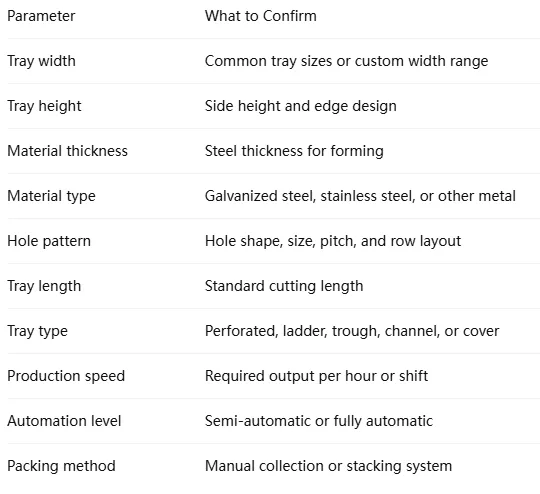
Many buyers only send a product photo. That is not enough. A cable tray machine manufacturer needs clear drawings and production requirements. With the right information, the supplier can design the forming process, punch layout, roll former structure, and cutting system correctly.
Chenlong usually asks these questions early because they protect the buyer’s investment. A clear machine plan is better than a rushed quotation.
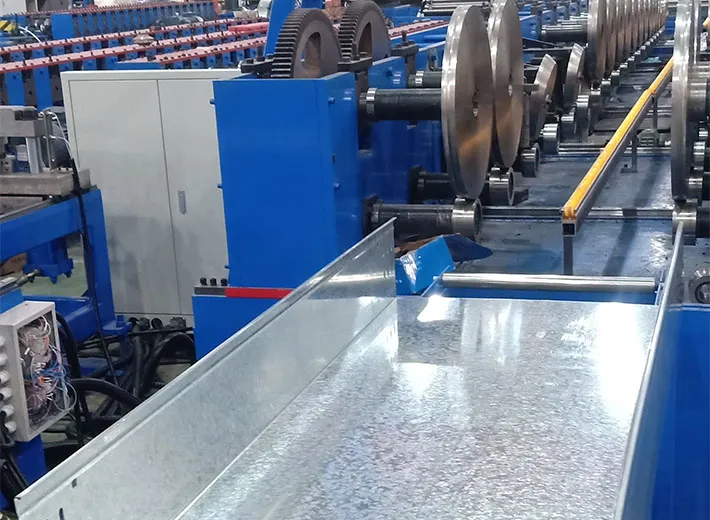
A cable tray system often includes more than the tray body. It may also include a cable tray cover, tray supports, connectors, elbows, reducers, and other accessories. These parts help create a complete cable management system.
A cable tray cover protects the cable from dust, falling objects, sunlight, and light impact. It is useful in some industrial areas, outdoor sections, and places where extra cable protection is needed. The cover must match the tray width and tray profile. If the cover does not fit well, installation becomes slow.
Cable tray profiles also affect cable support. A strong side profile improves load capacity. A clean edge helps reduce cable damage. A correct tray profile makes installation easier. A modern cable tray should not only hold cable. It should help organize the whole cable route.
For manufacturers, this creates a wider product opportunity. A cable tray production line can be planned not only for tray sections, but also for matching covers and custom tray profiles.
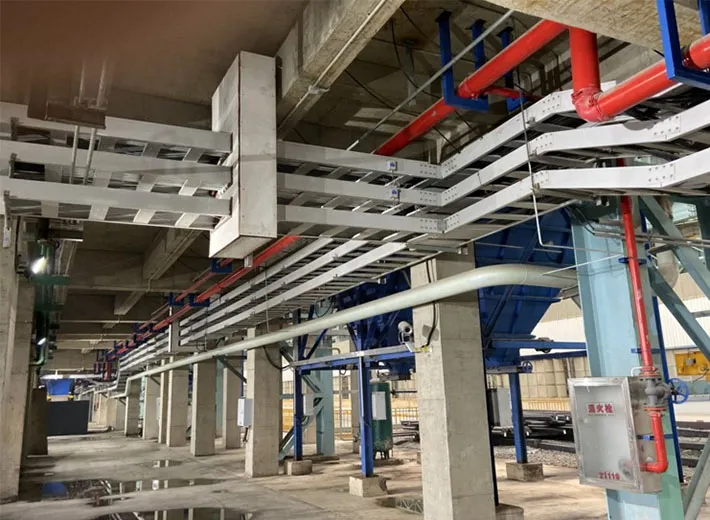
Modern cable tray manufacturing often uses galvanized steel, hot-dip galvanized steel, stainless steel, aluminum, or other metal materials. The best choice depends on the cable tray applications, environment, cost target, and corrosion risk.
Common choices include:
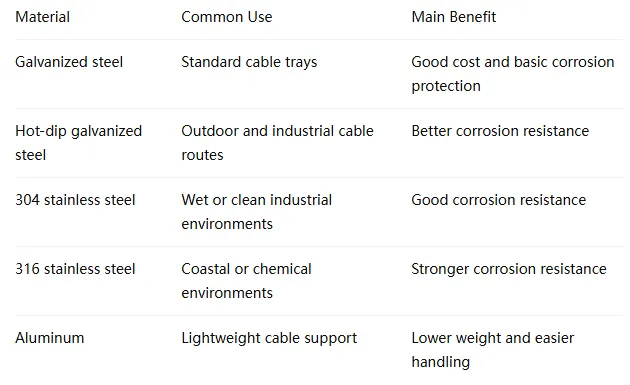
Steel cable tray products are widely used because they are strong and cost-effective. Stainless steel trays are used in harsher environments. Aluminum may be selected when weight matters.
The material affects the machine design. Thicker material needs stronger forming machines. Stainless steel may need better roller surface control. Different materials may require different punch force and cutting methods. A good metal forming system must match the material, not fight it.
Weifang Chenlong Intelligent Technology Co. Ltd. is a high-tech company based in Shandong, China. We specialize in high-precision cold bending forming equipment and customized automated production lines for metal profile processing.
For cable tray manufacturing, Chenlong can provide a turnkey cable tray production line based on customer drawings, tray width, material thickness, hole pattern, speed target, and factory layout. We can support perforated cable tray, cable tray cover, channel cable trays, ladder side rail, tray profile, and other cable tray cold roll forming needs.
Chenlong can help with:
Our role is not only to sell forming machines. We help customers turn their cable tray product into a practical production system. This is important for manufacturers, distributors, and OEM partners who want stable output and long-term growth.
Choosing the right cable tray machine manufacturer is a serious decision. A low-cost machine may look attractive, but poor design can create slow speed, unstable trays, and expensive downtime.
Before choosing a supplier, buyers should check:
A good machine manufacturer asks many technical questions before making a proposal. This is a good sign. It means the supplier is not just selling a standard machine. They are designing a real production solution.
As a roll forming machine manufacturer, Chenlong focuses on automation, customization, and stable production. We want the line to work not only during testing, but also in daily factory use.
Manual cable tray fabrication can support small orders, but it has limits. Workers may cut sheets, punch holes, bend edges, and move parts between different machines. This needs more labor and creates more variation.
An automated cable tray production line connects the main steps. The material moves through the machine continuously. The line handles punching, forming, cutting, and collection with fewer manual steps.
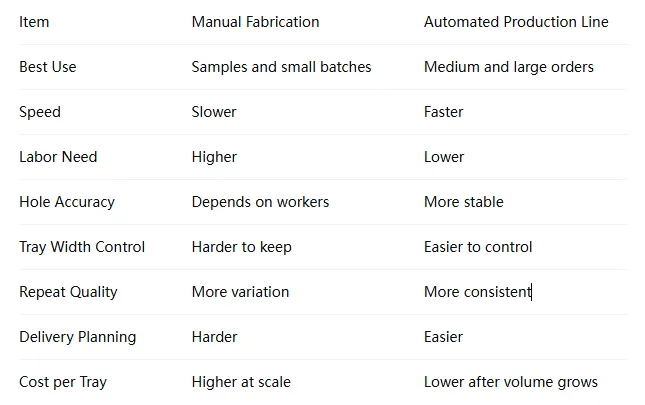
For export orders and OEM projects, automated production is often the better long-term choice. It helps the factory produce cable trays faster and with more confidence.
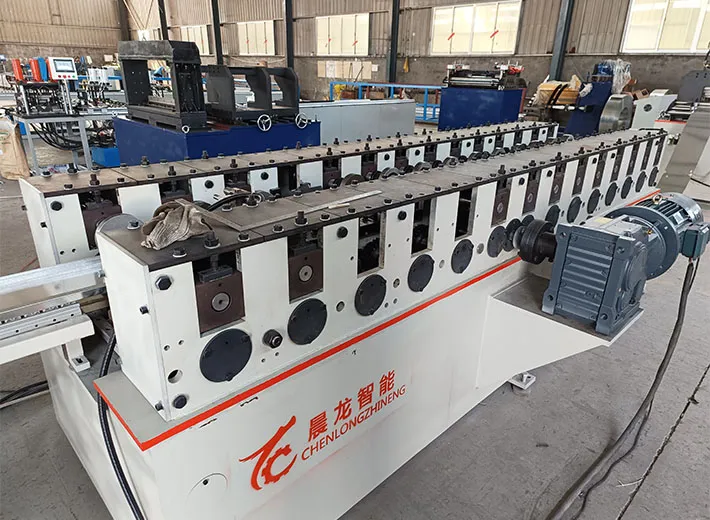
Different cable tray applications require different machine configuration. A factory making light-duty cable trays may need a simpler line. A factory producing heavy-duty industrial cable trays may need stronger rollers, stronger punching, and more powerful cutting.
Par exemple :
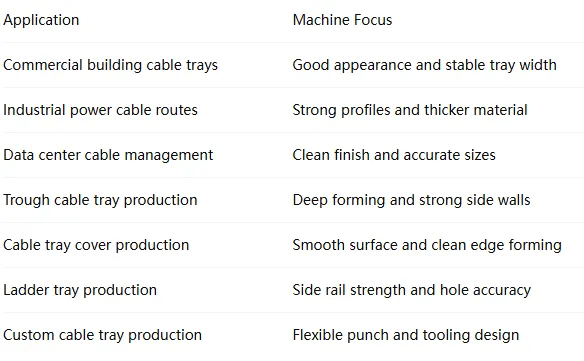
The machine can produce different products only when the structure is planned correctly. That is why early technical communication matters.
At Chenlong, we help buyers match the machine to the real cable tray applications. This saves time and reduces the chance of buying the wrong equipment.
Cold roll forming shapes metal at room temperature. The process bends the material gradually through roller stations. This is different from single-step bending, where the metal may be formed in one strong movement.
For cable trays, cold roll forming has several benefits:
A forming machine is a specialized tool for repeat metal profiles. When the profile is long and the order volume is high, cold forming is often more efficient than manual bending.
A cable tray cold roll forming line can also combine punching and cutting. This makes the whole cable tray production process smoother and more efficient.
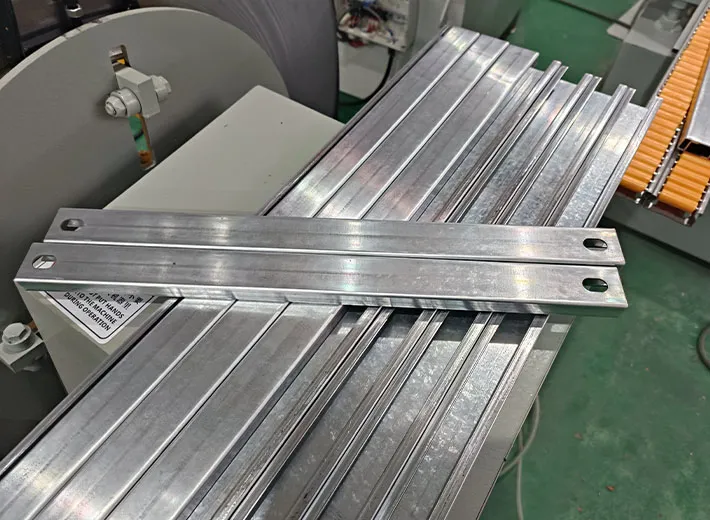
A complete production plan looks beyond one machine. It checks the whole cable tray production process from raw material to finished tray. This includes coil handling, punching speed, forming quality, cutting accuracy, stacking, operator access, and maintenance.
A whole cable tray production plan should answer these questions:
This planning helps the buyer avoid hidden problems. A machine that looks good on paper may not fit the workshop. A fast line may still be slow if stacking is manual. A strong forming system may fail to meet output if punching is too slow.
Chenlong designs production lines with these details in mind. The goal is simple: make the line practical, stable, and easy to use.
A cable tray roll forming machine is equipment used to form steel coil or sheet strip into cable tray sections, tray profiles, cable tray covers, and related cable support parts. It can include punching, forming, cutting, and stacking.
A cable tray production line is a complete system for making cable trays. It may include decoiling, leveling, servo feeding, punch units, roll forming section, cable tray cutting, stacking, and control systems.
Yes. With the right punch system and roll forming design, the machine can produce perforated cable tray products with accurate holes, stable tray width, and clean formed edges.
It depends on the product design. Some cable tray types may need different tooling or separate lines. Chenlong can review drawings and recommend whether one line or multiple cable tray lines are better.
You should provide tray drawings, tray width, tray height, material type, material thickness, hole pattern, required length, expected production speed, and automation requirements.
Chenlong provides high-precision cold bending forming equipment and customized automated production lines. We help manufacturers, distributors, and OEM partners design practical cable tray production systems based on real product and factory needs.
Poor storage planning wastes floor space, slows picking, and increases product damage. The…
Loose electrical lines create blocked access, poor airflow, slow maintenance, and higher d…
Nous vous répondrons dans les 24 heures. En cas d'urgence, veuillez ajouter WhatsApp/WeChat : +8613863639320,. Ou appelez directement +8613863639320.
*Nous respectons votre confidentialité et toutes les informations sont protégées.
Nous n'utiliserons vos informations que pour répondre à votre demande et n'enverrons jamais de messages électroniques ou promotionnels non sollicités.