


Entreprise
09 October 2026
Cable Tray Roll Forming Machine Production Line: Configuration, Process, and Buying Guide
Slow punching, uneven bends, repeated material handling, and unstable dimensions can limit…
 11:34
A 3-phase coffret de distribution is a metal enclosure housing three-phase breakers, busbars, and terminals that route power to downstream circuits. For electrical cabinet OEMs, the enclosure itself — its steel gauge, material grade, and forming tolerances — is what determines mechanical strength, fit with internal components, and how the finished panel performs in the field.
The term covers any enclosure built to house three-phase distribution hardware: incoming supply terminals, breakers or fuses for each phase, busbars, and often metering or monitoring gear. Search results for this term are dominated by finished-product listings — pre-built boxes ready to bolt onto a wall, or rental units for temporary site power. Those pages answer “what do I buy” for someone wiring a single installation.
They don’t answer a different question: what determines whether the enclosure itself holds up once it’s populated with switchgear, mounted outdoors, or produced at volume for a product line. That’s the OEM side of the term, and it’s the side finished-box sellers have no reason to cover.

Cabinet OEMs and switchgear manufacturers don’t buy a distribution box as a finished unit. They buy or fabricate the enclosure — the formed steel shell, door, mounting panel, and cable entry points — and populate it with their own electrical assembly. At that stage the enclosure is a mechanical component with its own requirements: it has to hold its shape under door and hardware load, seal against the environment it’s rated for, and match the internal layout the cabinet designer has already drawn.
Get the gauge or material wrong and the problem doesn’t show up on a spec sheet. It shows up as door sag after a few hundred open-close cycles, panel flex that misaligns breaker mounting holes, or corrosion at the seams on an outdoor unit that was speced for indoor use.
Cold-formed electrical cabinet profiles are typically produced from one of six material grades, each suited to a different exposure or cost target:
| Material Code | Steel Type | Common Enclosure Context |
| SPCC | Cold-Rolled Carbon Steel | Indoor panels and general-purpose enclosures |
| SPHC | Hot-Rolled Carbon Steel | Thicker-gauge frames and structural members |
| SGCC | Hot-Dip Galvanized Steel | Outdoor or humid-environment enclosures |
| SECC | Electro-Galvanized Steel | Indoor cabinets requiring a paint-ready, corrosion-resistant surface |
| SUS (Stainless) | Stainless Steel | High-corrosion or wash-down environments |
| Aluminium | Aluminum Sheet | Weight-sensitive or non-magnetic applications |
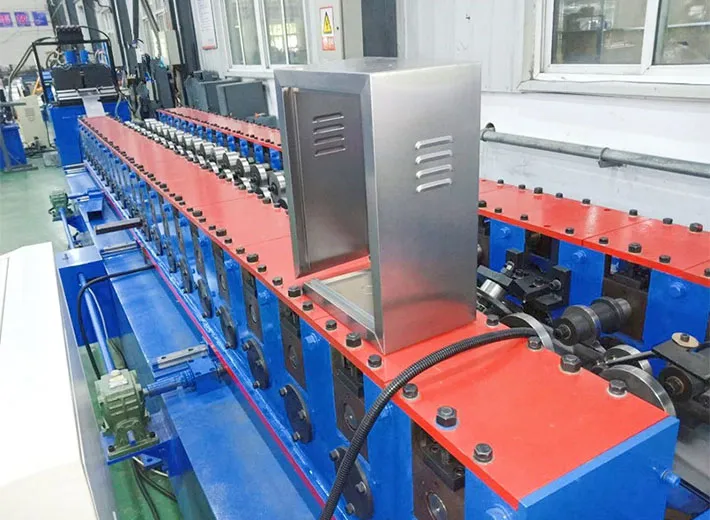
For OEM builders working with a cold-forming supplier rather than buying a catalog box, the process typically runs:
Skipping step 1 — starting from a generic spec instead of an actual cabinet drawing — is the most common reason a first production run doesn’t fit on assembly.
Chenlong states ISO9001, CE, and SGS approvals at the company level. Certificate numbers, issuing bodies, and exact scope aren’t published, so that claim should be read as a company-level positioning statement rather than a verifiable per-machine certification — worth confirming directly with the supplier before it’s cited in a procurement document.
For context on what CE actually requires: machinery placed on the EU market currently falls under Machinery Directive 2006/42/EC, with Regulation (EU) 2023/1230 replacing that framework starting January 20, 2027. That transition matters for any OEM sourcing production equipment for EU-bound cabinets, separate from the finished-box question.
On cost: there’s no published price list for this profile line. Chenlong prices these projects individually based on the customer’s drawings, material spec, dimensions, required speed, punching needs, and automation level — so “how much” only gets answered after a drawing is submitted. What is published are the commercial terms: 30% deposit at order confirmation, balance after inspection and before shipment, T/T or L/C accepted, standard lead time of 20–30 business days, and 40–60 business days for custom configurations.
Compared with the finished-enclosure and rental-box listings that typically rank for this search term, this is a different transaction. A finished-box purchase starts from a catalog SKU and ships as-is. Custom cold-formed fabrication starts from a cabinet drawing and produces an enclosure built to that layout — which is the only version of this that actually helps a switchgear OEM, since a catalog box wasn’t designed around their internal component placement to begin with.
The trade-off is timeline. A finished box can ship same-week; a custom production run, even at the fast end, runs 20–30 business days standard and longer for custom configurations. For a one-off installation, that’s a real disadvantage. For an OEM building the same cabinet across a product line, it’s the difference between fitting internal hardware without rework and forcing a design around a box that wasn’t made for it.
On Chenlong’s production line for this application, rolling thickness spans 0.2–10 mm, with the specific figure depending on cabinet size, load, and installation environment rather than a single standard number.
Yes — supported materials include SPCC, SPHC, SGCC, SUS (stainless), aluminum, and SECC, selected according to the project’s exposure and corrosion requirements.
Standard equipment lead time is 20–30 business days; custom configurations run 40–60 business days. Expedited production may be available for urgent orders.
The published product line covers cold-formed steel profiles and the production equipment that makes them (decoiling through cutting, punching, and stacking), not finished retail distribution boxes.
Chenlong states ISO9001, CE, and SGS approvals at the company level. Certificate numbers and exact scope aren’t published on the reviewed pages, so this should be confirmed directly for any project requiring documented compliance.
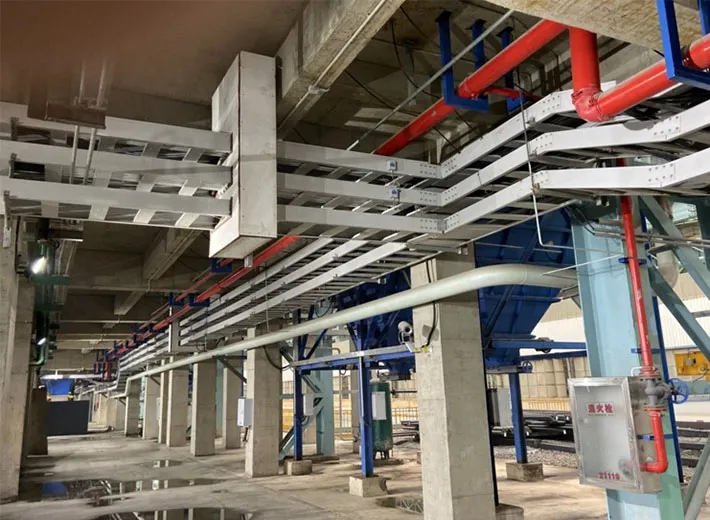
Slow punching, uneven bends, repeated material handling, and unstable dimensions can limit…
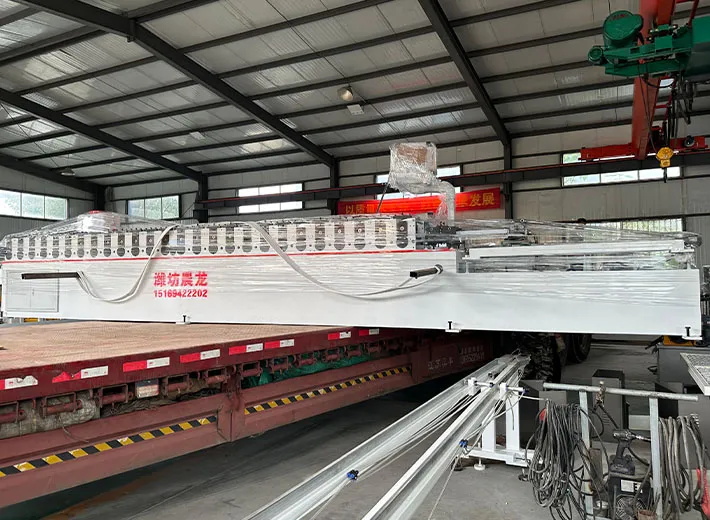
No independent, audited ranking of the world’s largest roll forming companies exists…
Nous vous répondrons dans les 24 heures. En cas d'urgence, veuillez ajouter WhatsApp/WeChat : +8613863639320,. Ou appelez directement +8613863639320.
*Nous respectons votre confidentialité et toutes les informations sont protégées.
Nous n'utiliserons vos informations que pour répondre à votre demande et n'enverrons jamais de messages électroniques ou promotionnels non sollicités.