











Company
20 September 2026
Warehouse Racking Systems & Shelving Production Guide
Moving a warehouse shelving line from standard to custom profiles changes four things: too…
 11:54
11:54 Cable routes become messy fast. Loose cable runs increase risk, slow installation, and make future maintenance harder. A well-made steel cable tray profile solves this by giving every cable a clear, strong, and safe route.
A cold-formed steel cable tray profile is a roll formed metal section used to build a cable tray system for supporting, protecting, and organizing power, control, and communication cable routes. It can be made as ladder, channel, perforated, solid bottom, or custom tray profiles, using galvanized steel, stainless steel, or aluminum based on project needs.
A cold-formed steel cable tray profile is a shaped metal profile made from sheet metal or coil through roll forming. The steel strip passes through several forming stations. Each station bends the material a little more until it reaches the final cable tray shape. This process creates a stable structure with good strength, smooth shape, and repeatable dimensions.
In simple words, the profile is the body or side rail of the cable tray. It may be used for a channel cable tray, ladder side rail, perforated cable tray, solid bottom tray, or custom cable tray system. The form can be simple or complex, depending on cable load, tray supports, width, height, length, and installation space.
At Weifang Chenlong Intelligent Technology Co., Ltd., we focus on high-precision cold bending forming equipment and customized automatic production lines for metal profile processing. Our work is not only about selling one roll forming machine. We help buyers develop the right profile, tooling, production process, and finished roll forming line for long-term manufacturing.
Cable trays are mechanical support systems for electrical cables, raceways, and insulated conductors used in power, control, instrumentation, and communication systems, according to NEMA’s cable tray description. Metal cable trays are commonly made from galvanized steel, stainless steel, and aluminum.
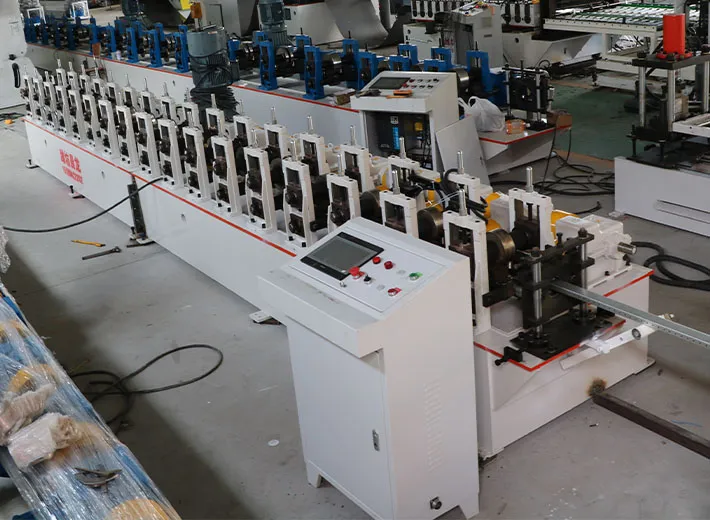
A cable tray is not just a metal channel. It is part of the electrical route. It helps guide cable from one area to another, keeps cable organized, and supports cable weight over distance. In factories, power plants, data centers, commercial buildings, and new energy projects, poor cable management can cause delays, higher labor cost, and difficult repair work.
Steel cable trays are popular because steel has strong mechanical performance and can support many types of cable in demanding environments. A proper cable tray system can help installers separate power cables, control cable, and signal cable. It also makes future inspection easier because the cable route is visible and accessible.
Different cable tray types serve different project needs. The right choice depends on cable weight, heat dissipation, environment, installation route, dust level, moisture level, and maintenance needs.
Common cable tray types include:
A ladder design is often used when long-distance cable support and airflow are important. The rung structure keeps cable supported while allowing heat to move away. A channel design is often used in compact electrical rooms, machine frames, and equipment interiors. A solid bottom design gives more protection against dust or falling objects.
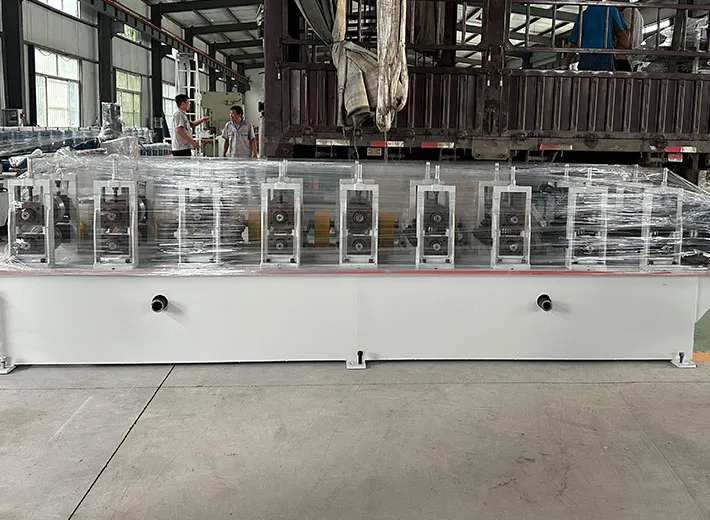
A cable tray system normally includes straight tray sections, bends, tees, crosses, reducers, covers, brackets, and tray supports. It gives cable a planned route through a building, workshop, production line, or outdoor industrial area.
The process usually starts with design. Engineers confirm the types of cable, route distance, cable weight, environment, tray width, support spacing, finish, and installation method. Then the manufacturer designs the profile shape, punching pattern, connection holes, and forming process.
A basic project workflow may look like this:
Cable Route Plan
↓
Cable Tray Type Selection
↓
Profile Design and Material Selection
↓
Roll Forming Tooling Design
↓
Punching / Forming / Cutting
↓
Surface Finish and Inspection
↓
Packing and Installation
There is no single best cable tray design. There is only the best design for your cable, environment, and installation.
A ladder cable tray is often the best choice for heavy-duty power cable routes. It offers good ventilation, lower dust build-up, and easier cable tie fixing. Cable ladders are common in industrial environments where heat dissipation and long span support matter.
A channel cable tray works well for smaller cable runs. It is simple, clean, and cost-friendly. A channel design is useful when the cable route is short, the width is narrow, and the cable load is not too high. Many OEM equipment manufacturers use channel tray profiles inside machines or control systems.
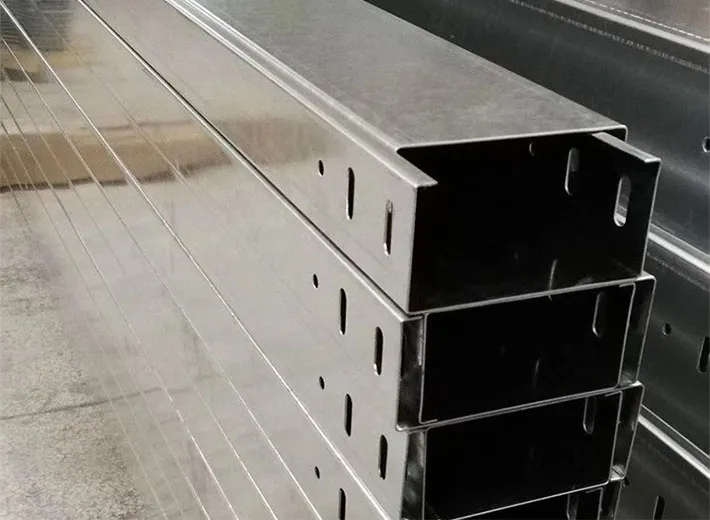
A solid bottom cable tray gives better cable protection. It is useful where small parts, dust, or debris may fall on the cable. But it has less airflow than ladder or perforated designs. A perforated cable tray gives a middle choice. It has support, cable protection, and some ventilation. A perforated cable profile can also be made with custom holes for fastening and drainage.
Material selection has a direct effect on durability, corrosion resistance, weight, cost, and service life. The most common materials include pre-galvanized steel, hot-dip galvanized steel, stainless steel, and aluminum.
Pre-galvanized steel is widely used for indoor commercial and light industrial applications. It gives a clean finish and good cost control. Hot-dip galvanized finish is often selected for tougher outdoor or humid environments because the zinc coating is thicker after fabrication. Stainless steel is used when corrosion resistance is more important, such as chemical plants, food facilities, marine areas, or high-cleanliness environments.
A stainless steel cable tray can be made from 304 stainless steel or 316 stainless steel. 304 is common for many indoor or general corrosion-resistant needs. 316 is often selected for stronger corrosion resistance, especially where salt, chemical vapor, or harsh environmental exposure exists.
Before manufacturing a cable tray profile, buyers should confirm clear technical details. This saves time and prevents wrong tooling, wrong holes, or poor installation fit.
The most important specification points include:
| Specification Item | What to Confirm |
|---|---|
| Material | Galvanized steel, stainless steel, aluminum |
| Grade | 304, 316, Q235, or custom steel grade |
| Thickness | For example, 0.8 mm, 1.2 mm, 1.5 mm, 2.0 mm |
| Width | Tray width based on cable volume |
| Height | Side height based on cable protection and load |
| Length | 10 ft, 3 m, or custom length |
| Hole pattern | Round, slot, perforate, connection holes |
| Finish | Pre-galvanized, hot-dip galvanized, powder coated, stainless |
| Load | Cable weight and support distance |
| Accessories | Covers, bends, connectors, brackets |
Buyers should also confirm whether they need standard cable trays designed for general use or custom profiles for special equipment. If the tray must match an existing cable tray system, the hole distance, profile width, connector position, and bend angle must be checked carefully.
At Chenlong, we often suggest that customers send drawings, profile samples, photos, material requirements, and expected output capacity. This helps us build the right roll forming equipment and reduce trial errors. The more complete the requirement, the faster the technical solution becomes.
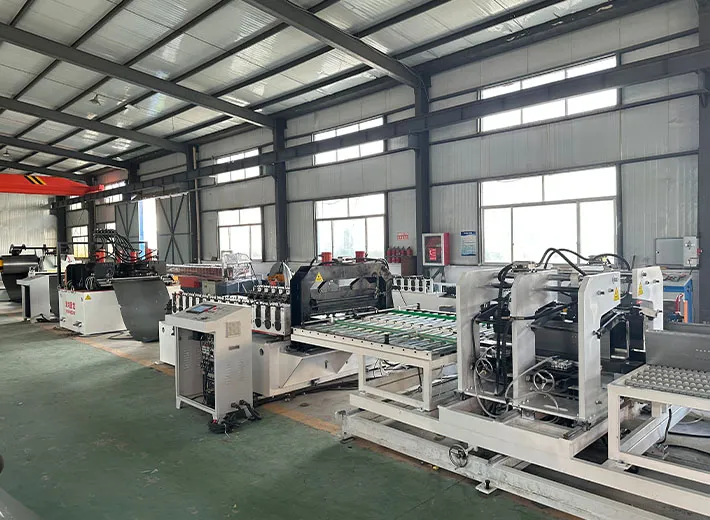
Cold-formed cable tray profiles are usually made by automatic production lines. A typical line may include an Uncoiler, decoiler, coil leveler, Servo Feeder, Punch Press, roll forming machine, cutting unit, collection table, and sometimes an automatic Palletizer.
The process starts when the steel coil is placed on the uncoiler machine. The coil is released and sent through the leveler to improve flatness. The servo feeder sends the sheet metal forward with accurate length control. Then the punch press makes holes, slots, or connection shapes. After that, the roll forming stations bend the profile step by step. Finally, the cutting system cuts the cable tray section to the required length.
A simple automatic production line may include:
Decoiler → Leveler → Servo Feeder → Punch Press → Roll Forming → Cutting → Palletizing
For some projects, a cnc laser welding machine or cnc laser welding process may be added if the cable tray design needs welded parts, reinforced sections, or special structural details. An automatic palletizer or palletizer machine can also reduce labor for large-volume production.
As a roll forming machine manufacturer, Chenlong designs custom automatic production lines based on the profile. We consider material thickness, width, hole pattern, maximum speed, production capacity, cutting accuracy, and finished product quality. This is why custom roll forming is different from buying a standard machine from stock.
Cable tray profiles are used in many industrial applications because almost every modern project needs power, control, or data cable management. The application may be simple, like a commercial building, or complex, like a new energy factory.
Common application areas include:
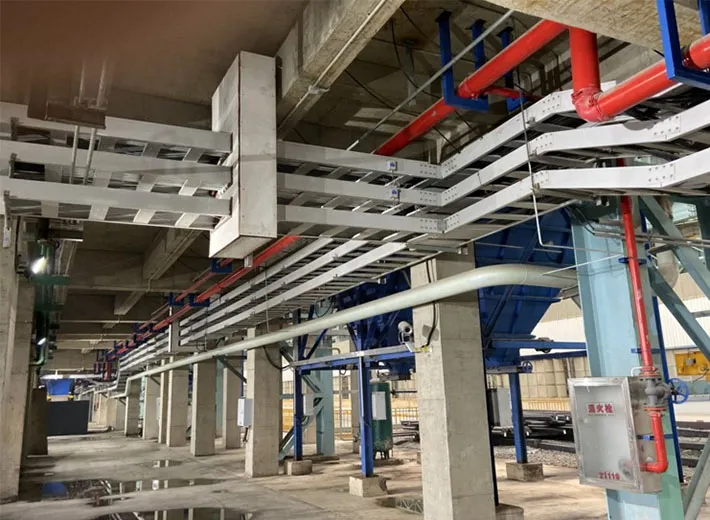
In electrical and new energy projects, cable tray quality affects cable route clarity and maintenance speed. In industrial plants, heavy-duty tray structures support power cables over long distance. In commercial buildings, galvanized cable tray products help organize electrical and communication systems.
For OEM factories, cable tray profiles may also become part of equipment frames, electrical distribution box systems, or control cabinet wiring channels. This is where a cold forming equipment supplier with profile development ability can support more than one product. We can help buyers create roll forming products for cable tray, distribution box, fire protection cabinet, roof corrugated panels, and other steel profile forming machine applications.
Chenlong is based in Shandong, China, and focuses on high-precision cold bending forming equipment and customized automated production lines. We serve industries such as electrical equipment, new energy, structural equipment, warehousing systems, construction profiles, and custom roll formed products.
For cable tray production, we can help with:
Our goal is simple: help you turn a cable tray idea, drawing, or sample into a stable production line. You get better control over quality, cost, delivery time, and product range.
If you are a cable tray manufacturer, electrical product distributor, steel profile supplier, or OEM factory, a custom cold roll forming line can help you produce cable tray solutions in your own market with better flexibility.
The best material depends on the environment. Pre-galvanized steel is good for many indoor projects. Hot-dip galvanized steel is better for outdoor or humid areas. Stainless steel is better for chemical, marine, food, or high-corrosion environments. Aluminum is useful when low weight is important.
A ladder cable tray has side rails and rungs. It gives strong support and good ventilation. A channel cable tray is more compact and often used for smaller cable routes. Ladder trays are better for heavy cable runs, while channel trays are better for simple and narrow routes.
Yes. Stainless steel cable tray profiles can be made by roll forming, but the tooling and forming design must match the material strength. 304 stainless steel and 316 stainless steel are common choices. The machine structure and forming rollers must be designed carefully to avoid scratches, twist, or poor shape.
You should send profile drawings, photos, samples, material grade, thickness, width, height, length, hole pattern, required finish, production capacity, and automation needs. If you have a current product, send the exact specification. If you only have an idea, Chenlong can help review the design.
Sometimes yes, but it depends on the profile design. Some lines can support adjustable width or several close sizes. Other profiles need separate tooling. If you want one line to produce multiple sizes, you should discuss the full size range with the manufacturer before machine design.
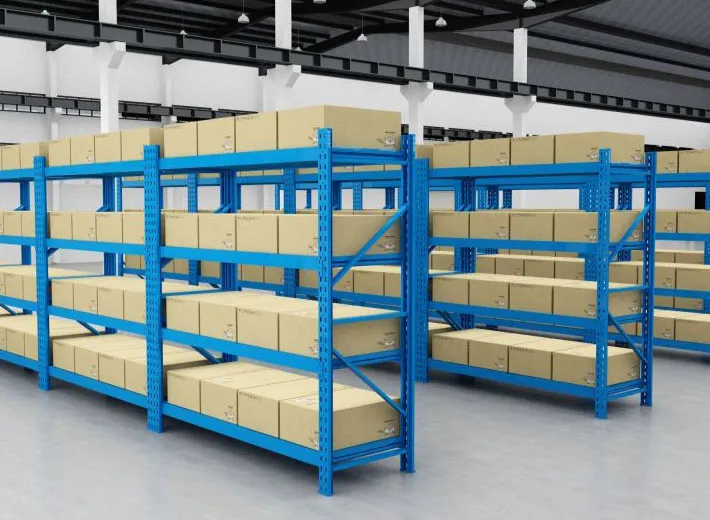
Moving a warehouse shelving line from standard to custom profiles changes four things: too…
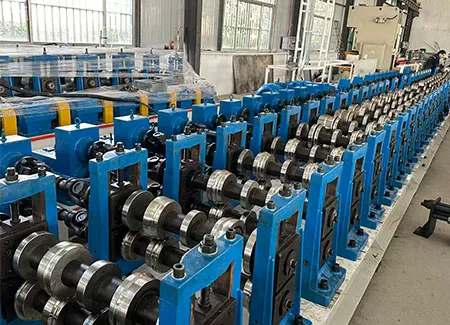
Chenlong’s roof and wall panel line is a factory-based automated roll forming system…
We will reply you within 24 hours. If for urgent case, please add WhatsApp/WeChat: +8613863639320,. Or call +8613863639320 directly.
*We respect your confidentiality and all information are protected.
We will only use your information to respond to your inquiry and will never send unsolicited emails or promotional messages.