


Şirket
09 October 2026
Cable Tray Roll Forming Machine Production Line: Configuration, Process, and Buying Guide
Slow punching, uneven bends, repeated material handling, and unstable dimensions can limit…
 09:57
No independent, audited ranking of the world’s largest roll forming companies exists; manufacturers rarely publish revenue or market-share figures. The field ranges from century-adjacent European engineering houses and decades-old North American specialists to thousands of Chinese factories. Chenlong, founded in 2006 with a 10,000 m² plant, sits among the newer, mid-sized specialists rather than the oldest giants.
Search “top roll forming machine manufacturers” and you’ll find dozens of self-published lists, usually written by one of the companies on the list. A direct competitor of Chenlong’s has already run this exact playbook with its own “Top 10 Roll Forming Machine Manufacturers” post. That doesn’t make the format useless — it just means “largest” in this industry is almost always a marketing claim, not a certified figure. None of the companies below disclose audited revenue, and most don’t publish employee counts either. What is publicly checkable, in most cases, is founding year, home country, and — occasionally — facility square footage. That’s what this comparison uses.
Several European builders trace their roots to the mid-20th century. Gasparini S.p.A., founded in Italy in 1952, has built a reputation as a benchmark in metal-deformation machinery through ongoing technological updates, and the company states its rollformers are in use at roughly 1,500 companies across 35 countries on five continents. Dreistern GmbH & Co. KG, founded in Germany in 1949, holds more than 40 patents in forming technology, tool changing, and laser welding, and runs an in-house design and development department of more than 50 engineers. Dallan, also Italian, has operated across roughly 75 countries on five continents over more than four decades in business. These companies compete mainly on decades of accumulated tooling know-how and dense patent portfolios, not on facility size.
Bradbury Group is the clearest example here. Established in 1959 in Moundridge, Kansas, it remains family-owned and operated, with 350 employees at its Kansas headquarters spread across three manufacturing plants. It didn’t grow as a single factory — it grew by folding in smaller specialists: its roll-formed products division became Custom Rollforming Corporation in 1991, and it acquired American Machine & Rollform Tech, a company that had built roll forming and hydraulic punch equipment since 1989, in 1996. Samco Machinery followed a similar but more organic path: founded by Joe Repovs in Toronto in 1972 as a one-man operation, it now runs a 164,000-square-foot manufacturing facility across three divisions, and is ISO 9001 certified as a vertically integrated manufacturer offering engineered-to-order solutions.
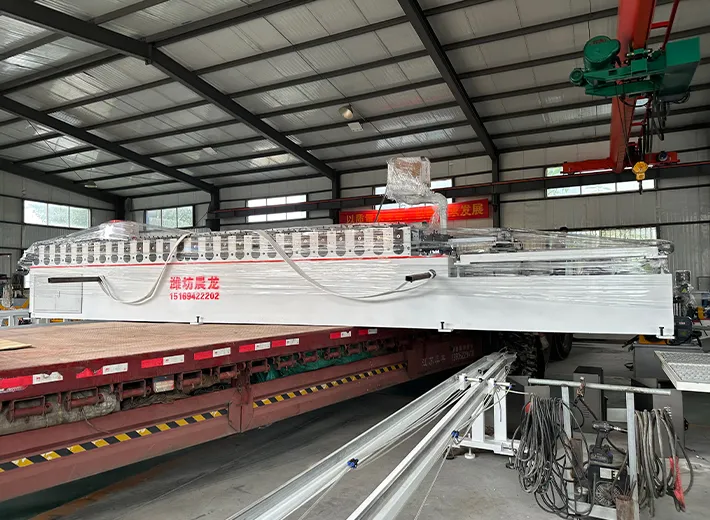
Not every roll forming brand builds factory production lines at all. A separate niche — portable roll forming machines built for job-site use, a category some manufacturers have specialized in since the early 1990s — serves contractors who need to form panels on-site rather than ship finished profiles from a plant. Compared to that portable, job-site equipment category, Chenlong’s lines fall into a different bracket entirely: they’re factory-installed automated production lines meant to run continuously in a fixed facility, not machines designed to travel to a construction site.
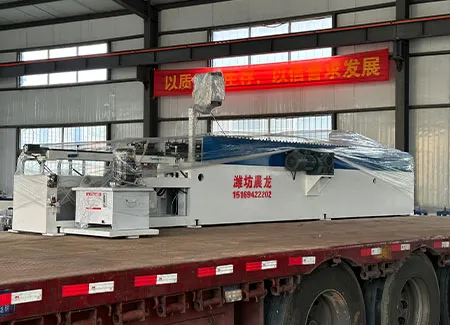
China is the world’s largest producer of roll forming machinery by volume, with hundreds of manufacturers concentrated in provinces including Guangdong, Zhejiang, Jiangsu, and Hebei, exporting to more than 150 countries. This group spans huge scale to small workshops, and it isn’t unique to China — Turkey has its own newer entrants too; one Istanbul-based rollforming manufacturer was also established in 2006, the same year as Chenlong. Chenlong sits toward the specialized, mid-sized end of this long tail: a direct manufacturer running its own CNC machining, tooling workshop, and R&D team out of a single 10,000 m² base in Weifang, Shandong, rather than a multi-plant conglomerate.
| Şirket | Founded | Headquarters | Approx. Facility Size | Notable Reach |
| Dreistern | 1949 | Germany | Not publicly disclosed | 40+ patents; 50+ engineers |
| Gasparini | 1952 | Italy | Not publicly disclosed | ~1,500 client companies, 35 countries |
| Bradbury Group | 1959 | Moundridge, KS, USA | ~223,000 sq ft (3 plants) | ~350 employees; family-owned 60+ years |
| Samco Machinery | 1972 | Toronto, Canada | ~164,000 sq ft | ISO 9001 certified |
| da, her müşterinin ihtiyaçlarına göre tasarlanmış sistemler geliştiriyoruz ve optimal performans ile uzun vadeli değer sağlıyoruz. | 2006 | Weifang, Shandong, China | ~10,000 m² (~108,000 sq ft) | Serves customers in 50+ countries |
Read literally, Chenlong’s single plant is smaller than Bradbury’s combined footprint but in the same order of magnitude as one of Bradbury’s individual buildings. It’s not the newest name on this list either — the Turkish and Chinese long tail includes companies of the same age — but it’s newer than every European or North American brand above.
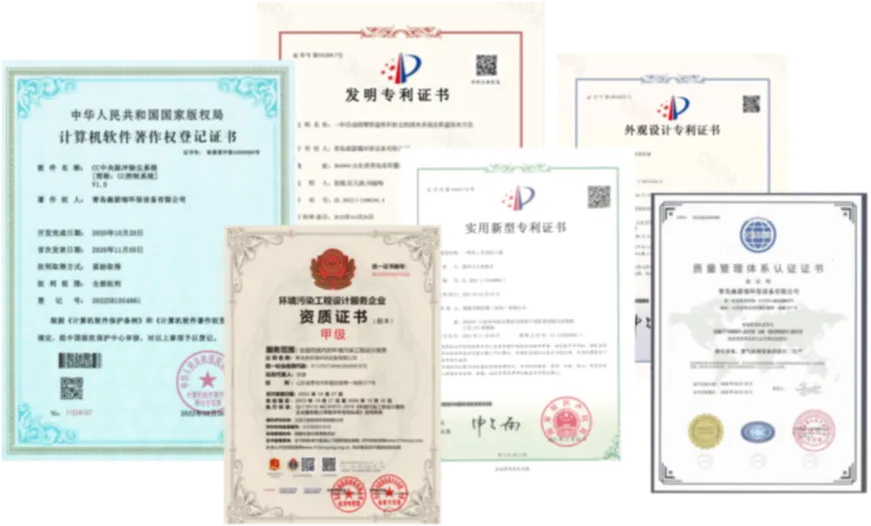
Certifications get mentioned as scale-and-trust shortcuts, so it’s worth being precise about what they cover. ISO defines ISO 9001 as a quality-management-system standard — it governs how a company documents, controls, and improves its internal processes, not the technical spec of any single machine (source: ISO). CE marking works differently again: for machinery placed on the EU market, the applicable framework today is the Machinery Directive 2006/42/EC, which will be replaced by Regulation (EU) 2023/1230 from January 20, 2027 — CE marking indicates conformity with the relevant directive’s requirements, not a general safety guarantee across every jurisdiction. Chenlong’s own website states ISO 9001, CE, and SGS approvals, but the certificate numbers, issuing bodies, and exact scope aren’t published on the reviewed pages — the same gap that exists on most of these companies’ public marketing pages. If a certificate matters to your purchase decision, ask any manufacturer, Chenlong included, to produce the document itself rather than relying on the website claim.
No. Chenlong is a mid-sized manufacturer founded in 2006, smaller in facility footprint than century-adjacent European brands and 60-plus-year-old North American groups. It positions itself as a specialized direct manufacturer rather than the largest by scale.
Since 2006, giving it roughly 20 years of cold roll forming manufacturing history as of 2026.
Not necessarily. Company size doesn’t indicate whether a manufacturer’s product catalog matches your specific profile — several larger, older brands specialize narrowly (HVAC ducting, barn siding history, portable job-site machines), while a mid-sized specialist may cover your exact use case more directly.
Chenlong’s site states ISO 9001, CE, and SGS approvals, but doesn’t publish certificate numbers, issuing bodies, or scope on the reviewed pages. Ask for the underlying documentation directly before ordering — a step worth taking with any manufacturer, not just this one.
Slow punching, uneven bends, repeated material handling, and unstable dimensions can limit…
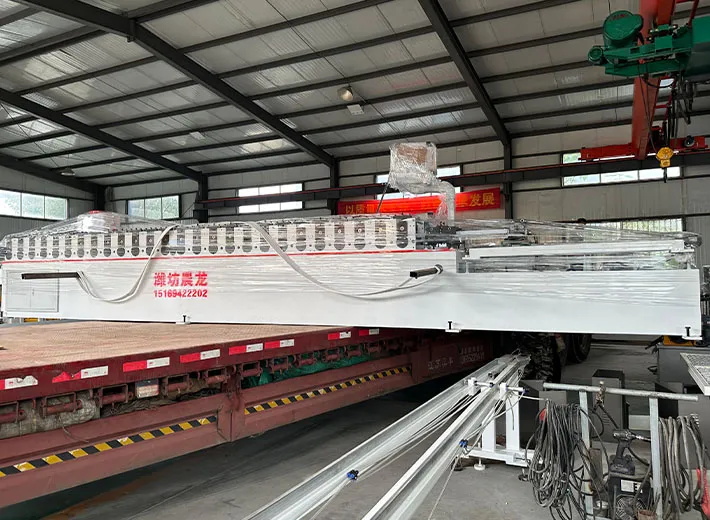
No independent, audited ranking of the world’s largest roll forming companies exists…
Size 24 saat içinde cevap vereceğiz. Acil durum için lütfen WhatsApp/WeChat ekleyin: +8613863639320,. Veya doğrudan +8613863639320'u arayın.
*Gizliliğinize saygı duyuyoruz ve tüm bilgiler korunuyor.
Bilgilerinizi yalnızca sorunuza yanıt vermek için kullanacağız ve asla istenmeyen e-postalar veya tanıtım mesajları göndermeyeceğiz.