











Компания
02 September 2026
Warehouse Racking Systems and Warehouse Shelving: How to Choose the Right Storage Solution
Poor storage planning wastes floor space, slows picking, and increases product damage. The…
 11:13
11:13 Poor cable routing can cause overheating, difficult maintenance, wasted space, and unsafe installations. As more power and data lines are added, the problem grows. A correctly selected cable tray system organizes cables, supports their weight, improves access, and makes future expansion easier.
A cable tray is an open or partially enclosed support system for electrical, control, instrumentation, and communication cables. Buyers should select it according to cable load, tray width, support span, bend radius, environment, material, fittings, and applicable standards. Ladder, perforated, solid-bottom, trough, and wire-mesh systems serve different industrial needs.
People searching “what are cable trays” usually want a simple cable tray description. A tray is a structural pathway that supports insulated electrical, data, control, or communication cables along a planned route. It does not automatically replace conduit, and it does not remove the need to follow electrical codes.
A well-designed electrical кабельный канал helps installers:
The search phrases cable tray electrical and cable tray industrial commonly refer to systems used in factories, power plants, data centers, warehouses, commercial buildings, renewable-energy facilities, and infrastructure projects.
A cable duct or raceway may provide more enclosure than an open tray. A raceway cable tray must therefore be selected according to its actual construction and certification, not its product name alone. Engineers should confirm whether the product is treated as a tray, wireway, raceway, or another wiring method under the applicable rules.
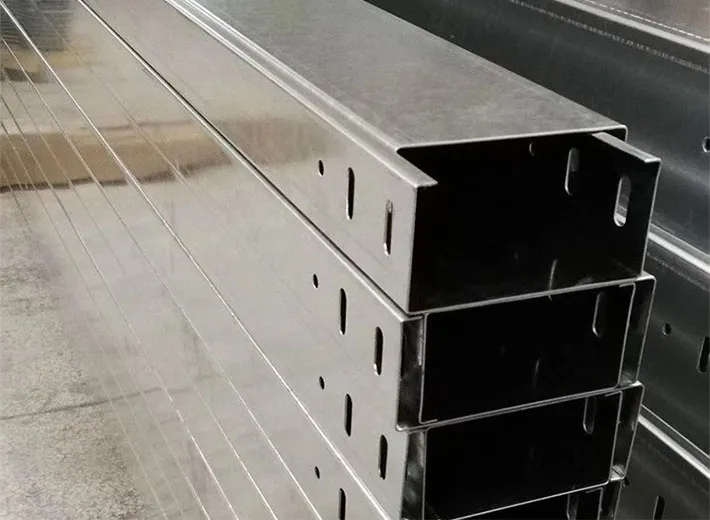
The main cable tray types differ in structure, ventilation, cable support, load capacity, and maintenance access.
| Type | Typical Application | Main Advantage |
| Ladder tray | Heavy power and control cables | Strength, ventilation, and open access |
| Perforated tray | Mixed industrial cables | Continuous support with airflow |
| Solid-bottom tray | Small or sensitive wiring | Full bottom support |
| Wire-mesh tray | Data and light cables | Flexible routing and fast installation |
| Trough tray | Control and instrumentation cables | More support than ladder construction |
| Channel tray | Small cable quantities | Compact routing |
| Flexible tray | Routes with frequent changes | Easier field adjustment |
A ladder cable tray uses two side rails connected by repeated rungs. The same product may be called a cable ladder tray or ladder type cable tray. Its open construction allows airflow and makes it easier to secure, inspect, or remove large cables.
A perforated cable tray uses a formed bottom with punched ventilation openings. It supports smaller cables more continuously than a ladder structure. Manufacturers can change the hole pattern, rail height, width, and reinforcement according to the required load.
A solid кабельный канал has a continuous bottom. It can provide strong support for small or sensitive cables, but designers must consider heat, dust, water accumulation, and ventilation.
Trough cable trays may use closely spaced rungs or a ventilated bottom. The exact construction varies between manufacturers, so buyers should review drawings and load data before ordering.
A wire mesh cable tray, also known as a wire basket cable tray or wire tray basket, is common for telecommunications, data cabling, and lightweight electrical routes. It can be cut and redirected in the field, although every modified section still needs suitable edge treatment, support, and bonding where required.
The phrase cable tray flexible may refer to mesh products, articulated systems, or a bendable cable tray. Buyers should confirm the material, minimum bend, load rating, and approved installation method rather than relying on the word “flexible.”
Ladder Rack vs Cable Tray: What Is the Difference?
The search “ladder rack vs cable tray” can refer to several different products. A ladder tray is an established electrical cable-support structure. A ladder rack may describe a telecommunications pathway, overhead cable runway, vehicle rack, or another support frame.
For electrical installations, compare:
Correct cable tray sizes begin with a cable schedule. Record the outside diameter, quantity, weight, voltage class, function, bend radius, and expected future additions for every cable.
The basic selection process is:
Some buyers search “size cable tray” when they need a quick selection. However, width alone is not enough. Two trays of equal width can have different rail heights, material thicknesses, rungs, reinforcements, spans, and load ratings.
| Nominal Width | Common Planning Use | Important Check |
| 50–100 mm | Small control or communication routes | Cable quantity and connector clearance |
| 150 mm | Compact power or mixed-cable routes | Fill, separation, and bend radius |
| 200–300 mm | General industrial routing | Cable weight and support span |
| 400–600 mm | Larger cable groups | Structural load and installation access |
| Above 600 mm | Special high-capacity routes | Engineering review and sectional layout |
This кабельный канал sizes chart is illustrative, not a universal specification. A cable tray 150mm wide may suit one project but be too small or unnecessarily large for another.
Ladder type cable tray sizes are normally defined by width, side-rail height, rung spacing, section length, and material thickness. A large cable tray or long cable tray also needs careful attention to deflection, joint positions, transportation, and installation handling.
Low profile cable trays are useful where vertical clearance is restricted, but their lower side rails may limit cable depth and load performance. Always balance space savings with mechanical requirements.
A metal cable tray may be made from galvanized steel, stainless steel, or aluminum. The correct choice depends on corrosion, humidity, chemicals, temperature, weight, electrical performance, service life, and budget.
| Material or Finish | Typical Use | Main Consideration |
| Предварительно оцинкованная сталь | Dry indoor environments | Economical corrosion protection |
| Hot-dip galvanized steel | Outdoor or industrial exposure | Stronger coating after fabrication |
| Нержавеющая сталь | Chemical, food, coastal, or washdown areas | High corrosion resistance |
| Алюминий | Lightweight or corrosion-sensitive routes | Lower weight and material compatibility |
| Painted steel | Controlled indoor applications | Coating damage and maintenance |
| GI steel | General commercial and industrial use | Confirm coating grade and thickness |
A GI cable tray is made from galvanized iron or, more commonly in modern specifications, galvanized steel. Buyers should ask whether the material is pre-galvanized, hot-dip galvanized after fabrication, or coated using another process.
An aluminum cable tray reduces weight and offers useful corrosion resistance in many environments. An aluminum ladder tray can be especially helpful for elevated routes where installation weight matters. However, designers must still examine loading, connections, temperature, and galvanic interaction with dissimilar metals.
Chenlong’s cold-formed steel cable tray profiles can be customized in cold-rolled steel, hot-rolled steel, galvanized steel, stainless steel, pre-coated metal, aluminum, copper, and other suitable materials.
A complete system includes more than straight sections. Common cable tray components include:
A cable tray elbow redirects the route horizontally or vertically. Its radius must suit the installed cables. Tight bends can damage insulation or violate the cable manufacturer’s minimum bending requirements.
Cable tray fittings should match the straight sections in width, rail height, material, finish, and load path. Field-made fittings require careful engineering and workmanship because poor cutting can create sharp edges, weak joints, or inadequate cable support.
A cable tray cover can protect wiring from falling objects, dust, sunlight, or water. Common cable tray cover types include flat, peaked, ventilated, solid, hinged, and clamp-on designs.
The correct cable tray cover size must match the outer tray dimensions and fastening system. Designers should also determine whether the cover changes ventilation, heat dissipation, wind loading, or access.
The phrase tray cable types refers to cables approved or designed for particular tray applications. Cable selection and tray selection are related but separate decisions. Confirm cable listings, environmental requirements, and local electrical rules.
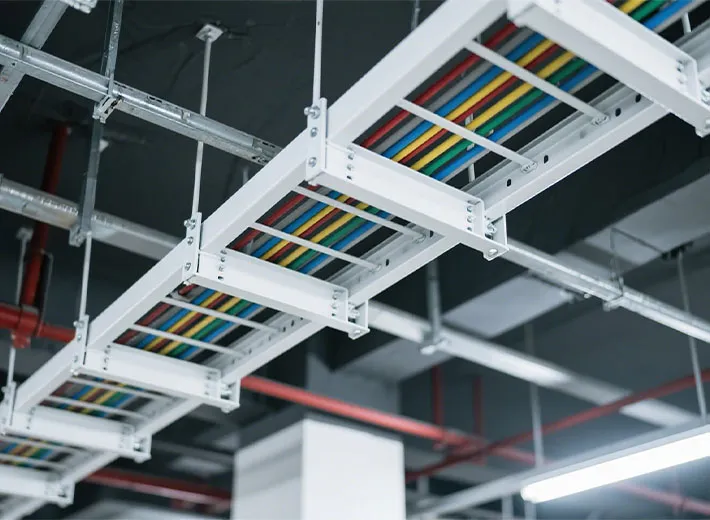
A safe cable tray installation needs correctly positioned supports, aligned joints, compatible fittings, adequate clearance, and protection from mechanical damage.
Typical cable tray support methods include:
The required spacing depends on tray type, material, load, span classification, fittings, and manufacturer instructions. Cable tray support requirements may also be affected by seismic loads, wind, snow, ice, vibration, or concentrated forces.
Useful cable tray support details should show:
Do not place every splice at the same unsupported position unless the system is designed for it. Extra support may be needed near a heavy fitting, vertical transition, cable drop, or equipment entry.
Before work begins, inspect the proposed route for pipes, ducts, fire barriers, doors, access platforms, and maintenance space. Installers should also follow the applicable electrical code, project drawings, manufacturer instructions, and requirements of the authority having jurisdiction.
The cable tray price depends on much more than length. Important cost drivers include:
A published cable tray price list can support early budgeting, but it rarely reflects every fitting, support, finish, freight cost, or custom requirement. Searches such as price cable tray usually need a defined specification before suppliers can provide an accurate quotation.
When comparing a cable tray for sale, buyers should check the total installed system rather than the lowest straight-section price. A low-cost product may require more supports, field modifications, replacement fittings, or additional labor.
Before you buy cable tray, request:
The phrases cable tray sale, new cable tray, and quick ship cable tray often indicate urgent purchasing intent. Availability matters, but an incorrectly sized or incompatible product can create much greater delays during installation.
Ченлонг is not positioned as a retail tray reseller. We help cable trays manufacturers, OEM partners, and industrial suppliers develop profiles and automated equipment. Companies seeking a long-term cable tray manufacturer should evaluate design support, production control, testing, customization, and global service—not price alone.
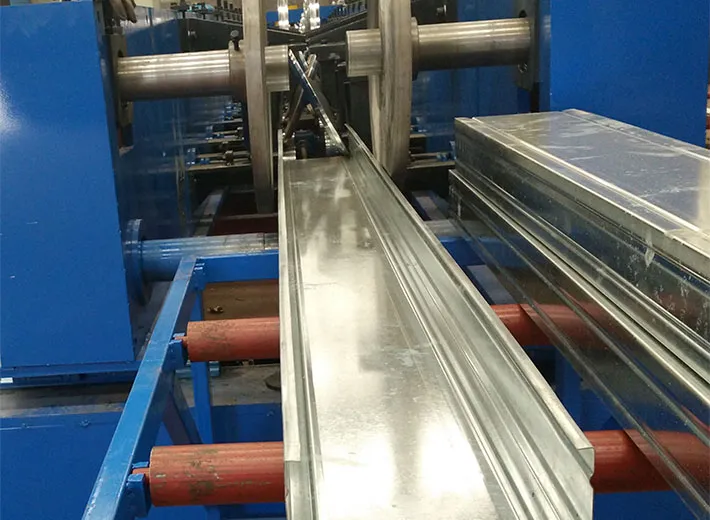
Cable tray profiles are the repeated metal sections used to form side rails, rungs, channels, edges, supports, and related components. Cold roll forming is well suited to these long parts because it shapes metal gradually through multiple roller stations.
Common electrical cable tray profiles include:
A cable ladder profile needs stable dimensions, straightness, suitable hole positions, and a connection design that works with rungs and splice plates. Small dimensional errors can accumulate across long routes and make assembly difficult.
At Weifang Chenlong Intelligent Technology Co., Ltd., we develop high-precision cold bending forming equipment, customized automated lines, and roll-formed profiles for electrical equipment manufacturers. Buyers can review our complete range of electrical field profiles and production equipment.
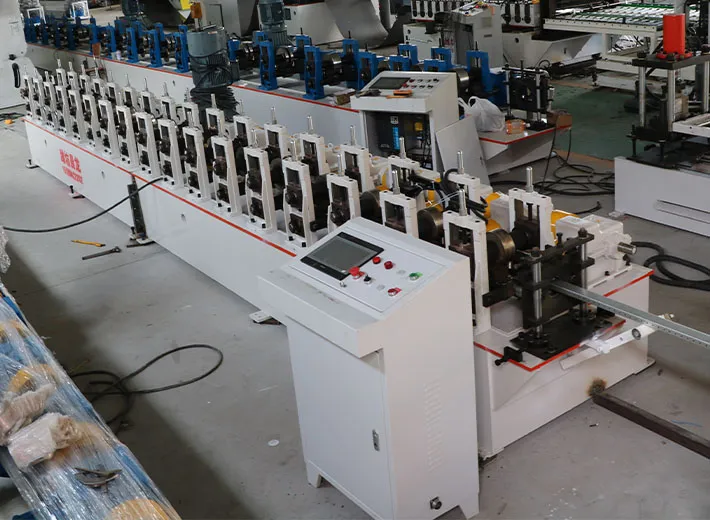
Chenlong’s cable tray cold-forming equipment production line can connect several manufacturing operations in one controlled process.
A typical line may include:
Servo feeding helps position repeated holes accurately. The press produces ventilation openings, connector holes, or functional slot patterns before forming. Roller stations then shape the strip gradually into the finished cross-section.
A machine supplier cannot design a reliable line from a general cable tray catalogue alone. Manufacturers should provide detailed production information.
Prepare the following:
If one line must produce several widths, explain which dimensions change and how frequently operators will change products. Adjustable stands may support some variations, while substantially different sections may require separate roller sets or punching dies.
Chenlong’s electrical cabinet and cable tray solution combines servo feeding, punching, cold bending, cutting, and application-focused profile development.
We work with manufacturers, distributors, and OEM partners worldwide. Our goal is to provide an efficient production method built around the actual component—not force every factory to use the same standard machine.
Ladder systems are widely used for industrial power cables because they provide strength, ventilation, and open access. Perforated systems are common where smaller cables need more continuous support. The best type depends on cable weight, environment, span, heat, and access.
Not always. A duct or raceway usually provides greater enclosure, while a tray is generally an open or ventilated support structure. Product names vary by market, so check the construction and applicable electrical classification.
Complete cable tray details should include dimensions, material, thickness, finish, section length, load rating, support span, fitting options, cover design, connection hardware, grounding provisions, and applicable standards.
A GI system can provide economical strength for many indoor and industrial applications. Aluminum reduces weight and offers corrosion resistance in suitable environments. Compare structural load, exposure, electrical behavior, installation method, service life, and total cost.
It may. Adjustable stations, modular tooling, programmable punching, and interchangeable rollers can expand the product range. The final capability depends on the profile differences, material thickness, width range, punching layout, and required changeover time.
Yes. Chenlong can support customized roll-formed components and complete production equipment. Our services are designed for manufacturers and OEM partners that need repeatable metal profiles, automation, or an integrated solution.
A reliable cable-management system starts with the correct type, size, material, support layout, fittings, and installation method. For manufacturers, quality begins even earlier—with accurate holes, stable profiles, repeatable lengths, compatible components, and controlled production.
Weifang Chenlong Intelligent Technology Co., Ltd. provides custom cold roll forming machinery and metal profiles for electrical equipment, new energy, structural systems, and industrial infrastructure. We focus on automation, customization, production efficiency, and global technical service.
If your current process involves repeated measuring, separate punching, manual bending, or excessive material transfers, an integrated line may provide a more stable way to increase output.
Contact Chenlong with your drawings, material specifications, profile range, required speed, and output target. Our engineering team will review the project and propose a practical manufacturing solution.
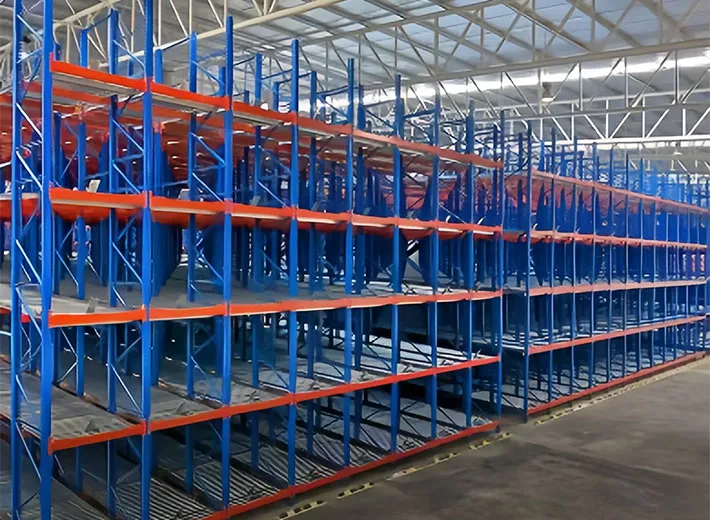
Poor storage planning wastes floor space, slows picking, and increases product damage. The…
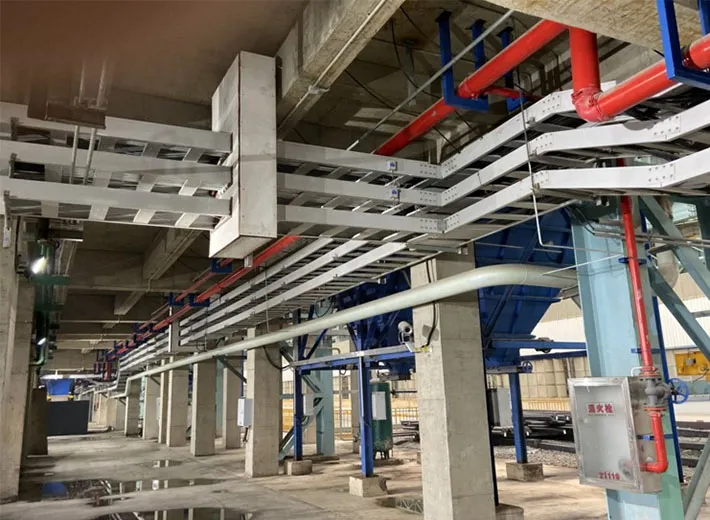
Loose electrical lines create blocked access, poor airflow, slow maintenance, and higher d…
Мы ответим вам в течение 24 часов. Если для срочного случая, пожалуйста, добавьте WhatsApp/WeChat: +8613863639320,. Или позвоните по телефону +8613863639320.
*Мы уважаем вашу конфиденциальность и защищаем всю информацию.
Мы будем использовать вашу информацию только для ответа на ваш запрос и никогда не будем отправлять незапрашиваемые электронные письма или рекламные сообщения.