











Компания
20 September 2026
Warehouse Racking Systems & Shelving Production Guide
Moving a warehouse shelving line from standard to custom profiles changes four things: too…
 10:12
10:12 Cable tray manufacturers often face slow output, uneven cable tray profiles, and rising labor cost. When orders grow, small forming errors become big delivery problems. A high-precision cold forming production line helps produce stronger cable tray parts faster, cleaner, and with better repeat quality.
A cold-formed steel cable tray profile is a roll formed metal section used to build cable tray, cable ladder, perforated cable tray, channel cable tray, and solid bottom cable tray systems. These profiles support, guide, and protect power cable, control cable, signal cable, and communication cable routes in industrial applications.
Cold-formed steel cable tray profiles are metal sections shaped at room temperature through roll forming, punching, bending, cutting, and other metal forming steps. These profiles are used to build a cable tray system that supports and routes cable in factories, power plants, data centers, commercial buildings, tunnels, and infrastructure projects.
A cable tray is not only a metal channel. It is a support system for electrical and communication cable runs. NEMA describes cable trays as mechanical support systems for electrical cables, raceways, and insulated conductors used in power distribution, control, signal instrumentation, and communication. That is why cable tray quality matters in real projects.
For manufacturers, cable tray profiles include side rails, rungs, tray sections, perforated bottoms, solid bottom panels, channel trays, and tray supports. When these parts are formed accurately, the final cable tray is easier to assemble, stronger in use, and more stable during installation.
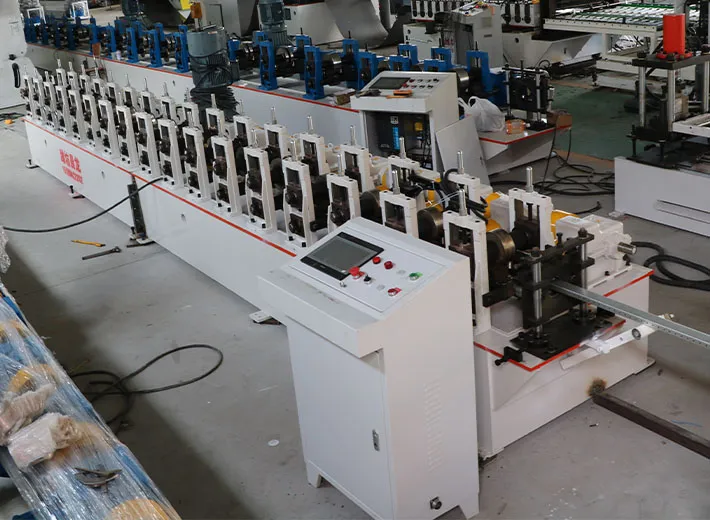
Cable tray profiles matter because they decide how well the cable tray can support cable weight, protect the cable route, and keep electrical systems organized. A weak cable tray can bend. A poorly formed ladder side rail may not align with rungs. A rough perforated tray edge can damage cable insulation during installation.
In industrial applications, the cable tray may carry power cable, control cable, signal cable, stainless steel cable, and communication cable routes. Each type of cable has different weight, bend radius, and routing needs. Heavy cable needs stronger support. Smaller cable runs may use channel trays or wire mesh systems.
A good cable tray design helps with:
For buyers, this means the cable tray profile must be more than “close enough.” It must be accurate, repeatable, and suitable for the final project.
A ladder cable tray usually includes two side rails and cross rungs. The side rail is one of the most important cable tray profiles because it supports the main load. The rung helps hold the cable and keeps the tray structure stable.
A ladder profile production process may include:
Steel Strip → Leveling → Punching → Roll Forming → Cutting → Side Rail Output
The ladder side rail must be straight, strong, and accurate. If the side rail twists, the cable ladder becomes hard to assemble. If the holes are not accurate, the rung connection may not fit. If the profile edge is rough, installation becomes slower.
A high-quality roll formed profile improves repeat accuracy. The same side rail shape can be produced again and again. For mass production, this is a clear advantage over manual bending.
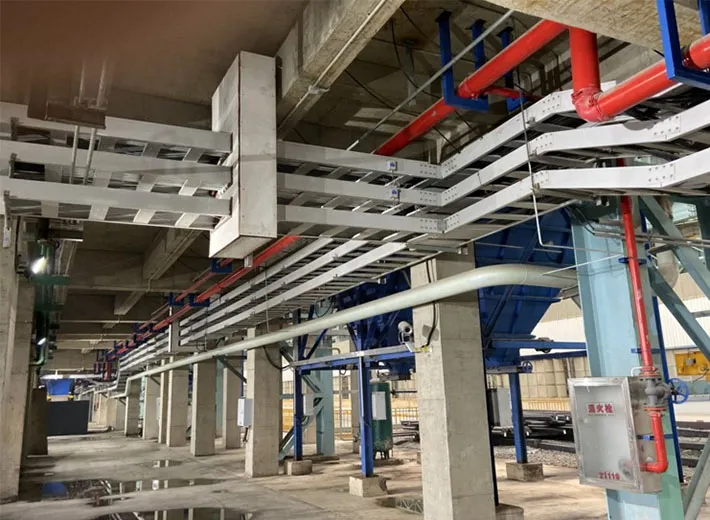
A perforated cable tray has holes in the bottom. These holes reduce weight, improve airflow, and help with drainage in some conditions. A solid bottom cable tray has a closed bottom, which gives more continuous cable support and better separation from the surrounding area.
The production method is also different. A perforated tray needs accurate punching before or during forming. Hole shape, hole spacing, tray width, and edge bending must match the product drawing. A solid bottom design may focus more on flatness, edge forming, and clean tray sections.
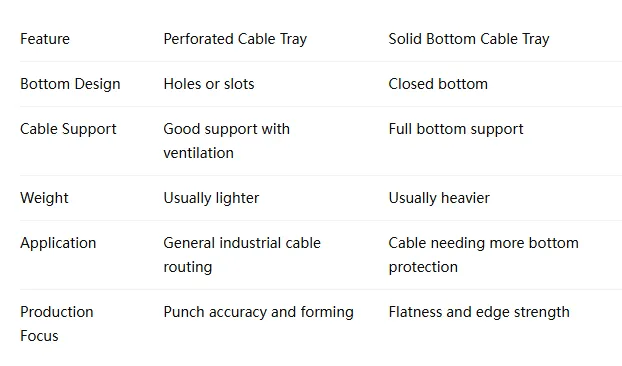
For manufacturers, both products need stable forming. A small error in tray width can affect accessories, covers, supports, and installation fit. That is why accurate cable tray profiles are important.
Steel cable trays can be made from different materials and surface treatments. The best option depends on the working environment, corrosion risk, load requirement, and cost target.
Common material options include:
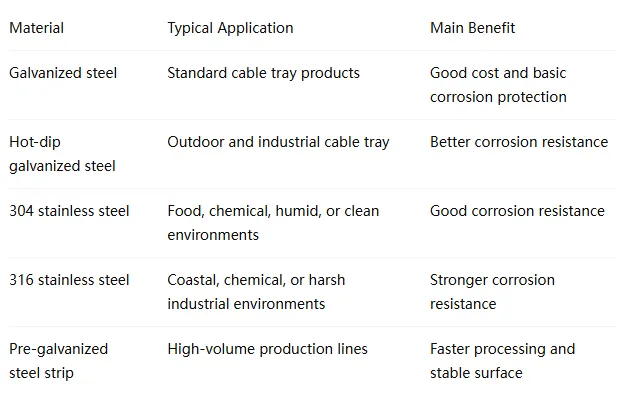
A hot-dip galvanized cable tray is often chosen for industrial environments because the zinc coating helps resist corrosion. A stainless steel cable tray is suitable when the environment is wet, chemical, or highly corrosive. 304 stainless steel works for many demanding areas, while 316 stainless steel is preferred for stronger corrosion resistance needs.
Material thickness and cable weight must also match. Heavy cable requires stronger tray structures and better tray supports. If the material is too thin, the cable tray may deform. If the material is too thick, the production line needs stronger forming equipment.
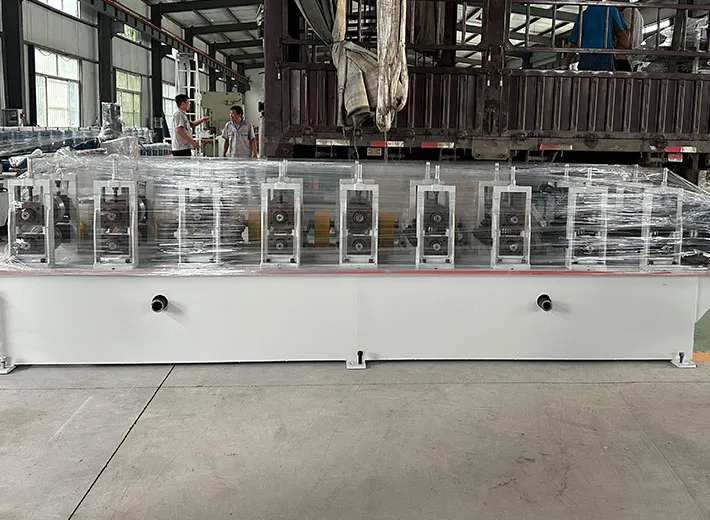
Before customizing cable tray profiles, buyers should define the product and production target clearly. A good drawing helps the machine supplier design the right tooling. A vague requirement can lead to wrong roller design, poor punching layout, or low production efficiency.
Buyers should prepare:
Custom tray profiles should match both the project and the factory. For example, a heavy duty cable tray may need stronger side rails and thicker material. A standard cable tray may need faster output and lower cost. A stainless steel cable tray may need careful handling to protect the surface.
The goal is not only to produce a shape. The goal is to produce a cable tray solution that can be manufactured efficiently and installed smoothly.
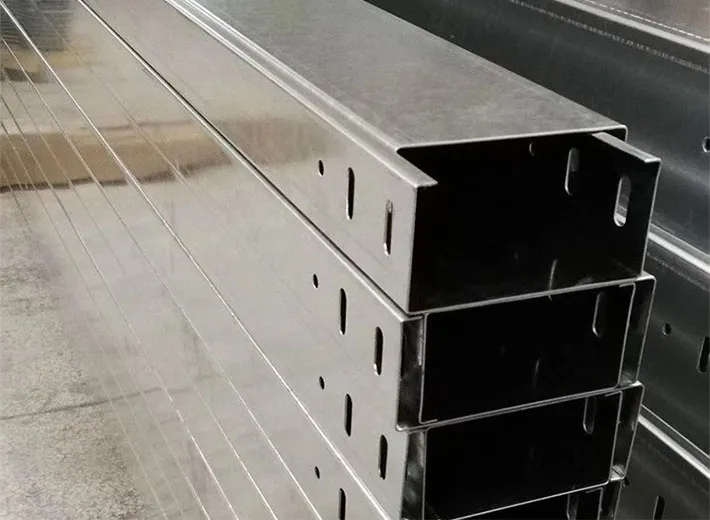
Компания Weifang Chenlong Intelligent Technology Co., Ltd. is a high-tech company based in Shandong, China. We specialize in high-precision cold bending forming equipment and customized automated production lines for metal profile processing.
For cable tray manufacturers, Chenlong can provide production equipment for cable tray profiles, ladder side rail forming, perforated cable tray production, solid bottom tray forming, channel tray forming, and custom tray profiles. Our equipment helps manufacturers improve speed, accuracy, and stability.
Chenlong can support:
We do not only look at the finished cable tray. We look at the production process behind it. How does the steel strip enter the line? Where should punching happen? How can the profile avoid twisting? How should tray sections be collected? These details decide the final production result.
Manual cable tray fabrication can work for samples or small orders. Workers cut, punch, bend, weld, and assemble tray sections by hand or with separate machines. This method is flexible, but it becomes slow when production volume grows.
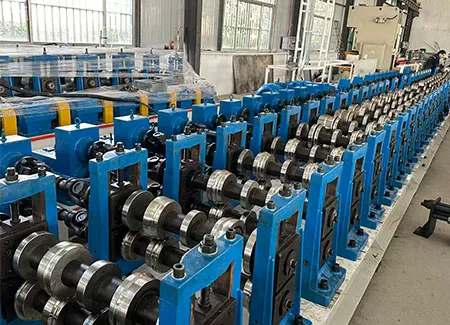
Automated production lines are better for repeat products. A cable tray production line can complete feeding, punching, forming, cutting, and stacking in one flow. This reduces manual handling and improves production efficiency.
For cable tray manufacturers, automation is not only about speed. It also helps improve cable tray quality, reduce waste, and make delivery more predictable.
When a buyer needs stable export orders or OEM supply, automated production lines become more valuable.
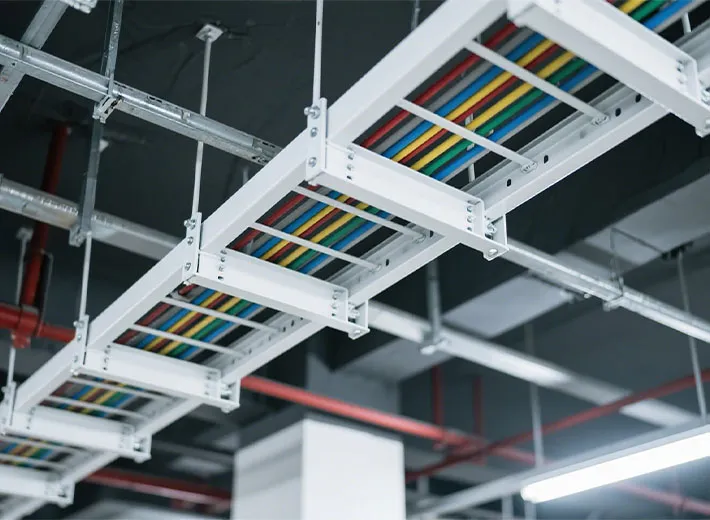
Different types of cable need different cable tray design ideas. A power cable may be heavy and require stronger support. A control cable may need organized routing near machines. A signal cable may need clean separation and easy maintenance. Communication cable routes often need neat layout and accessible paths.
A good cable tray system supports these needs by creating a clear cable route. It keeps cables off the floor, improves access for inspection, and reduces messy wiring. In industrial environments, this can make maintenance safer and faster.
Cable trays and cable ladders also help future expansion. When a factory adds new equipment, more cable may be required. A well-designed cable tray route can make that upgrade easier.
For this reason, cable tray profiles should be made with careful attention to tray width, side height, hole pattern, surface treatment, and support spacing.
Cable trays often work in tough places. They may be installed in factories, tunnels, power plants, chemical workshops, water treatment areas, outdoor structures, and humid environments. In these places, corrosion resistance matters.
Hot-dip galvanized cable tray products are widely used because the zinc layer helps protect the steel. Stainless steel cable tray products are used when corrosion risk is higher. 304 stainless steel is common for many indoor and industrial areas. 316 stainless steel is often used in more corrosive environments, such as coastal or chemical sites.
The production line must match the material. Stainless steel is harder to process than standard galvanized steel. The surface may need better protection during forming. Rollers must be designed to reduce scratches and maintain profile accuracy.
For buyers, material choice should not be decided by price alone. It should match the cable tray application and expected service environment.
Good cable tray design makes installation easier and maintenance faster. Installers care about tray width, straightness, hole positions, fittings, tray supports, and how sections connect. If the tray sections do not fit well, installation slows down.
A good design should consider:
A ladder tray makes it easier to inspect and tie cable. A perforated tray gives bottom support and airflow. A solid bottom tray gives more continuous support. A channel cable tray helps with smaller cable runs.
The best cable tray design is the one that fits the project, the cable type, and the production method. When design and production work together, the final cable tray solution becomes stronger.
A cold-formed steel cable tray profile is a metal section formed at room temperature for use in cable tray systems. It can be used for ladder side rails, tray bottoms, channel trays, perforated tray sections, and other cable support structures.
The main cable tray types include ladder tray, perforated cable tray, solid bottom cable tray, channel cable tray, wire mesh cable tray, and stainless steel cable tray. Each type supports different cable routes and installation needs.
A ladder tray uses side rails and rungs, making it suitable for heavy cable and long routes. A perforated cable tray has a bottom with holes, giving cable support while allowing ventilation and reducing weight.
The best material depends on the environment. Galvanized steel is common for standard cable tray products. Hot-dip galvanized steel is better for stronger corrosion resistance. 304 stainless steel and 316 stainless steel are used for humid, chemical, coastal, or harsh industrial environments.
Yes. Chenlong can customize cable tray production lines based on tray type, profile drawing, material thickness, punch pattern, tray width, production capacity, and factory layout. The solution can support ladder tray, perforated tray, solid bottom tray, and channel tray production.
Automation improves production speed, hole accuracy, tray width control, and profile repeatability. It also reduces manual handling, lowers labor pressure, and helps cable tray manufacturers manage large or repeat orders more efficiently.
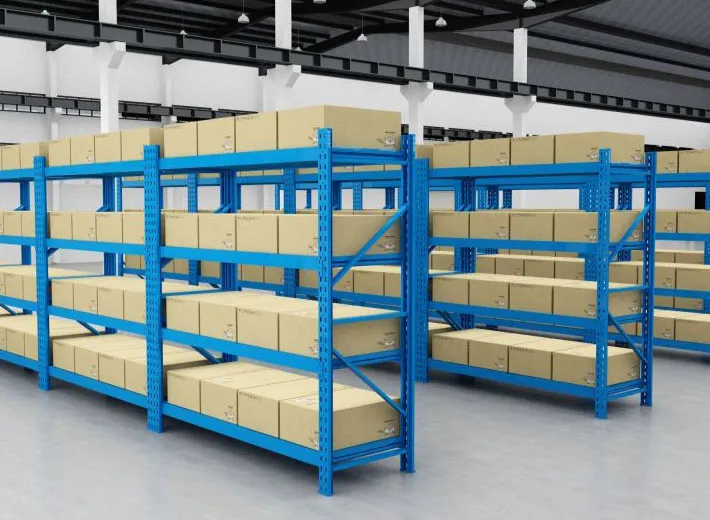
Moving a warehouse shelving line from standard to custom profiles changes four things: too…
Chenlong’s roof and wall panel line is a factory-based automated roll forming system…
Мы ответим вам в течение 24 часов. Если для срочного случая, пожалуйста, добавьте WhatsApp/WeChat: +8613863639320,. Или позвоните по телефону +8613863639320.
*Мы уважаем вашу конфиденциальность и защищаем всю информацию.
Мы будем использовать вашу информацию только для ответа на ваш запрос и никогда не будем отправлять незапрашиваемые электронные письма или рекламные сообщения.