


Entreprise
18 November 2026
Temporary Power Distribution Boxes: Uses and Sourcing Guide
A temporary power distribution box is a portable enclosure that takes one incoming supply …
 09:28
A used machine de formage à froid gets you producing sooner, but only if its tooling, stands and electrics match your exact profile and power supply. A new line built to your drawing takes longer (Chenlong publishes 40–60 business days for custom equipment) and is designed around the profile you actually sell. In both cases, check the tooling first.
Typical marketplace listings are single machines sold as they stand, often tooled for whatever profile the previous owner made. A new line is specified around your drawing. The table compares the two on the points that usually decide the purchase.
| Decision factor | Used roll former (marketplace listing) | New line built to your drawing |
| Availability | Can often be inspected and shipped soon after purchase | Chenlong publishes 20–30 business days for standard equipment, 40–60 for custom |
| Fit to your profile | Only if the existing rolls form your exact section | Tooling designed for your drawing |
| Tooling condition | Unknown wear; may need regrinding or replacement | New rolls and dies |
| Punching, cutting, stacking | Often sold separately or missing | Integrated according to project requirements |
| Electrical supply | Wired for the original site’s voltage and frequency | Specified for your local supply |
| Documentation | Manuals, drawings and electrical schematics may be incomplete | Supplied with the line |
| Support and spare parts | Depends on whether the original builder still supports the model | Chenlong offers remote diagnostics, video consultation, spare parts and optional on-site service |
| Price visibility | Listed price, plus unknown refurbishment cost | Quoted per project; nothing is priced until drawings are reviewed |
| Risque principal | Hidden cost of making it fit | Longer wait and a 30% deposit before you see the machine |
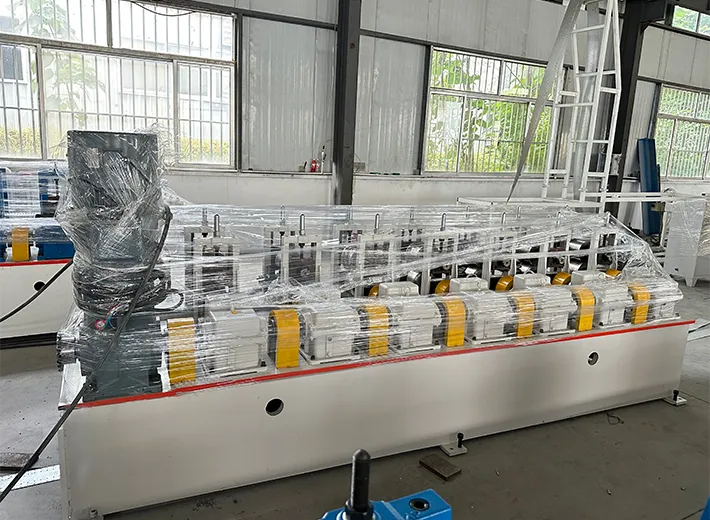
The most common mistake is assuming that a used roll former listed for “C purlin,” “trapezoidal sheet” or “stud and track” will produce your C purlin, your trapezoid or your stud.
A roll set is cut for one cross-section. Web height, flange width, lip length, bend radii and material thickness range are all built into the rolls. If your drawing differs from the previous owner’s in any of these, you need new or modified tooling. At that point the used machine’s frame decides what is possible:
So the realistic comparison is not used price against new price. It is used price plus new tooling, missing stations, rewiring and commissioning, against a new line. Ask for that total before deciding.
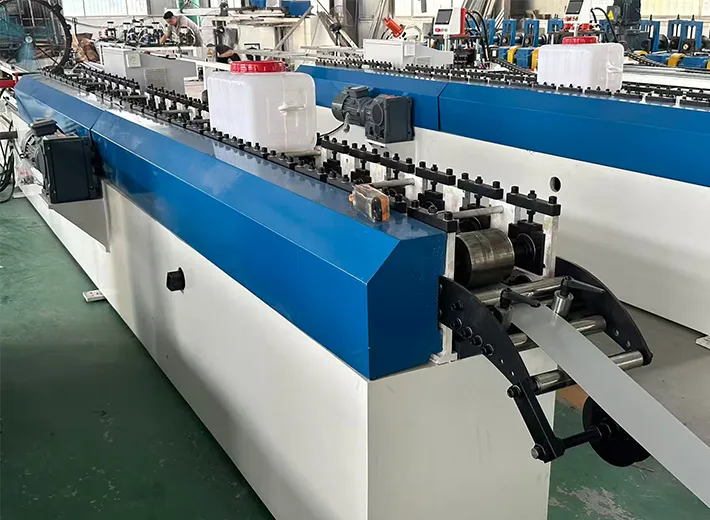
Work through these in order. A failure at step 1 or 2 usually ends the evaluation.
A new line removes the fit problem but adds others: you commit money against drawings, before any metal is formed. Use this sequence:
As an example of what a published range looks like, here are the figures Chenlong lists for its warehouse and supermarket shelving production line. They apply to that line only.
| Paramètre | Published range (shelving production line) |
| Matériaux | SPCC, SPHC, SGCC, SUS, aluminium, SECC |
| Material width | 10–2,000 mm |
| Épaisseur de laminage | 0.2–10 mm |
| Capacité de production | 0–50 m/min |
| Motor power | 3–200 kW |
| Tension | 110–380 V, customized for local supply |
| Punching die materials | Cr12MoV, SKD11 or DC53, depending on material and application |
| Servo feeder | Yaskawa, Delta |
These are ranges for configuring a project, not the specification of any single machine. Your quote should state the exact values chosen for your line.
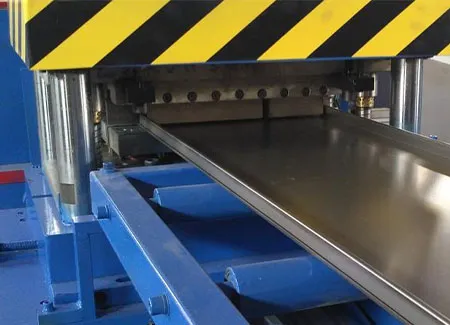
Search results for “roll forming line for sale” often show prices, but those prices are for specific listings. They tell you little about the cost of a line that forms your profile.
Each line is quoted from the customer’s profile drawings, material specifications, product dimensions, required speed, punching requirements, automation level and line configuration. The published commercial terms are:
A used roll former makes sense when a machine already forms your exact profile, its tooling is in measured good condition, and you need output before a new line could be delivered. It also suits short-run or trial production where you are not yet sure the product will sell.
It is a poor choice when your profile differs even slightly from the existing tooling, when punching must be integrated, or when the original builder no longer supplies parts. In those cases, the cost of making the machine fit can approach the cost of a new line without giving you a new line’s documentation or support. Some buyers start by sourcing finished profiles while testing demand. Chenlong offers that route alongside its equipment.
The purchase price usually is. The total cost may not be, once you add new tooling, missing stations, rewiring and commissioning. Compare total cost to first good part, not listing price against quote.
Sometimes. The frame’s shaft diameter, stand spacing, number of stations and drive power limit which new tooling will work. Have the tooling designer check these against your drawing before you buy.
Chenlong’s website lists new standard and customized equipment, not used machines.
Chenlong publishes 40–60 business days for custom equipment and 20–30 business days for standard equipment. Expedited production may be available.
Profile drawings, material grade and thickness range, coil width, punching requirements, cut lengths, required output and local power supply. Missing items lengthen the quotation process.
The website describes 24/7 technical support covering remote diagnostics, video consultation, spare-parts supply and optional on-site technical service.
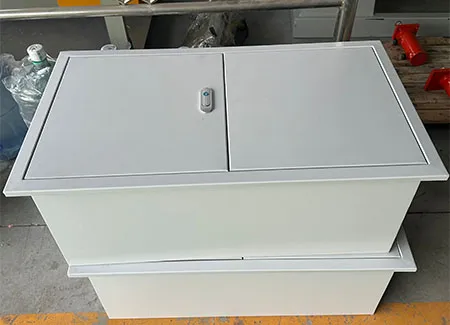
A temporary power distribution box is a portable enclosure that takes one incoming supply …
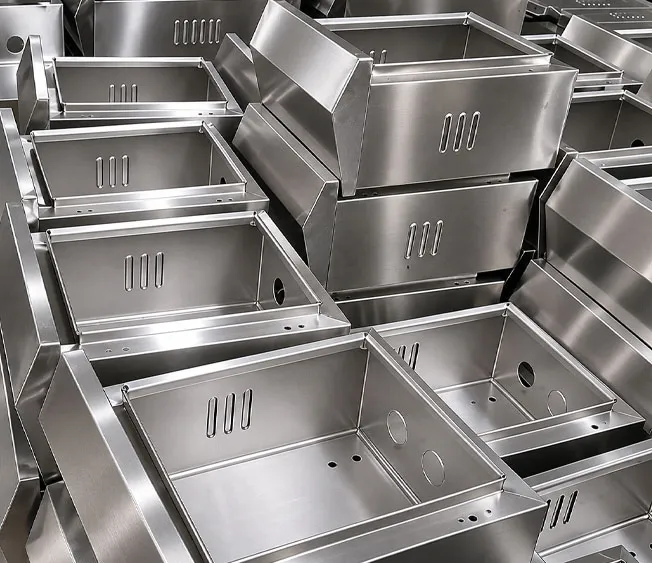
Seven electrical panel board types explained for cabinet and switchgear manufacturers, plu…
Nous vous répondrons dans les 24 heures. En cas d'urgence, veuillez ajouter WhatsApp/WeChat : +8613863639320,. Ou appelez directement +8613863639320.
*Nous respectons votre confidentialité et toutes les informations sont protégées.
Nous n'utiliserons vos informations que pour répondre à votre demande et n'enverrons jamais de messages électroniques ou promotionnels non sollicités.