









Entreprise
02 September 2026
Warehouse Racking Systems and Warehouse Shelving: How to Choose the Right Storage Solution
Poor storage planning wastes floor space, slows picking, and increases product damage. The…
 09:37
09:37 Chenlong Technical Team | Corporate Technical Author | Published September 1, 2026
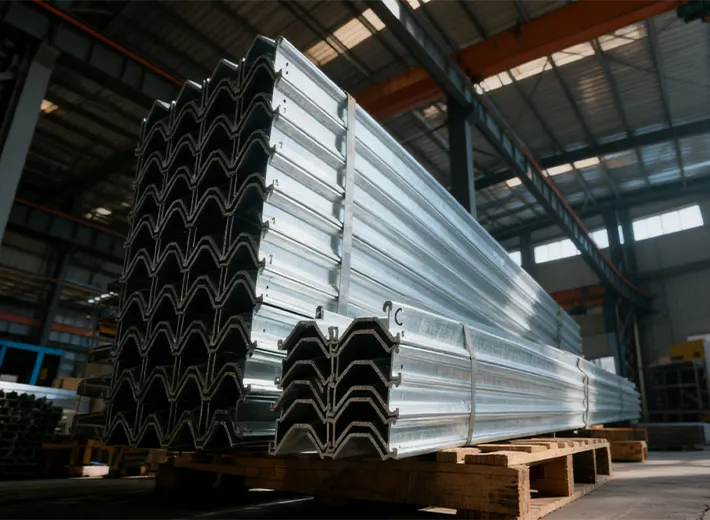
A CZ roll forming machine produces both C-section and Z-section steel purlins on shared or interchangeable tooling. The two profiles serve different structural roles — C sections resist bending independently, while Z sections overlap for continuous roof and wall spans.
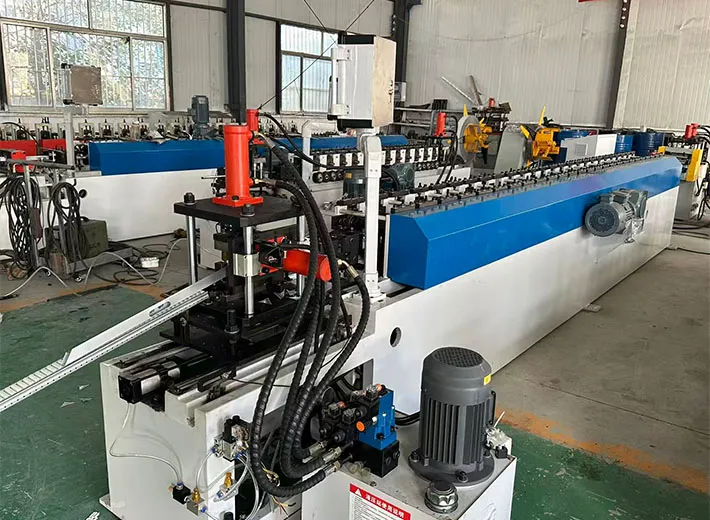
The term covers two related but distinct things, and buyers often conflate them. First, it can mean a single production line capable of switching between C and Z tooling sets — one machine, two profile outputs, changed by swapping roll stations or adjusting forming stands. Second, it can mean a purlin line dedicated to just one profile family, where “CZ” simply describes the product category rather than a dual-capability machine.
This distinction matters because it changes what you’re actually buying. A true interchangeable line adds tooling cost and changeover time to the quote. A single-profile line is cheaper but locks you into one shape unless you order a second tool set later.
Purlins made on either configuration typically serve the same downstream markets: industrial roofing structures, warehouse wall framing, and prefabricated steel construction where secondary structural members carry roof and wall cladding loads between primary beams.
The functional difference comes down to how the flanges sit relative to the web, which changes how the profile behaves under load and how it connects to adjacent pieces.
| Characteristic | C-Section Purlin | Z-Section Purlin |
| Flange orientation | Both flanges point the same direction (symmetrical channel) | Flanges point opposite directions (offset/staggered) |
| Typical use | Single-span roof and wall members, end sections of a run | Continuous multi-span roofs, overlapping laps between purlins |
| Nesting behavior | Cannot nest inside another C without rotating | Nests inside adjacent Z sections for lapped continuity |
| Structural continuity | Requires separate connection hardware between spans | Achieves partial continuity through the overlap itself |
| Common lip/return detail | Straight lip returns inward | Lip return angled to match the offset flange |
Roofing engineers generally default to Z sections wherever spans continue over multiple supports, because the overlap reduces deflection at the lap joint without extra brackets. C sections tend to show up at gable ends, single-bay structures, or wherever the framing plan calls for a section that doesn’t need to overlap a neighbor.
Neither profile is universally “better” — the structural drawing dictates which one gets specified, and mixed-profile buildings (Z through the field, C at the ends) are routine rather than exceptional.
A production line advertised as “CZ capable” usually achieves this one of two ways: quick-change roll stands that swap a full tool stack, or a single stand design with adjustable roll positions that reconfigure the same stack for either profile.
The first approach costs more upfront but changes over in a documented, repeatable sequence:
Skipping the measurement step in that sequence is where most changeover errors happen — a roll set that looks correctly seated can still produce a flange angle a degree or two off, which is invisible until the purlin fails to lap properly on site.
Buyers sometimes assume an interchangeable CZ line runs both profiles at the same speed and thickness range once tooling is swapped. That’s not guaranteed. Roll geometry differences between the two profiles can affect material flow through the stands differently, and a speed setting tuned for C-section forming isn’t automatically correct for Z-section forming on the same coil stock. Any line quoted as CZ-capable should specify whether speed and thickness parameters are validated separately for each profile, or whether one setting is expected to cover both — that detail belongs in the quotation, not assumed after purchase.
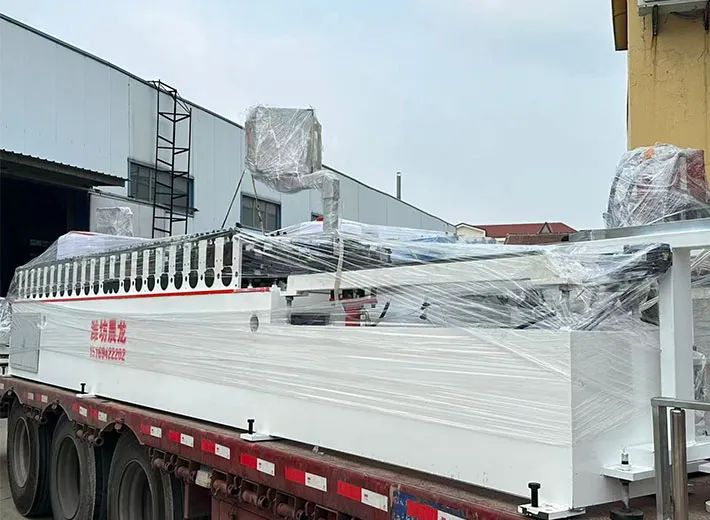
Chenlong offers an automatic production line built for C-section and Z-section purlins, positioned for industrial roofing structures, warehouse walls, commercial buildings, and prefabricated steel construction. The published product information describes the line’s application scope but does not list a separate width, thickness, or speed range specific to this line the way some of Chenlong’s other production lines do.
Not disclosed: specific width/thickness/speed parameters for this particular line. Buyers with a defined coil spec and target profile depth should request project-specific parameters directly, since Chenlong’s stated approach across its product range is to configure lines to the customer’s material and dimensional requirements rather than publish one fixed range for every application.
CZ purlin lines commonly run cold-rolled, hot-rolled, and galvanized steel coil, with profile depth and gauge set by the structural design rather than the machine itself. Tooling changeovers — including the C-to-Z sequence above — fall under general machinery risk-assessment principles. ISO 12100:2010 covers the general principles for machinery design, risk assessment, and risk reduction, and is relevant whenever a changeover procedure introduces a point where guards are removed or an operator works near moving forming stations. A documented changeover procedure with lockout steps, like the sequence above, is a practical way to apply that principle rather than an abstract compliance exercise.
Three questions settle most C-vs-Z decisions before the tooling conversation even starts:
Answering these before requesting a quote keeps the conversation focused on the tooling configuration that actually matches the job, rather than defaulting to “CZ capable” because it sounds more flexible.
A: Yes, when the line is built with quick-change or adjustable tool stands designed for both profiles. The tradeoff is changeover time and, in some configurations, a higher upfront tooling cost than a single-profile line.
A: It can. Roll geometry differs between the two profiles, so a speed setting validated for one doesn’t automatically apply to the other. Confirm with the supplier whether both profiles have separately validated speed ranges.
A: Pricing is project-quotation based, since configuration depends on the customer’s profile drawings, material, and production targets. Chenlong’s standard commercial terms are T/T or L/C with 30% deposit on order confirmation, standard equipment lead times of 20–30 business days, and custom equipment lead times of 40–60 business days.
A: Skipping the post-changeover measurement check. A roll set can appear correctly seated while still producing a flange angle or web height slightly off spec, which only becomes visible when purlins fail to lap correctly during installation.
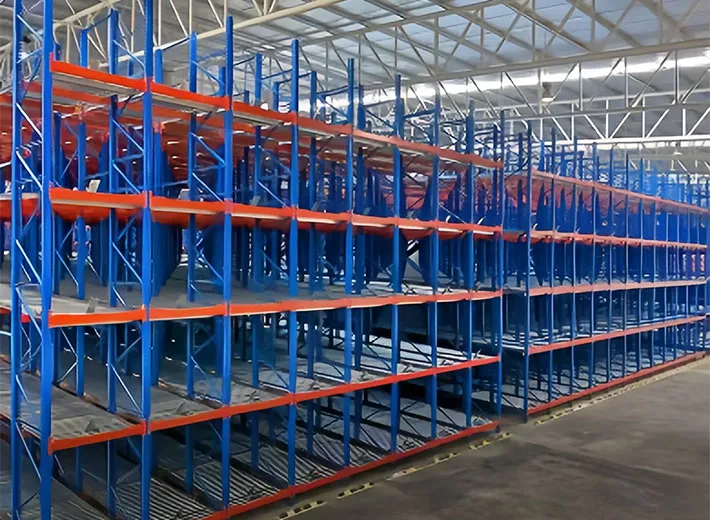
Poor storage planning wastes floor space, slows picking, and increases product damage. The…
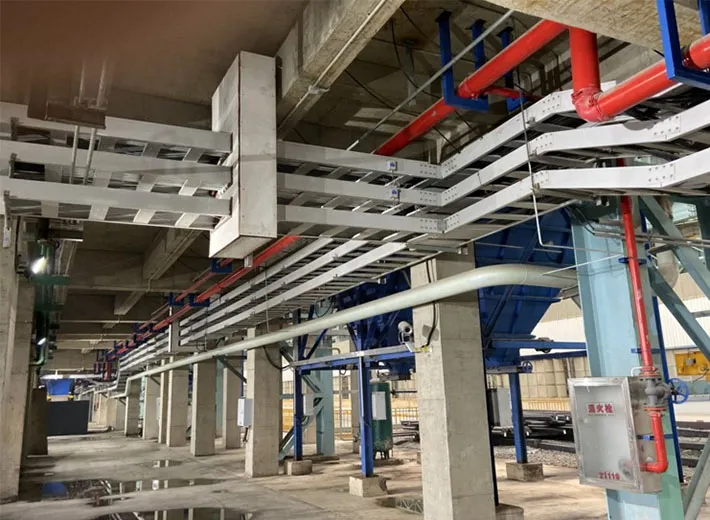
Loose electrical lines create blocked access, poor airflow, slow maintenance, and higher d…
Nous vous répondrons dans les 24 heures. En cas d'urgence, veuillez ajouter WhatsApp/WeChat : +8613863639320,. Ou appelez directement +8613863639320.
*Nous respectons votre confidentialité et toutes les informations sont protégées.
Nous n'utiliserons vos informations que pour répondre à votre demande et n'enverrons jamais de messages électroniques ou promotionnels non sollicités.