










Empresa
20 September 2026
Warehouse Racking Systems & Shelving Production Guide
Moving a warehouse shelving line from standard to custom profiles changes four things: too…
 09:11
09:11 Warehouse and supermarket rack makers often face slow output, unstable shelf size, and high labor cost. When orders grow, these problems delay delivery. A smart roll forming machine production line helps manufacturers produce stronger rack and shelf profiles with better speed, accuracy, and repeat quality.
A rack roll forming machine production line for warehouse and supermarket shelving is automated production equipment that forms steel coil into rack beams, uprights, shelf panels, roller tracks, flow rack parts, and supermarket shelves. It supports faster production, stable profile quality, flexible customization, and efficient storage solution manufacturing.
A rack roll forming machine production line is a manufacturing system that turns metal coil into rack, shelf, and shelving system profiles. The machine feeds steel strip through a group of rollers. Each roller shapes the material step by step until the final profile is complete.
This production line can help produce parts for warehouse shelving, supermarket rack systems, flow rack structures, light-duty shelves, heavy-duty pallet racking, and other storage equipment. It is useful when a factory needs repeated shapes, fast output, and stable size control.
For buyers, the main value is simple: one line can replace many manual steps. Instead of cutting, bending, punching, and moving parts by hand, the machine can combine feeding, punching, cold roll forming, cutting, and collection in one smooth process.
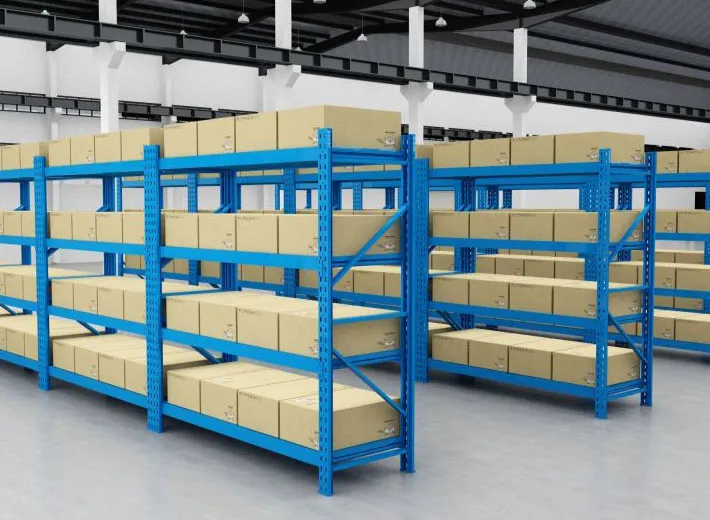
Rack and shelf products may look simple, but the market does not forgive poor quality. A supermarket shelf panel must look clean. A warehouse rack must carry goods safely. A pallet rack must match forklift traffic and warehouse layout. If the parts are not accurate, installation becomes slow and costly.
OSHA notes that warehousing hazards include forklifts, ergonomics, material handling, slips, trips, falls, and robotics. OSHA also recommends measures such as rack upright guards to reduce damage from incidental forklift contact. This shows why rack quality, aisle planning, and safe storage design matter in real warehouses.
Automation helps manufacturers keep quality stable. A roll forming machine can produce profiles with repeatable shape and hole position. This helps workers assemble rack levels faster, reduce rework, and shorten delivery time. When production demand rises, automated production becomes even more valuable.
A roll forming machine shapes metal through a continuous forming process. The machine starts with coil material, then levels it, punches holes, forms the profile, and cuts the part to length. The process is clean and logical.
A common process flow looks like this:
Coil → Leveling → Servo Feeding → Punching → Roll Forming → Cutting → Stacking
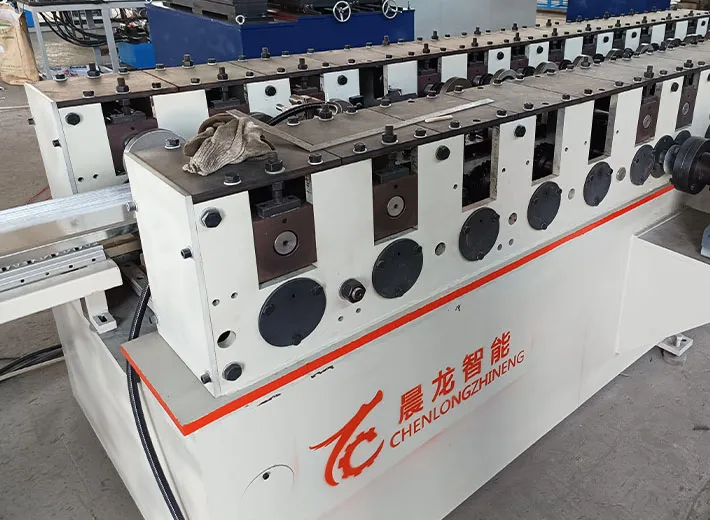
The servo system controls feeding accuracy. The punch station makes holes for assembly. The forming rollers shape the rack or shelf profile. The cutting unit finishes the length. Some lines also include automatic stacking to reduce manual work.
A good machine does more than “make a shape.” It controls material flow, hole spacing, straightness, forming speed, and surface quality. For rack production, these details decide whether the final shelving units are easy to assemble and strong enough for daily use.
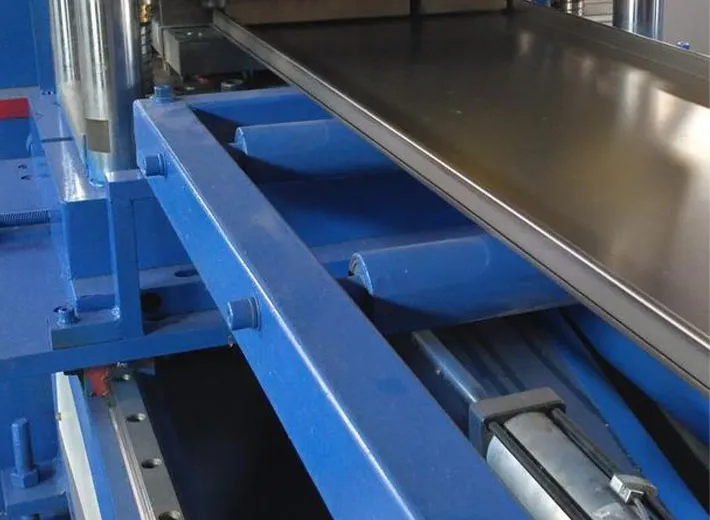
A shelf production line can manufacture many different parts, depending on the product drawing and machine design. Some parts are used in supermarkets. Others are used in a warehouse, e-commerce fulfillment center, workstation area, or manufacturing facility.
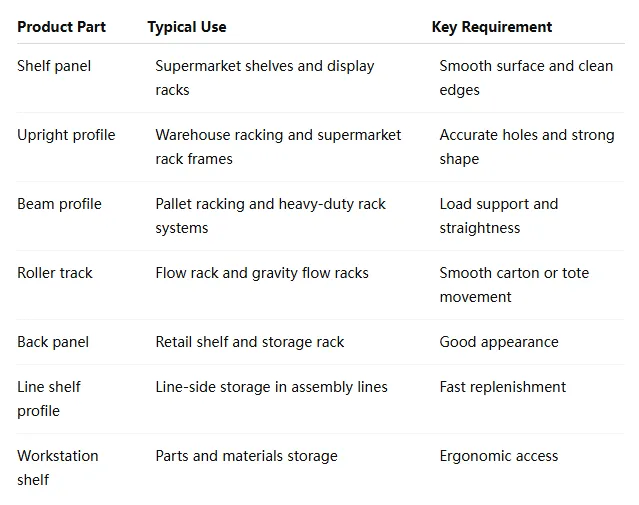
Common products include:
The machine can also produce shelf support parts, side brackets, rack columns, guide rails, and small parts storage profiles. With the right tooling, a factory can produce shelf components for different storage areas.
This is useful for companies that serve both warehouse and supermarket markets. One customer may need pallet racking. Another may need light retail shelves. A third may need a flow rack for first-in, first-out movement.
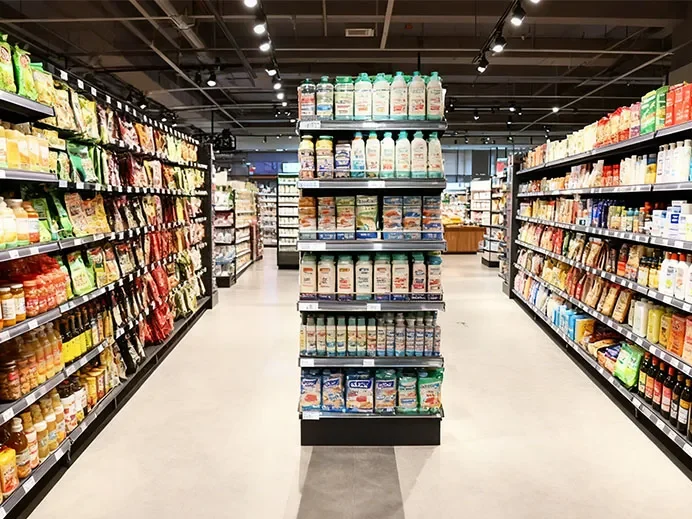
Warehouse racking and supermarket shelves both store goods, but their design goals are different. A warehouse rack focuses on load capacity, forklift access, storage density, and safe material handling. Supermarket shelves focus more on product display, customer access, and clean appearance.
Here is a simple comparison:
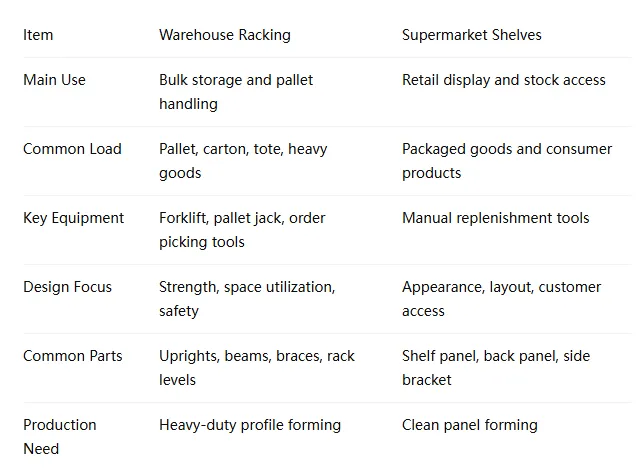
A good roll forming solution should match the end use. A pallet racking beam needs strength and stable forming. A supermarket shelf panel needs clean appearance and accurate size. A flow rack roller track needs smooth product movement.
Chenlong studies these differences before designing forming equipment. We do not treat every rack as the same product. A warehouse system, supermarket display, and line-side storage rack may all need different tooling and process planning.
Modern warehouses need fast material flow. A rack is not only a place to store goods. It can support picking operations, replenishment, inventory visibility, FIFO movement, and safer workflow.
A flow rack uses gravity and roller tracks to move goods from the loading side to the picking side. This helps support FIFO, which means first-in, first-out. Gravity flow racks are common in lean manufacturing, e-commerce fulfillment, small parts storage, and assembly lines.
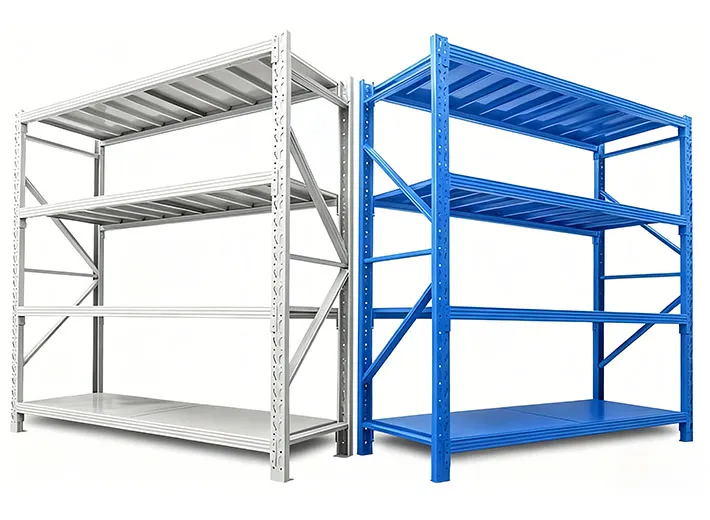
Pallet racking supports larger and heavier goods. It must work well with forklift movement, pallet size, aisle width, and warehouse layout. Good rack design helps reduce forklift traffic conflict and makes storage and retrieval easier.
Lean manufacturing focuses on reducing waste while improving quality, speed, and value. The U.S. EPA describes lean manufacturing as a method that eliminates non-value-added activities while delivering products on time, at least cost, and with greater efficiency. That idea applies directly to rack manufacturing and rack use.
In a factory, line-side racks, kanban shelves, and flow rack systems help workers access parts quickly. This can reduce waste from extra walking, waiting, searching, and overstocking. A good rack layout supports better material flow.
Kanban is often used to control replenishment. In a simple kanban system, a tote, card, or visual signal tells workers when to refill parts. EPA notes that kanban helps support just-in-time production and can reduce overproduction. In practical terms, this means better stock levels and less waste.
For rack manufacturers, this creates demand for better shelving systems. Customers do not only want storage. They want an ergonomic solution that helps workers pick, place, and replenish parts faster.
Choosing a shelf roll forming machine is a long-term investment. A low price may look attractive, but poor machinery can create downtime, unstable profiles, and higher maintenance cost. Buyers should check both the machine and the supplier’s engineering ability.
Use this checklist:
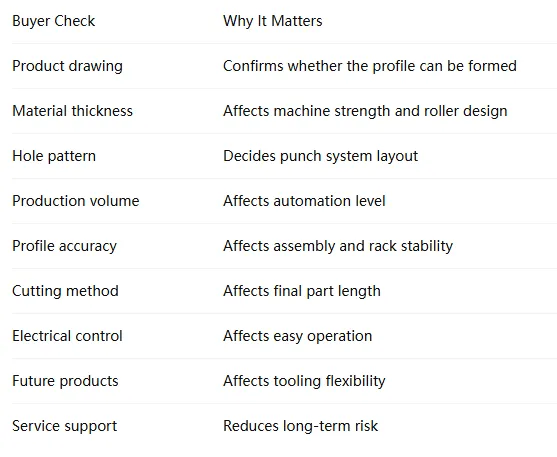
Buyers should also ask whether the production line can support future product sizes. A rack factory may start with one beam profile, then add uprights, braces, shelf panels, or roller tracks later.
A good supplier should ask many questions before offering a solution. What rack do you make? What material do you use? What is the production volume? Do you need servo punching? Do you need automatic stacking? These questions protect your investment.
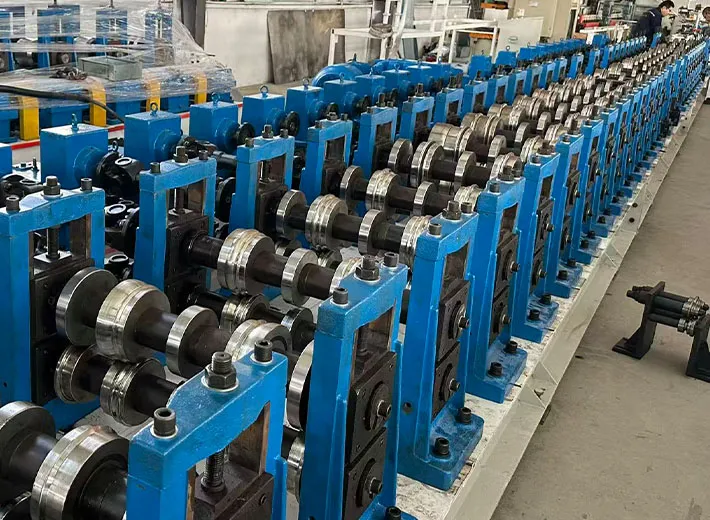
Weifang Chenlong Intelligent Technology Co., Ltd. is a high-tech company based in Shandong, China. We specialize in high-precision cold bending forming equipment and customized automated production lines. Our products serve electrical equipment, new energy, structural equipment, and metal profile processing industries.
For rack and shelf production, Chenlong can customize forming equipment based on the customer’s drawings, material, hole pattern, production speed, workshop layout, and production needs. We can help build an automated production system for supermarket rack parts, warehouse racking profiles, flow rack roller tracks, shelf panels, and line-side shelving.
Chenlong can support:
We understand that different buyers need different solutions. One factory may need a simple machine for a few profiles. Another may need a complete line with punching, cutting, stacking, and automated transfer. We help match the production equipment to the real business plan.
Chenlong is not only a machine supplier. We are a production solution partner for manufacturers, distributors, and OEM partners worldwide. Our focus is clear: high precision, automation, customization, and global service.
For rack and shelving manufacturers, Chenlong can help improve production speed, reduce labor work, and make profile quality more stable. A better machine helps the factory produce shelf and rack parts with fewer errors. That means better delivery control and stronger customer trust.
Our experience in metal profile processing also supports related products, such as structural profiles, storage systems, new energy equipment frames, electrical equipment parts, and custom industrial components. This broad experience helps us understand forming problems from many manufacturing environments.
When a buyer sends a drawing, we do not only look at the shape. We ask how the part will be used, how it will be assembled, what load it may carry, and what production demand the buyer expects. This is how we design a practical roll forming machine solution.
A good rack system helps a warehouse optimize space. Floor space is expensive. Ceiling height is often underused. A well-planned rack layout uses vertical space while keeping goods easy to reach.
Warehouse managers often care about three things: storage density, immediate access, and safe material handling. A rack system must balance all three. If the rack is too dense, picking becomes slow. If aisles are too wide, storage space is wasted. If the rack is weak, safety risk increases.
Common layout goals include:
This is why rack quality matters. Good shelving units support better inventory management. Better inventory management supports faster fulfillment. Faster fulfillment supports stronger business growth.
A rack roll forming machine is equipment that forms metal coil into rack profiles, shelf supports, beams, uprights, and other shelving components. It is used for warehouse racking, supermarket shelves, flow rack systems, and storage equipment production.
A shelf production line is a complete manufacturing system for producing shelf panels, rack profiles, brackets, beams, uprights, and related parts. It may include feeding, punching, roll forming, cutting, and stacking.
Yes, but it depends on the profile design. Some products need different roller tooling or separate machines. Chenlong can review drawings and recommend whether one line or multiple lines are better.
Common materials include galvanized steel, cold-rolled steel, pre-painted steel, and other suitable metal coils. The machine design must match the material thickness, strength, and surface requirements.
Servo punching helps control hole position before forming. This is important for rack uprights, beams, and shelves that need accurate assembly holes. Better hole accuracy means faster installation and less rework.
Not always. A fully automated production line is best for high-volume and stable orders. A simpler line may fit small or medium factories. The best choice depends on production volume, labor cost, product type, and budget.
Moving a warehouse shelving line from standard to custom profiles changes four things: too…
Chenlong’s roof and wall panel line is a factory-based automated roll forming system…
Le responderemos en un plazo de 24 horas. Si para el caso urgente, por favor agregue WhatsApp/WeChat: +8613863639320,. O llame directamente a +8613863639320.
*Respetamos su confidencialidad y toda la información está protegida.
Sólo utilizaremos sus datos para responder a su consulta y nunca le enviaremos correos electrónicos o mensajes promocionales no solicitados.