










Company
20 September 2026
Warehouse Racking Systems & Shelving Production Guide
Moving a warehouse shelving line from standard to custom profiles changes four things: too…
 11:26
11:26 Poorly made profiles can slow assembly, weaken structures, and raise long-term costs. When a steel channel or guide rail is out of shape, the whole project feels it. The fix is simple: use cold-formed, roll formed steel profiles built for precision, durability, and repeatable output.
Cold-formed steel channel and guide rail profiles are shaped from steel strip through a continuous roll form process. They are widely used in construction, automotive, shelving, electrical systems, and industrial support systems because they offer tight tolerances, stable cross-sections, flexible customization, and efficient large-volume production.
A steel profile is any shaped metal section made for a specific job. In this case, we are talking about cold-formed parts such as a steel channel, a guide rail, reinforcement profiles, brackets, and other open steel sections. These parts start as steel strips and pass through a continuous roll form process that shapes the metal step by step without melting it. That makes the process efficient and highly repeatable for large-volume fabrication.
In daily industrial use, these roll formed steel profiles are not niche products. They are widely used in construction and industrial projects, including door and window frame profiles, cable tray parts, shelving components, guard rails, automotive rails, and custom metal support systems. Chenlong’s shaped profiles specifically highlights guide rails, brackets, door and window frames, and custom sections as part of its high-precision profile offering.
What makes formed steel appealing is not only shape. It is consistency. Buyers want stable cross-section geometry, reliable dimensional accuracy, and cleaner edges so downstream assembly goes faster. In our experience, if a profile is not straight, not square, or not punched correctly, the customer pays for the problem again during installation. That is why cold-formed steel keeps gaining ground in industrial supply chains.
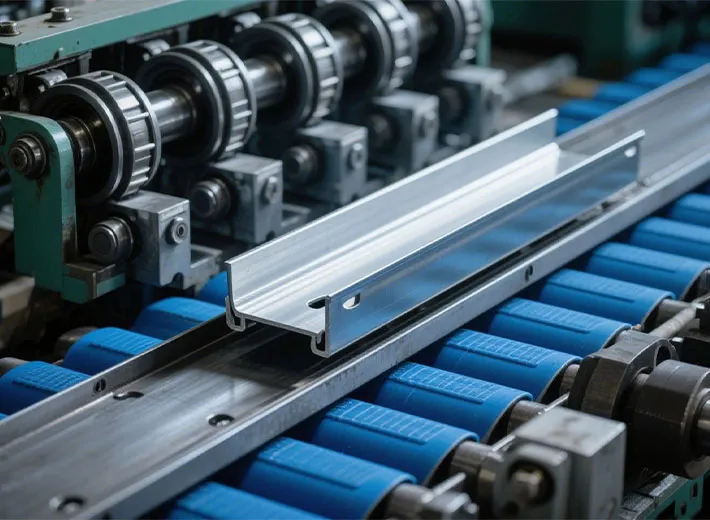
The biggest reason is speed with control. A good roll form process can produce profile after profile with very little variation. That helps ensure better fit, easier assembly, and less scrap. Compared with slower manual methods that rely on repeated cutting, welding, and bending, roll formed steel profiles support stable output and better cost control for commercial and industrial orders. Chenlong describes continuous roll forming as a way to deliver stable quality, low waste, and high output for large-volume profile manufacturing.
The second reason is flexibility. A buyer may need a light-duty shelve support today, a beam reinforcement next month, and a custom channel for a solar panel frame after that. With the right tooling and forming solution, the same production logic can be adapted to many profile families. This is why custom roll forming matters so much for OEMs. The process can be built around hole patterns, slot locations, edge details, and even special bends without rebuilding the whole factory workflow.
There is also a simple commercial reason. Profiles that are engineered to meet exact needs often use lighter steel more efficiently while preserving load-bearing capacity and structural integrity. That means the buyer can balance strength and cost instead of overbuying raw material “just to be safe.” In sectors that move fast, that is a real advantage.
The phrase different types of steel channels covers more than many buyers realize. Some projects use basic u-channels. Others require a deeper steel c profile, a reinforced open section, or a profile with return lips, ribs, or slots. There are also open profiles designed for cable routing, support systems, frame assemblies, and specialized OEM parts. In short, the market is broad, and most serious buyers are comparing more than one shape.
A useful way to group common profiles is this:
Chenlong’s show that these sections and profiles are used across warehousing, construction, electrical systems, fire protection, and automotive manufacturing. The Chenlong also mentions door and window sections, guide rails, brackets, cable tray profiles, and automotive rails among its finished applications. That broad fit is one reason roll forming solutions are attractive to manufacturers that serve more than one market.
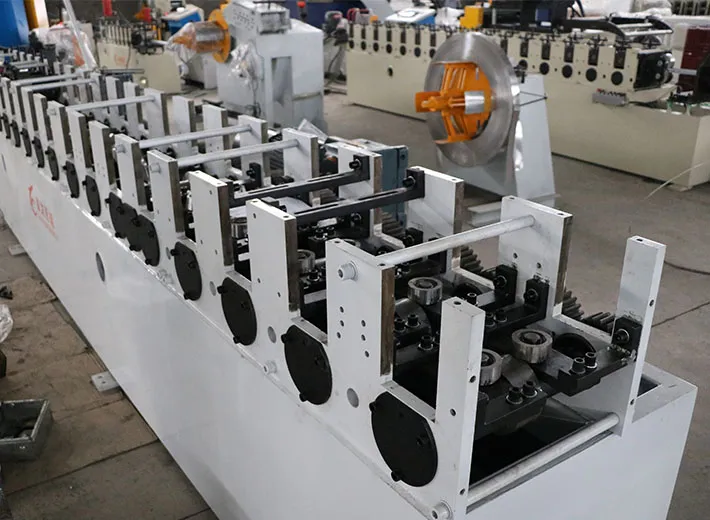
A profile is not finished when it leaves the last roll station. Many parts still need a punch pattern, a flange, a notch, or a joining step. That is why integrated auxiliaries matter. Chenlong describes CNC and hydraulic punching machines as essential for punching, shearing, trimming, bending, flanging, and stretching strip or semi-formed profiles to match design requirements.
The same is true for weld operations. Not every profile needs welding, but some do. When a profile is hollow, sealed, reinforced, or part of a more complex assembly, inline or secondary laser welding can improve structural integrity and surface quality. Chenlong’s component page says laser welding machines are suitable for seams, joints, or reinforcing parts of cold-formed profiles, especially when strong, smooth joins are needed.
In practical terms, these operations are where many projects are won or lost. You can have a good base section, but poor hole placement, uneven bends, or weak welds will still create trouble. That is why advanced roll forming is not just about rolling metal. It is about building a stable, repeatable process around the full profile requirement.
These profiles are widely used because they fit many industries. In construction and industrial sectors, they appear in framing, supports, cable management, roofing details, enclosures, steel deck systems, and other structural support systems. They are also common in door and window assemblies, where profile straightness and edge quality matter for final fit and sealing. Chenlong’s site specifically highlights modern construction applications, frame profiles, corrugated panels, gutters, steel decking, and non-standard structural sections.
In automotive manufacturing, precision matters even more. Seat slides, roof rack tracks, sunroof guide rails, reinforcement members, and other rail-based parts need consistent shape and stable batch production. Chenlong’s shaped profiles page refers directly to automotive rails and says its forming solutions support consistent dimensions and clean profile edges for industrial projects.
There are also expanding uses in new energy and infrastructure. A solar panel support profile, a cable tray channel, or a custom bracket for machinery all rely on repeatable section geometry. The same logic applies in warehouse shelving, light-duty storage systems, and guard rails for safety-related assemblies. When profiles are used in the construction of real systems, small shape errors can become large field problems. Precision is not a luxury. It is part of performance.
If a profile will face moisture, weather, or a demanding industrial environment, surface protection matters. Galvanized steel and hot dip galvanized finishes help slow rust and support longer service life. That does not remove the need for good design, but it does improve durability and surface protection in many outdoor or semi-exposed uses. Industry cold-formed steel standards and guidance also emphasize the role of proper product data, design, and material selection in long-term performance.
For buyers, this usually comes down to three questions:
A profile with the right surface finish can improve resale confidence and reduce maintenance concerns. It can also help ensure better consistency during assembly when the product needs a clean, stable exterior. For many commercial and industrial projects, hot rolled steel may still be part of the supply chain, but cold-formed steel with the right coating often offers a more efficient finished solution for repeatable profile production.
A good buying process starts with the end use, not the machine catalog. Ask what the profile actually does. Is it load-bearing or decorative? Is it part of a steel bridge support detail, a steel channel frame, a tubular steel reinforcement zone, or a light-duty shelving system? Will the profile be used in the construction of a building envelope, in machinery, or in a transport assembly?
Then ask the questions that shape the solution:
These questions help ensure the buyer gets the right equipment, not just the cheapest quote. In many cases, a supplier that can tailor the tooling, material handling, and finishing steps will create more value than a standard machine seller. That is especially true when the parts are engineered to meet specific assembly, strength, and finish requirements.
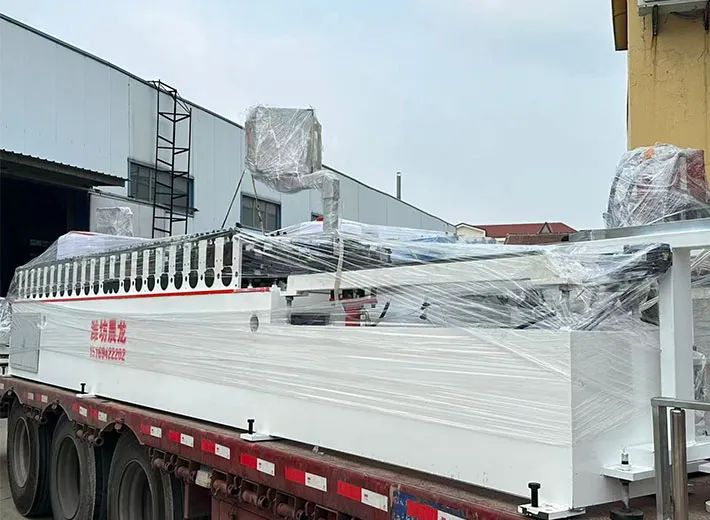
Chenlong positions itself as a Chinese manufacturer of customized cold roll forming equipment and shaped profiles, serving sectors such as warehousing, electrical cabinets, fire boxes, cable trays, construction, and automotive. The company homepage says it has a 10,000㎡ production base, advanced CNC centers, and a focus on turnkey equipment and high-precision profiles, while its service page highlights 24/7 support, in-house manufacturing, optional on-site installation and training, and shipment preparation within 45 days for equipment.
That matters for B2B buyers. Manufacturers and OEM partners usually do not want just a machine. They want a partner that understands the profile, the tooling, the material flow, the finishing steps, and the production target. Chenlong’s pages repeatedly invite buyers to send drawings, samples, material specs, or production goals and promise a tailored response within 24 hours. That is exactly the kind of supplier behavior buyers look for when evaluating custom roll forming, custom metal sections, and professional roll forming support.
From a sales point of view, this is where attention becomes action. The buyer sees a common problem: inconsistent parts, slow fabrication, too much manual handling. Then the buyer sees the interest point: a process that combines feeding, punching, forming, cutting, and stacking. Desire grows when the supplier can show profile flexibility, high strength, good finish, and scalable output. Action happens when the project owner shares a drawing and gets a forming solution built around real production needs.
What is the difference between hot-rolled and cold-formed profiles?
Hot-rolled steel is shaped at high temperature, while cold-formed profiles are shaped from strip at or near room temperature through progressive rollers. Cold-formed profiles usually offer better repeatability for thin-gauge, high-volume sections.
Are steel channels provide enough strength for structural uses?
Yes, when the profile shape, steel grade, thickness, and application are matched correctly. Steel channels provide support, alignment, and stiffness in many commercial and industrial systems, but the final design should always match the required load and service conditions.
Can roll formed steel products replace welded assemblies?
In many cases, yes. A well-designed roll formed section can reduce manual fabrication and cut variation. Some projects still need a weld step, but many benefit from fewer secondary operations.
Are profiles are commonly used in solar and support systems?
Yes. Profiles are used in cable routing, racking, support systems, and solar panel structures because the process offers repeatable sections and efficient output for long-length parts.
What makes profiles tailored for OEM projects better?
Profiles tailored to the product requirement can reduce waste, simplify installation, and improve overall fit. That makes them ideal for applications where hole location, bend geometry, finish, and cross-section must stay consistent across batches.
How do I start a custom project with Chenlong?
Prepare your drawing, sample, material data, and target output. Chenlong asks buyers to share those details so it can provide a tailored solution and recommend the right forming equipment or profile approach.
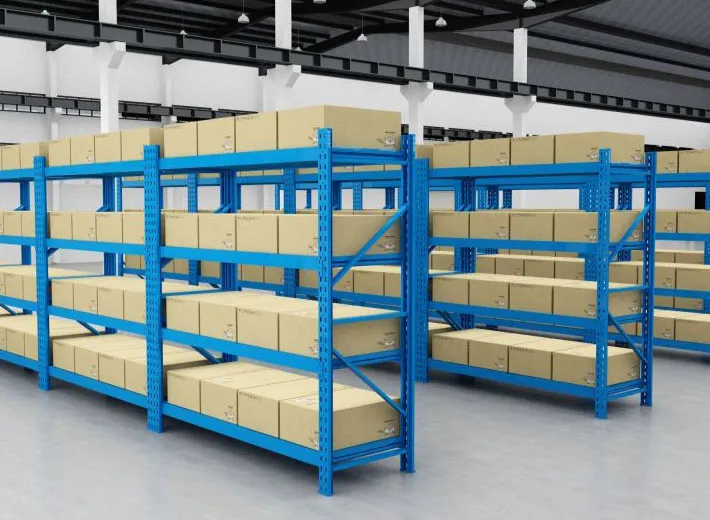
Moving a warehouse shelving line from standard to custom profiles changes four things: too…
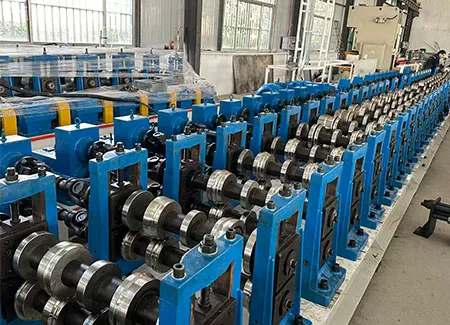
Chenlong’s roof and wall panel line is a factory-based automated roll forming system…
We will reply you within 24 hours. If for urgent case, please add WhatsApp/WeChat: +8613863639320,. Or call +8613863639320 directly.
*We respect your confidentiality and all information are protected.
We will only use your information to respond to your inquiry and will never send unsolicited emails or promotional messages.